8 Silksong Tips That Give Hornet a Huge Head Start

Hollow Knight: Silksong is tough, but a few concrete habits will save you time, rosaries, and headaches when you first set out as Hornet. Below are practical beginner tips that point out where to buy maps, how to fight and heal safely, and what to check in each new area so you don’t miss shortcuts or currency.
- Find Shakra to get your map
- Practice your downward attacks
- Look out for the signs
- Wait for the opportune time to heal
- Hunt down other pilgrims for rosaries
- Talk to NPCs more than once
- Beware of traps!
- Look out for suspicious walls
Find Shakra to get your map
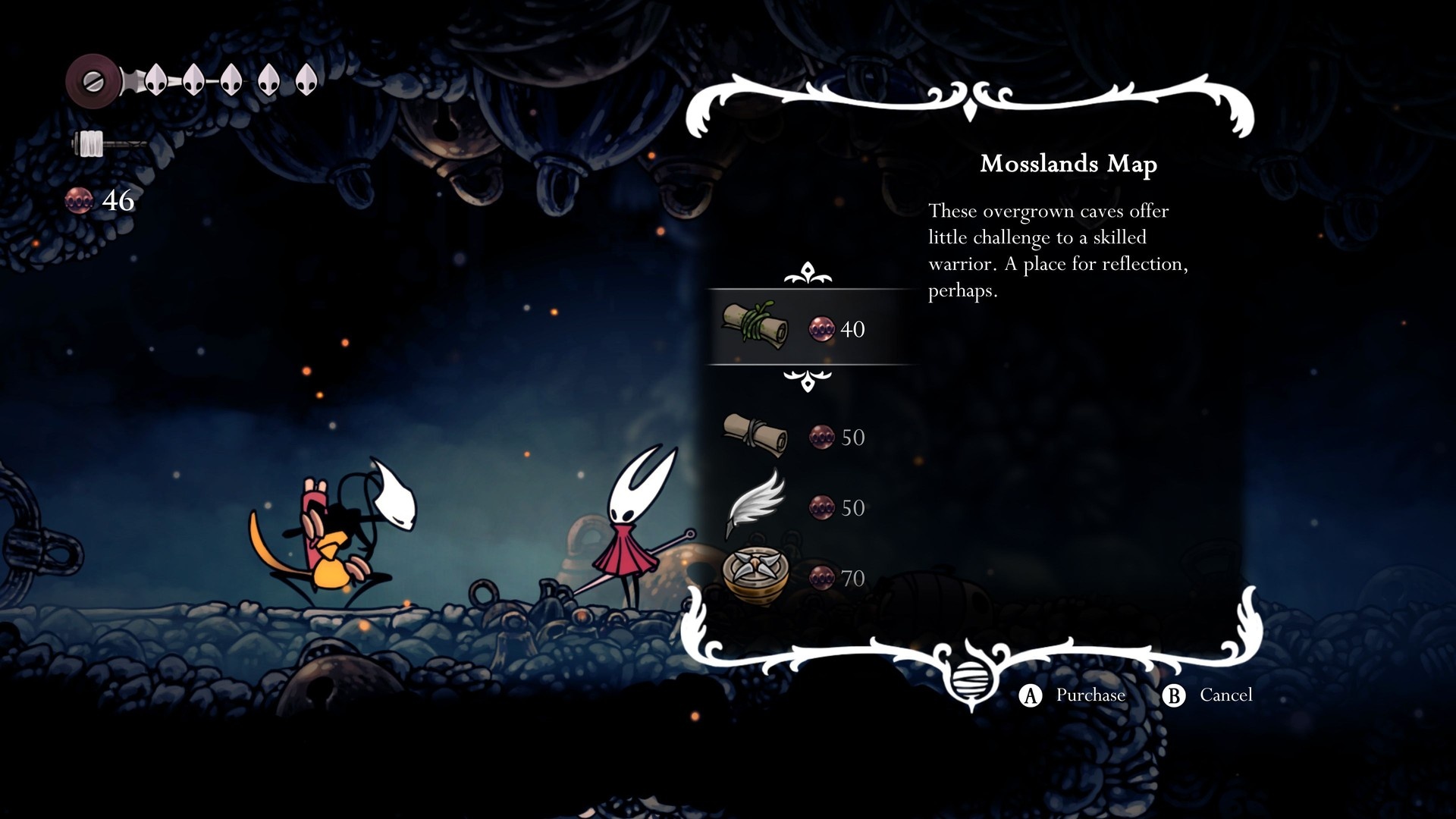
Maps make navigating Pharloom far easier. Early in the northwestern corner of The Marrow you can find the vendor Shakra, who sells the Mosslands and The Marrow region maps for 40 and 50 rosaries respectively. Buy those first two region maps to stop getting lost in the early game.
Also, pick up the Compass, Quill, and Bench Markers from her shop before moving on. The Compass shows your position on the map, the Quill updates the map when you rest, and Bench Markers add map pins for benches — together they make exploration much more efficient.
Practice your downward attacks
Silksong changes the downward attack so it strikes diagonally; this alters jump-attack timing compared to Hollow Knight. Learn the new angle early, because downward attacks are useful for bouncing off enemies to reach higher platforms and for avoiding incoming hits.
In short, spend a few minutes on low-risk enemies to get the timing and angle right. That practice translates directly into easier platforming and safer combat in places like Hunter’s March.
Look out for the signs
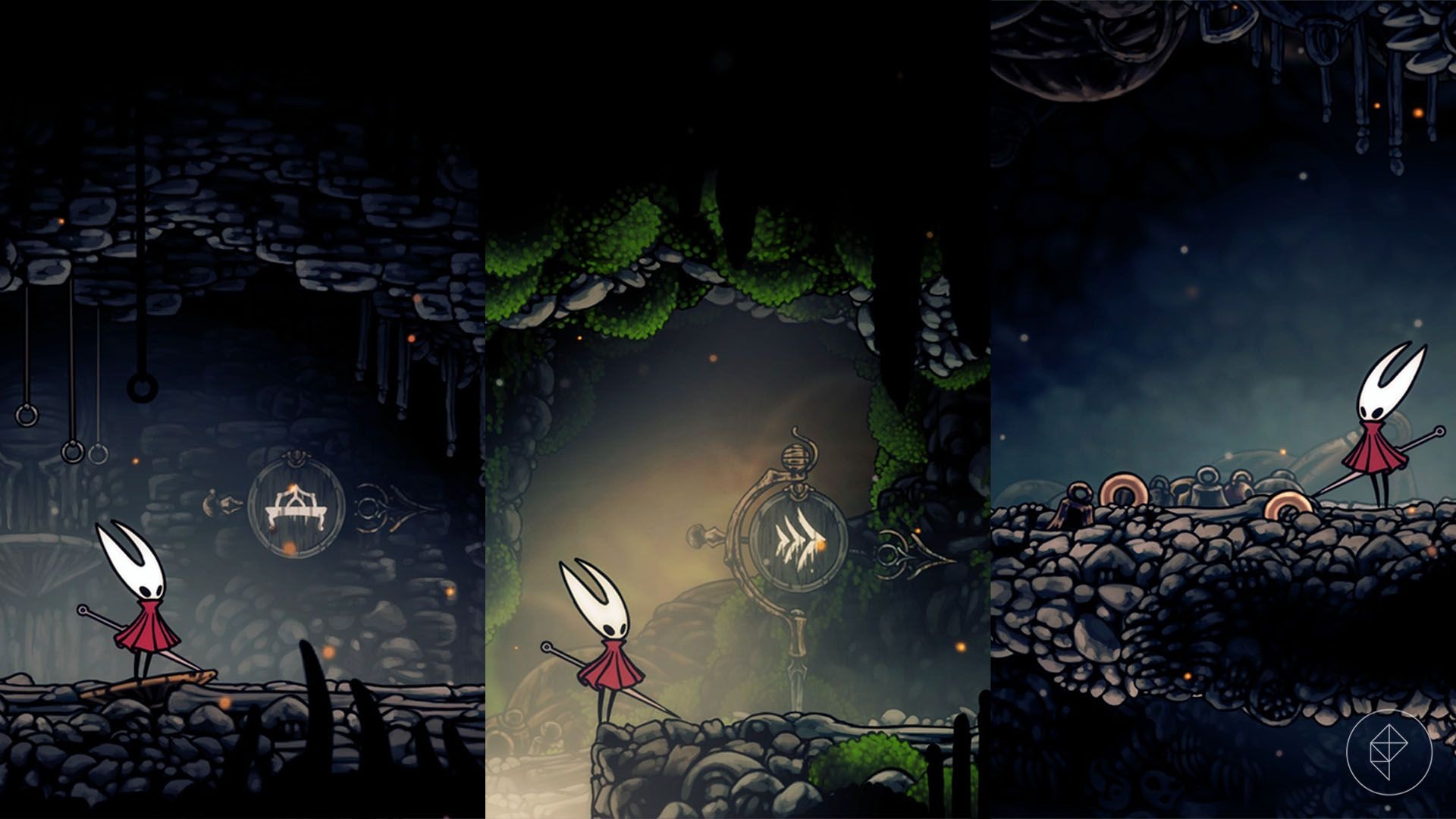
Environmental signs often point you toward benches, vendors, or pathways. For example, wooden boards, icons painted on walls, or patterns of golden rings on the ground usually indicate something useful nearby.
Wait for the opportune time to heal
Healing in Silksong — called binding — consumes your silk spool and restores three health points, but you are not invulnerable while casting (unless you have the Warding Bell). Therefore, avoid healing the moment you drop to one health; instead, create distance or stagger the enemy first, then bind. This reduces the chance of being interrupted and losing the silk you spent.
Hunt down other pilgrims for rosaries
Rosaries are the primary currency, and while they can feel scarce, there are reliable early sources. After finding Shakra, head a bit left and upward from her spot to find large grub-like enemies that drop +5 rosaries when defeated.
Moreover, there’s a nearby bench you can unlock by using a switch on the wall. Resting there respawns those rosary-dropping enemies, so you can farm small amounts of currency repeatedly if you need to buy maps or supplies.
Talk to NPCs more than once
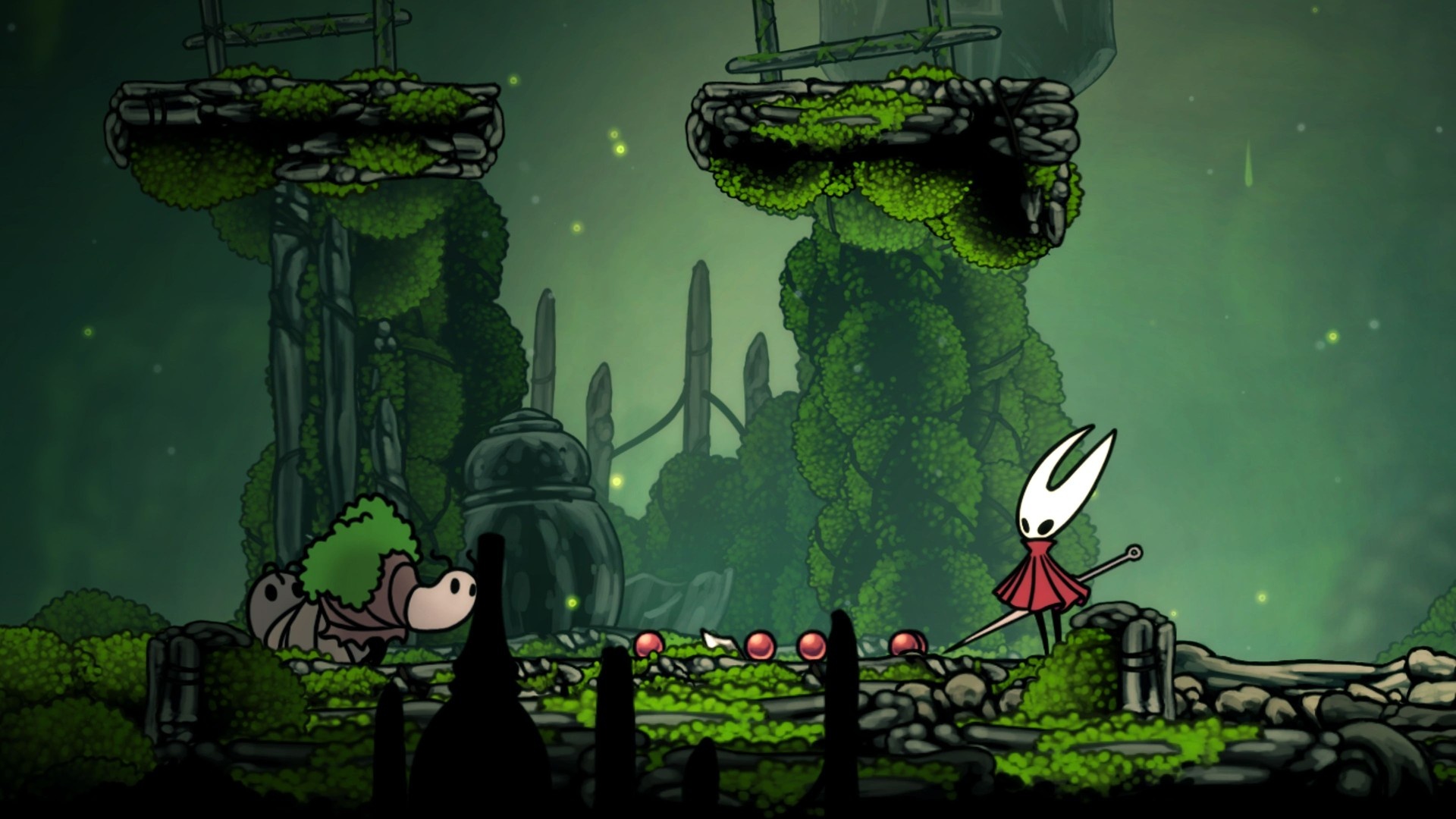
NPCs often have multiple dialogue lines, and some add new dialogue later in the story. Therefore, talk to characters more than once and revisit earlier areas as you progress, since additional conversations can give hints or open quest options you wouldn’t see on first pass.
Beware of traps!
New areas can contain environmental hazards that trigger when you get close. Always move cautiously into unexplored rooms, because falling rocks, spike traps, and surprise boss arenas are all present early on.
Falling rocks
A slight tremble and a dust cloud are warnings for falling stones, but those cues only appear when you’re quite near. Therefore, when running beneath low ceilings in unknown areas, either proceed slowly or be ready to sprint through once rocks start falling.
Spike traps
Spike traps usually require you to trigger them by stepping on raised tiles or tripping unseen wires. If you do set one off, sprint or jump clear immediately to avoid taking additional hits; otherwise you can lose several health points quickly.
Boss fights
Open, flat rooms with distinctive borders often signal a boss area. Before entering, consider switching tools, spending rosaries, and resting at a nearby bench so you don’t face a boss with no silk or supplies.

Look out for suspicious walls
Hidden paths are common: some walls look solid but have gaps you can jump through, while others are porous and breakable with your weapon. So, when an area seems like a dead end, test the walls and give suspicious surfaces a hit before moving on.