Don’t Start Digimon Story: Time Stranger Without These 10 Beginner Tips
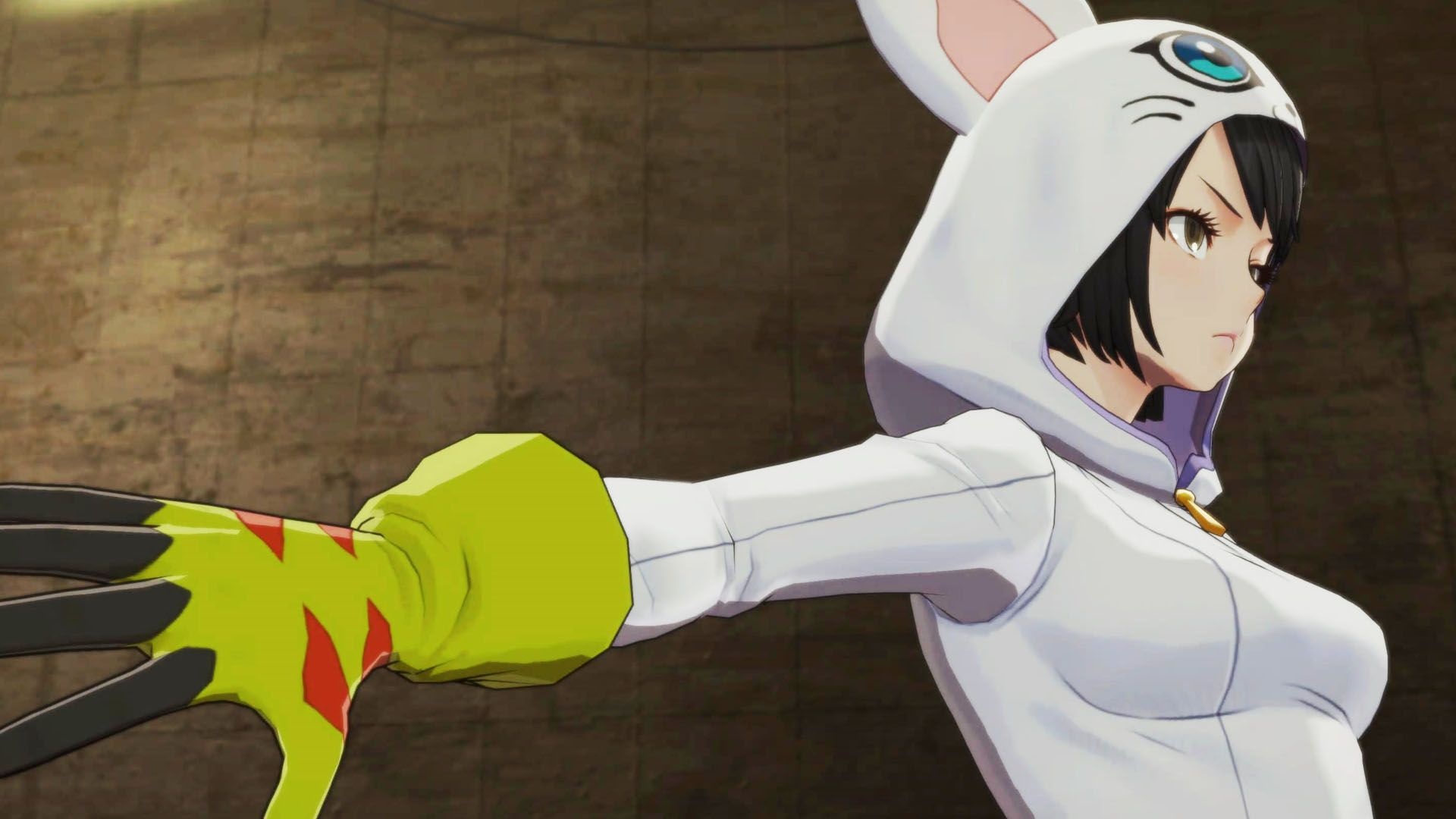
Digimon Story: Time Stranger has a few systems that work differently than in past Digimon games. Below are ten concrete, practical tips to help new players manage Digimon progression, training, and combat mechanics so you can make steady progress without missing key features.
- Best grind spots
- Burn your SP
- Prepare a training plan
- Answer your messages
- Always convert new Digimon
- Let unused Digimon enjoy the farm
- Prioritize experience Agent Skills
- Support Cross Arts are best early
De-Digivolving
When a Digimon reaches its maximum level, you can De-Digivolve it back to its previous form. Doing so raises that Digimon’s level cap and lets it inherit some attributes from the form it had before De-Digivolving. Therefore, De-Digivolving is a deliberate progression mechanic, not just a rollback option.
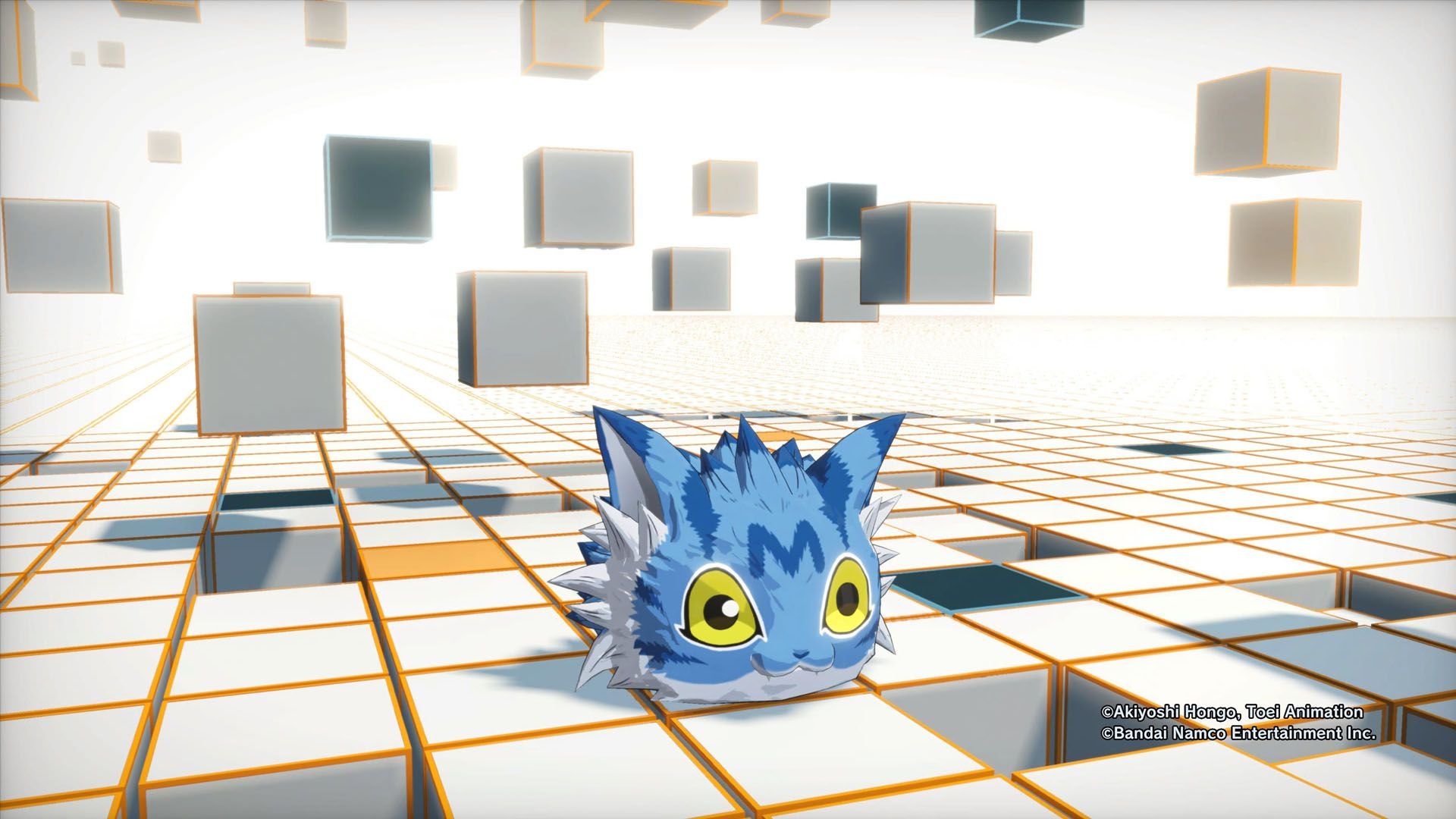
Grinding is part of the experience
Enemy levels matter. Battles use a rock–paper–scissors structure with elements, and a level gap of several stages can make encounters much harder. Consequently, expect to spend time leveling up when you enter new areas. If you want less resistance for key story fights, you can change the difficulty to Story, which lowers encounter friction for boss fights.
Finding the right grinding spot
Digimon respawn after a few minutes, and leaving an area resets it immediately. Thus, the fastest method is to clear a concentrated group of enemies near an exit, leave the map, then return to respawn everything. This loop is an efficient way to farm levels and materials.
Burn your SP
SP recovers simply by standing still for a few seconds, so it’s safe to use SP-heavy skills freely in Time Stranger. In short, unlike some RPGs where SP is strictly conserved, here you can rely on in-combat SP consumption without needing rare recovery items.
Prepare a training plan
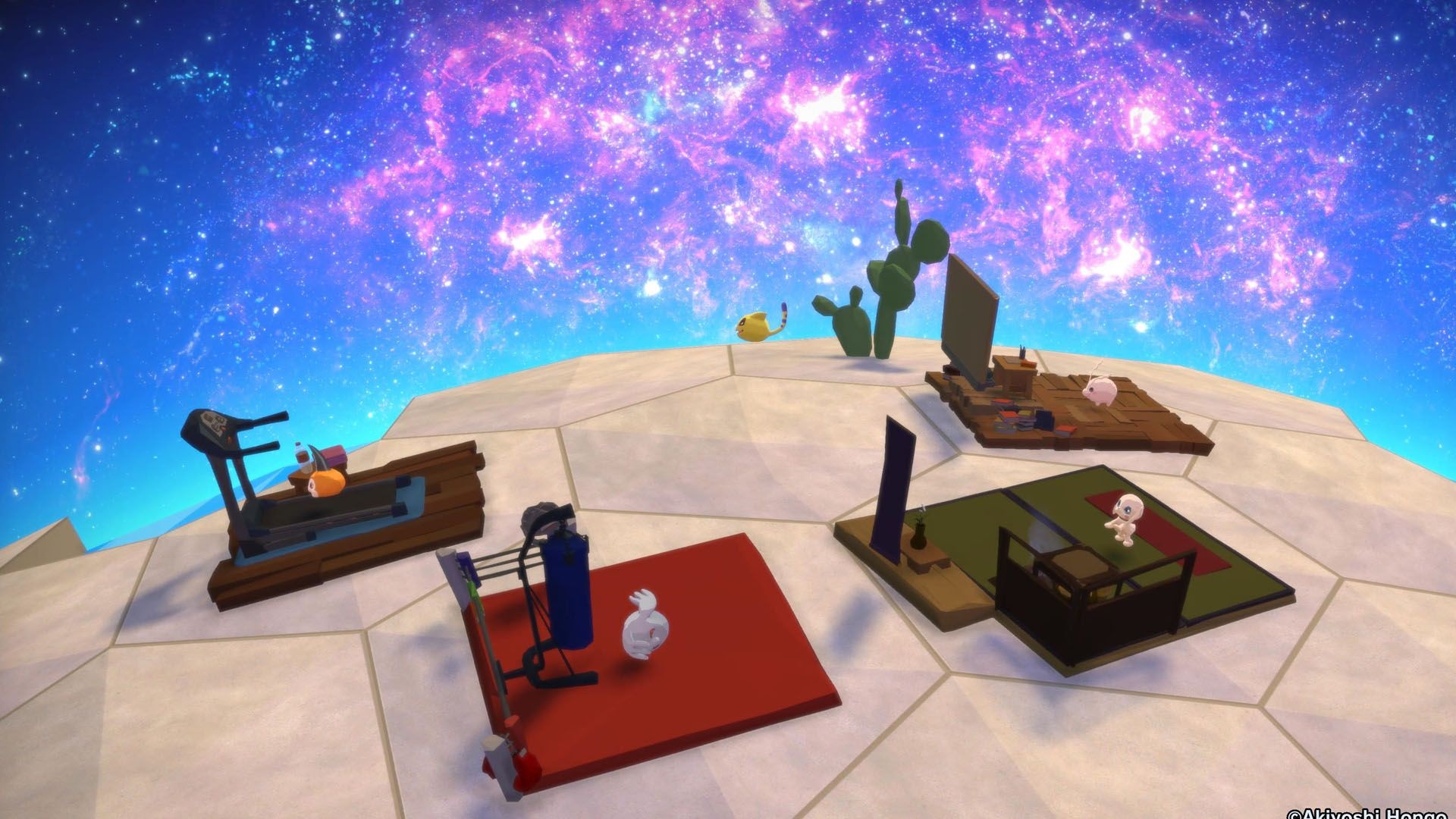
After unlocking the farm, you can train Digimon to raise base stats and meet evolution requirements. However, the farm UI doesn’t show evolution requirements, so you should record those numbers elsewhere (for example, on your phone or paper) before training.
Also, at the start you will have only one of each training set type available. Therefore, assign Digimon to training sets based on the exact attributes they need. Grouping multiple Digimon with the same required attribute can leave others idle, so rotate assignments to keep progress steady.
Answer your messages
The Digiline sends two especially useful message types. First, farm training completion notifications let you reassign the same training routine without visiting the farm. Second, messages from your Digimon can change their personality depending on your dialogue choices. So, respond to messages to manage training remotely and to influence Digimon behavior.
Always convert new Digimon
When a Digimon’s data reaches 200%, convert it into the actual Digimon. Multiple copies are useful: different copies can follow different evolution paths, and you can sacrifice one to boost another’s experience and attributes. In general, converting at 200% avoids wasting potential.
Let your Digimon enjoy the farm
Use spare farm slots for Digimon you aren’t actively using. Digimon on the farm gather crafting materials over time and still earn experience as if they were in your party. When you check the farm later, the game lists the materials they collected, and you can trade those with Zudomon in Central Town for crafted items.
Prioritize Agent Skills that increase experience
Agent Skills unlock upgrades and Cross Arts. Prioritize skills that boost experience gained in battle. For example, the Agent Skill “Lesson in Rearing” increases experience earned by 1% per Agent Rank. Across skill trees, several experience-boosting skills stack and provide a notable cumulative gain, which directly improves your ability to clear harder fights.
Support Cross Arts are the best
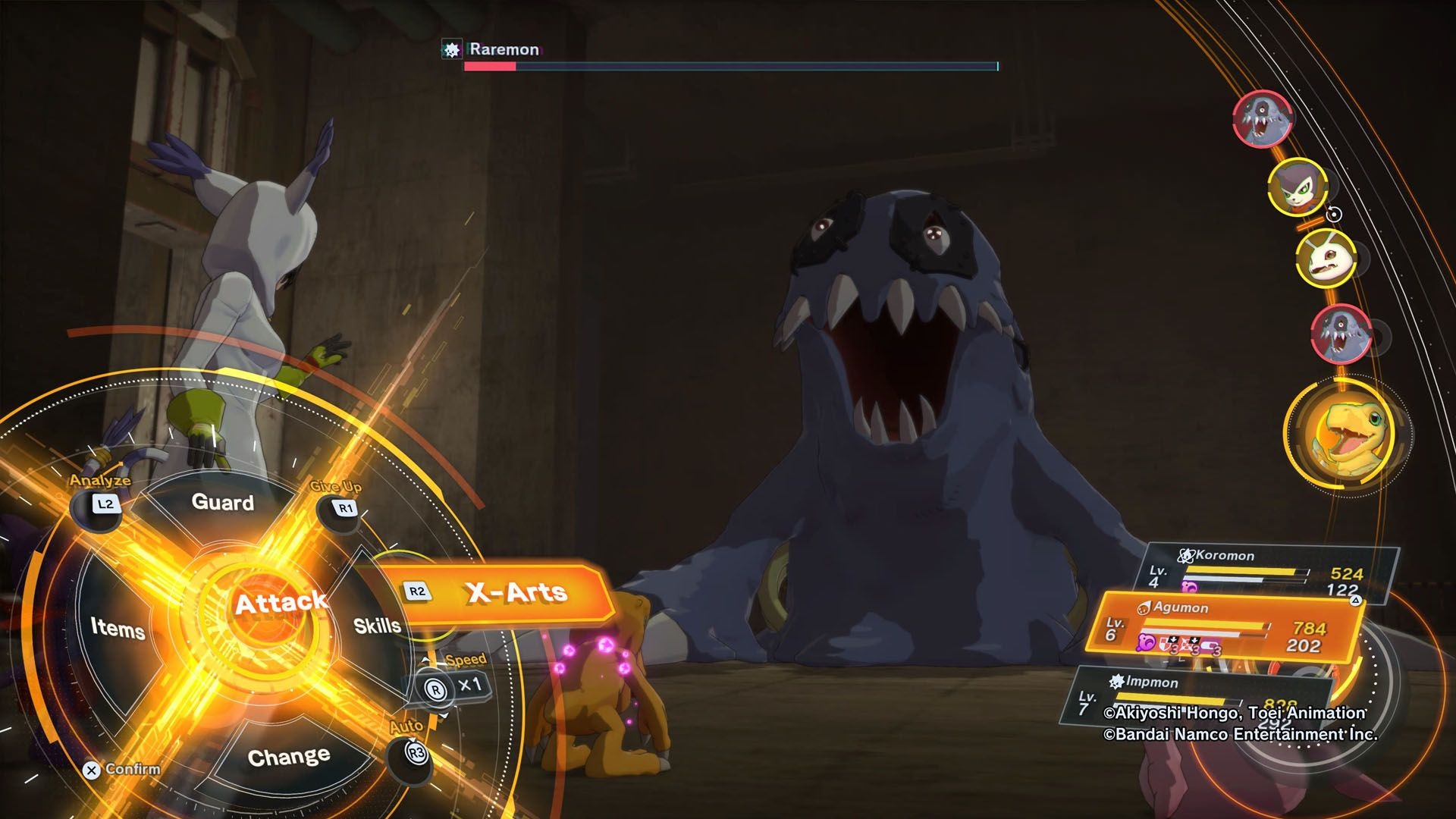
Cross Arts are special abilities unlocked via Agent Skills and used during fights. They don’t count as a Digimon action, so using a Cross Art effectively gives you two actions in a turn. Early in the game, support-oriented Cross Arts (buffs and heals) are more valuable than offensive ones because group healing is limited and recovery items are expensive.