Get Good Isn’t a Reply: Why Elden Ring: Nightreign and Other Soulslikes Deserve Real Criticism
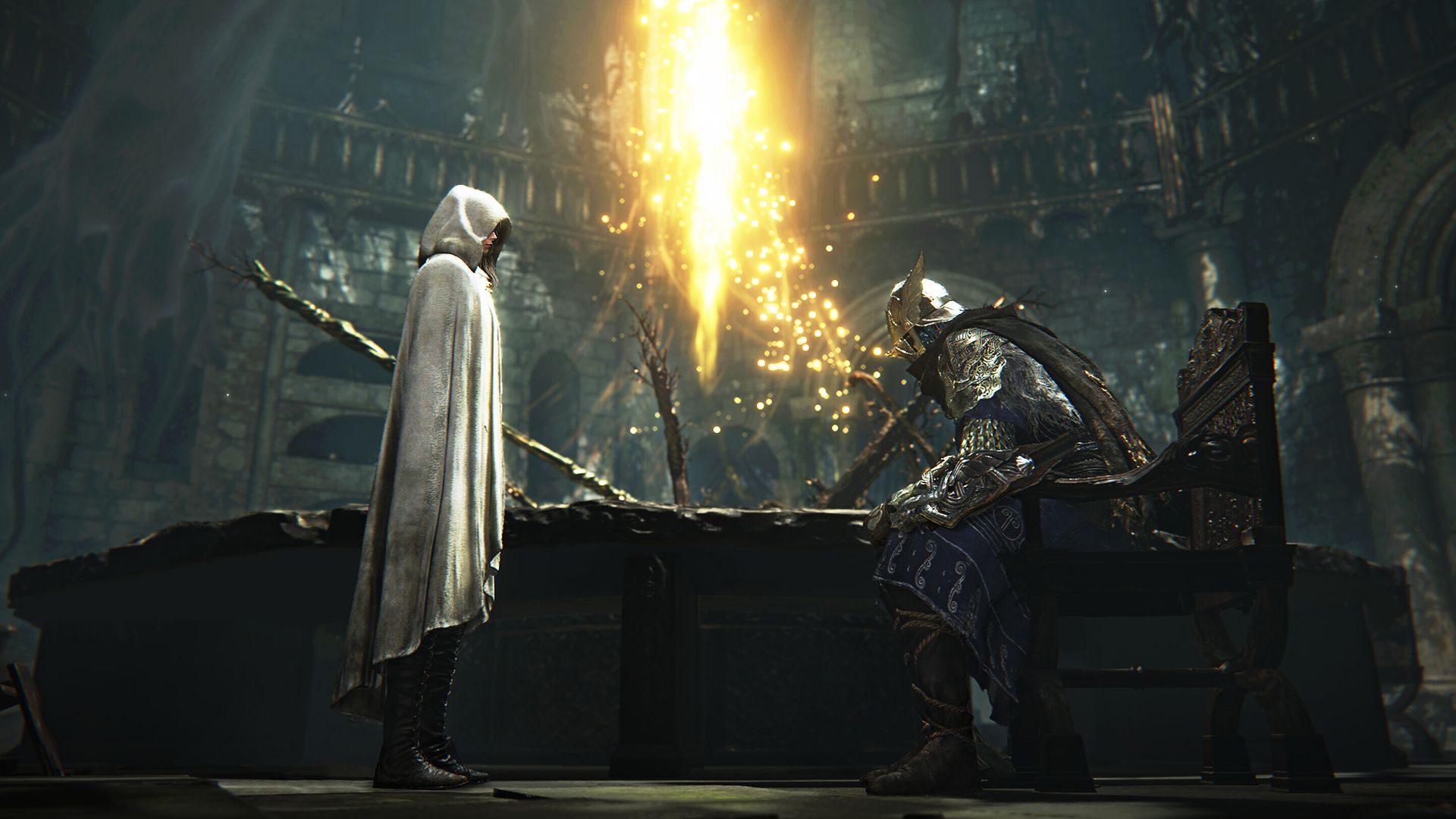
Players are debating which 2025 releases should be in the Game of the Year conversation, and criticism of the Soulslike genre has become a clear part of that discussion. While some fans insist that difficulty issues are a player problem, others point to design choices, technical issues, and post-launch balancing as concrete reasons for critique.
- Overview of the Game Awards debate and fan reactions.
- Examples of community responses and links to original posts.
- Specific design and balance issues highlighted in recent Soulslike releases.
- Other games and developers that added accessibility or difficulty options.
- Common technical complaints and developer fixes.
Game Awards debate and fan reactions
Discussion around the Game Awards has included Elden Ring: Nightreign, Clair Obscur: Expedition 33, and Death Stranding 2: On The Beach as contenders for Game of the Year. Fans of FromSoftware titles have defended Nightreign, while other players have argued that Clair Obscur should be the frontrunner based on current releases.
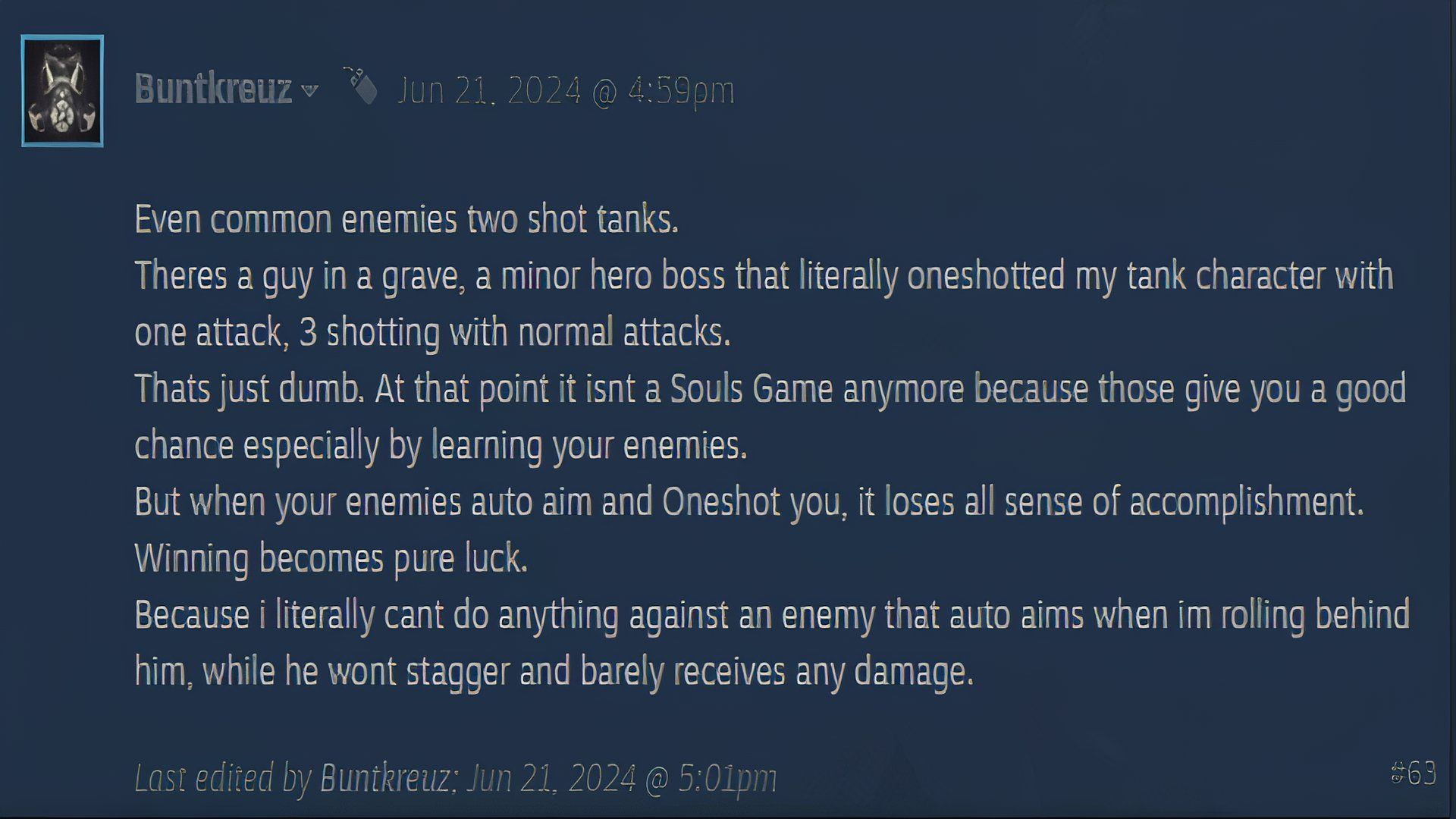
In community spaces, some responses to criticism have been short and direct. For example, posts and replies in public forums have used phrases like “get good” or “Sounds like a skill issue on your part.”
Community examples and sources
One Steam discussion captured a player reporting problems with matchmaking and teammate performance in Nightreign; a reply on that thread reads, “Sounds like a skill issue on your part”. You can view that Steam discussion here: Steam discussion.
Similarly, a Facebook community post included the line “If you don’t like Nightreign, it’s a skill issue on your part …”, which demonstrates the presence of that response in multiple public forums. The Facebook post is available here: Facebook community post.
Design, balance, and post-launch fixes
At launch, players and critics pointed to Nightreign’s solo experience as particularly punishing. In response, FromSoftware introduced a Duo mode and has released patches intended to improve the solo player experience. These are documented steps taken by the developer to address reported issues.

Difficulty spikes and developer responses
Earlier in the series, the Shadow of the Erdtree DLC drew attention for its high difficulty; reports noted that some players were surprised by encounters and that one difficult boss—Promised Consort Radahn—was later adjusted by the developer. This is an example where difficulty balance led to a concrete developer change.
Other developers adding options
Several non-FromSoftware developers have added accessibility or difficulty options after release. For example, Dead Cells and Celeste implemented Assist Modes. Meanwhile, Sifu and Lies of P added difficulty settings. In interviews, the director of Lies of P previously said, “Soulslike games shouldn’t have difficulty options,” and that interview is archived here: DualShockers interview. Later, Lies of P released an Overture DLC patch that included changes to difficulty options.

Common technical and accessibility complaints
Across Soulslike releases, certain issues recur in player reports and reviews. These include:
- Camera problems: lock-on or camera framing that behaves unexpectedly in tight spaces or against large enemies.
- Input buffering and controls: situations where player inputs feel inconsistent with intended actions.
- Opaque storytelling: fragmented narratives delivered via item descriptions, environment, or optional dialogue, which many players rely on community resources to interpret.
Developers have applied patches, added modes, and changed boss balance in response to reported problems. These are verifiable actions that show how post-launch feedback has led to concrete changes.
Summary
To date, community debates about Soulslike difficulty have included both defensive reactions and concrete critiques. Developers such as FromSoftware and other studios have implemented patches, new modes, and difficulty options in response to feedback. Therefore, reported design and technical issues have led to measurable developer actions and documented changes.