Hades 2: Brilliant Combat and Gorgeous Art — But Its New Progression Systems Overcomplicate a Classic
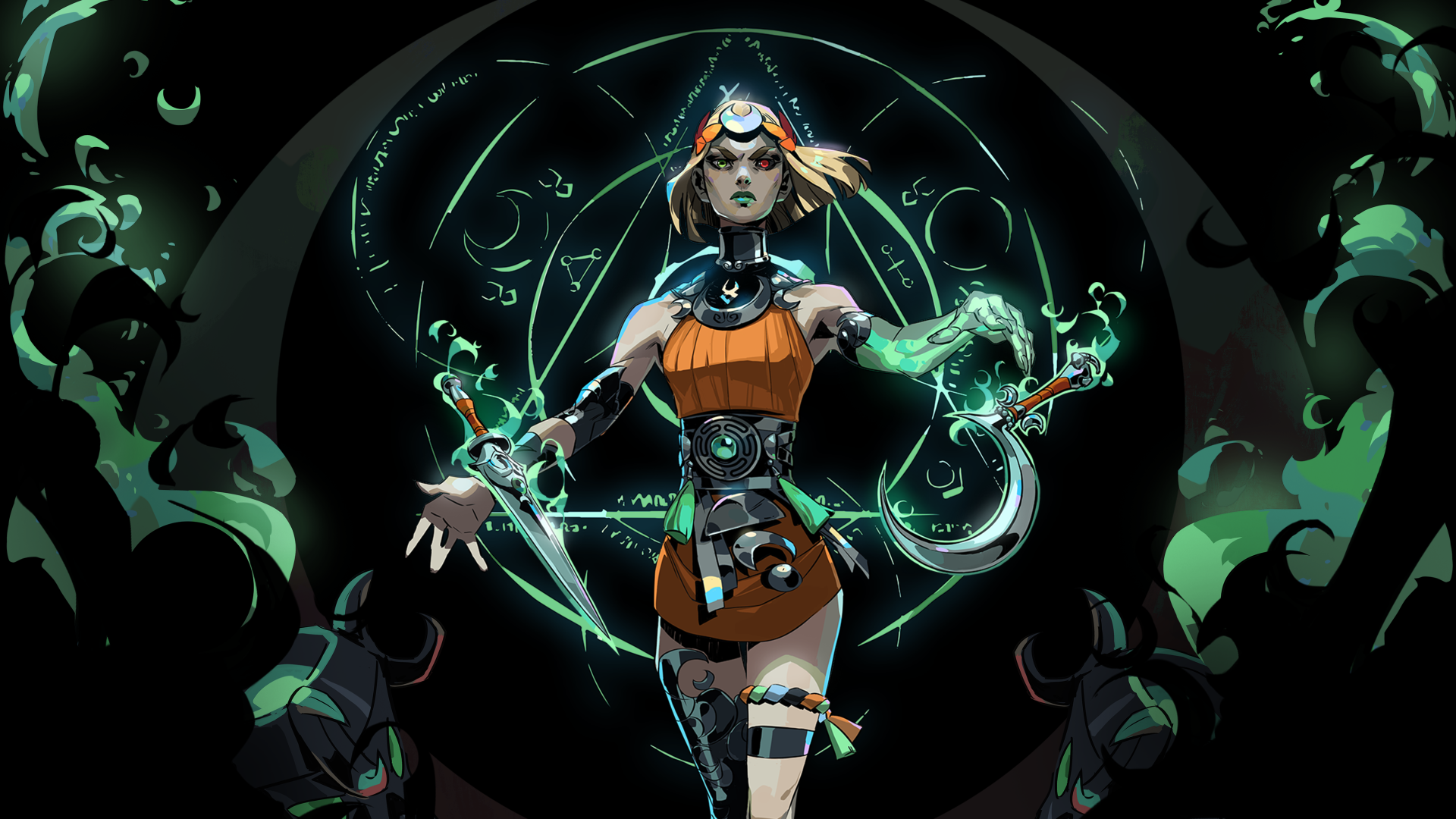
Hades 2 is Supergiant Games’ first sequel. It left early access after about 15 months, and launched on September 25 for Nintendo Switch, Nintendo Switch 2, and Windows PC. The game puts players in the role of Melinoë and asks them to confront the Titan Chronos to free Hades and Zagreus.
Overview
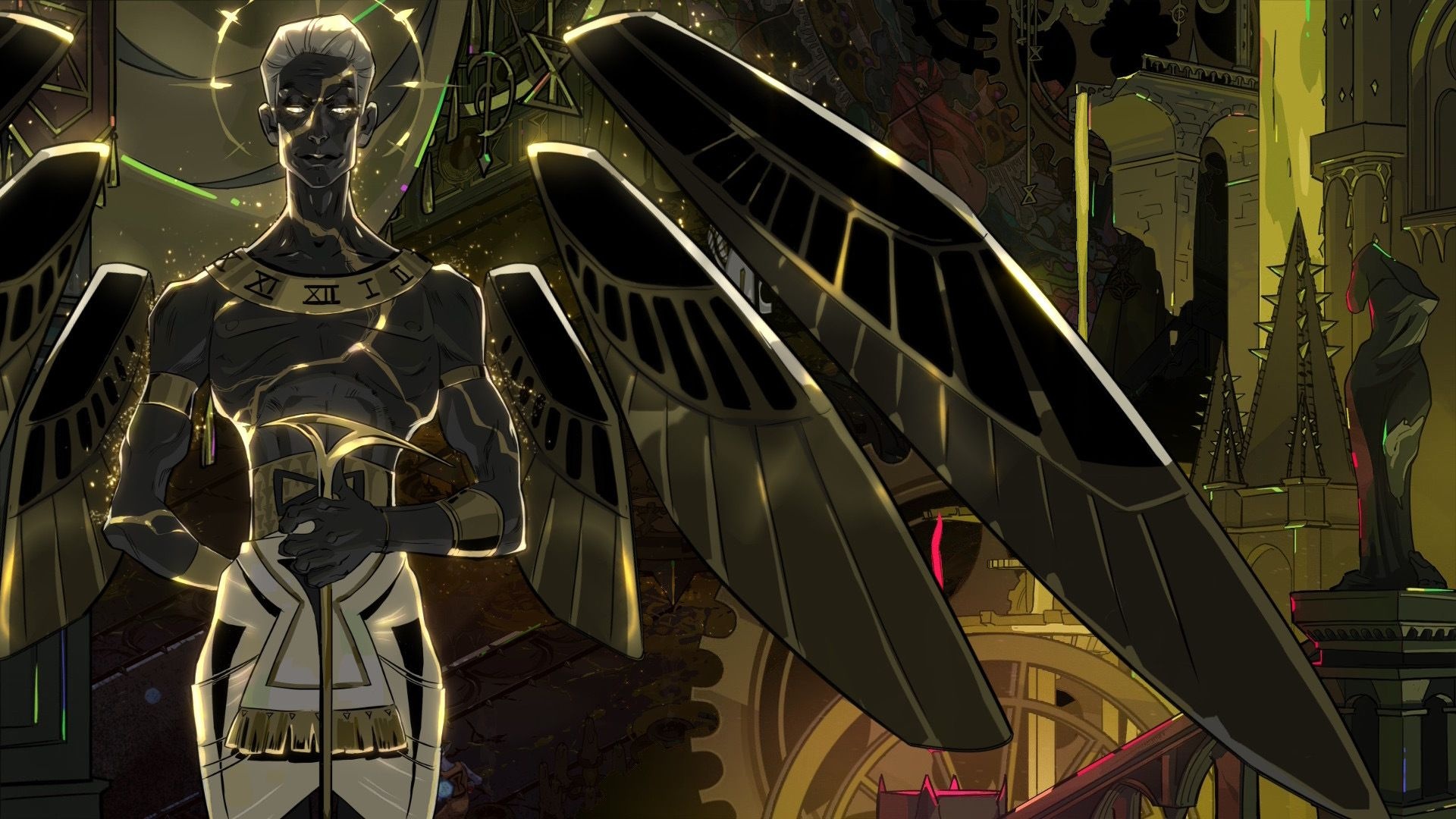
Supergiant’s sequel keeps the isometric roguelike structure of the original Hades. Players run repeated runs through procedurally generated chambers. Each run grants temporary upgrades known as boons, which come from Olympian gods and modify attacks and abilities.
Gameplay
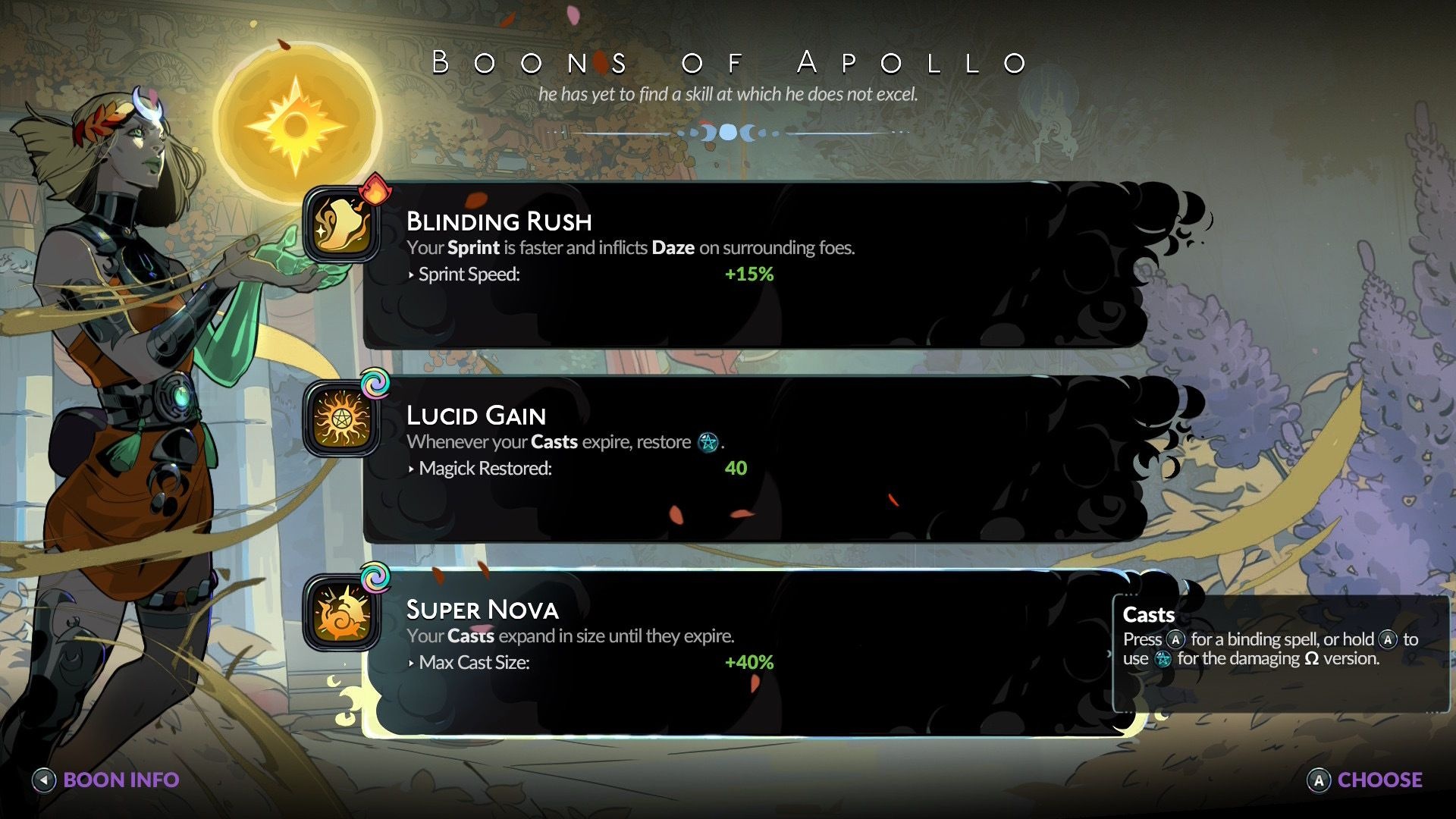
Players control Melinoë and can use several weapon categories: a staff, a battleaxe, and daggers, plus three additional tools unique to the sequel. Combat includes a basic attack, a special attack, and a cast ability. In Hades 2 the cast has been redesigned as an area effect that can immobilize enemies inside its boundary.
Boons return and are tied to gods. For example, Hestia grants fire effects, Aphrodite applies weakening effects, Apollo offers daze effects, Zeus delivers lightning effects, and Selene can unlock a randomized power that scales as the player uses witchy powers. Combining boons with weapon builds remains a central gameplay loop.
Progression systems and resources
Hades 2 expands the number of permanent and semi-permanent systems in its hub, the Crossroads. Key systems include:
- Arcana Cards — Melinoë’s passive abilities are organized into an Arcana Cards tree; unlocking cards costs Ashes and the number of active cards depends on Grasp, which is increased by earning Psyche.
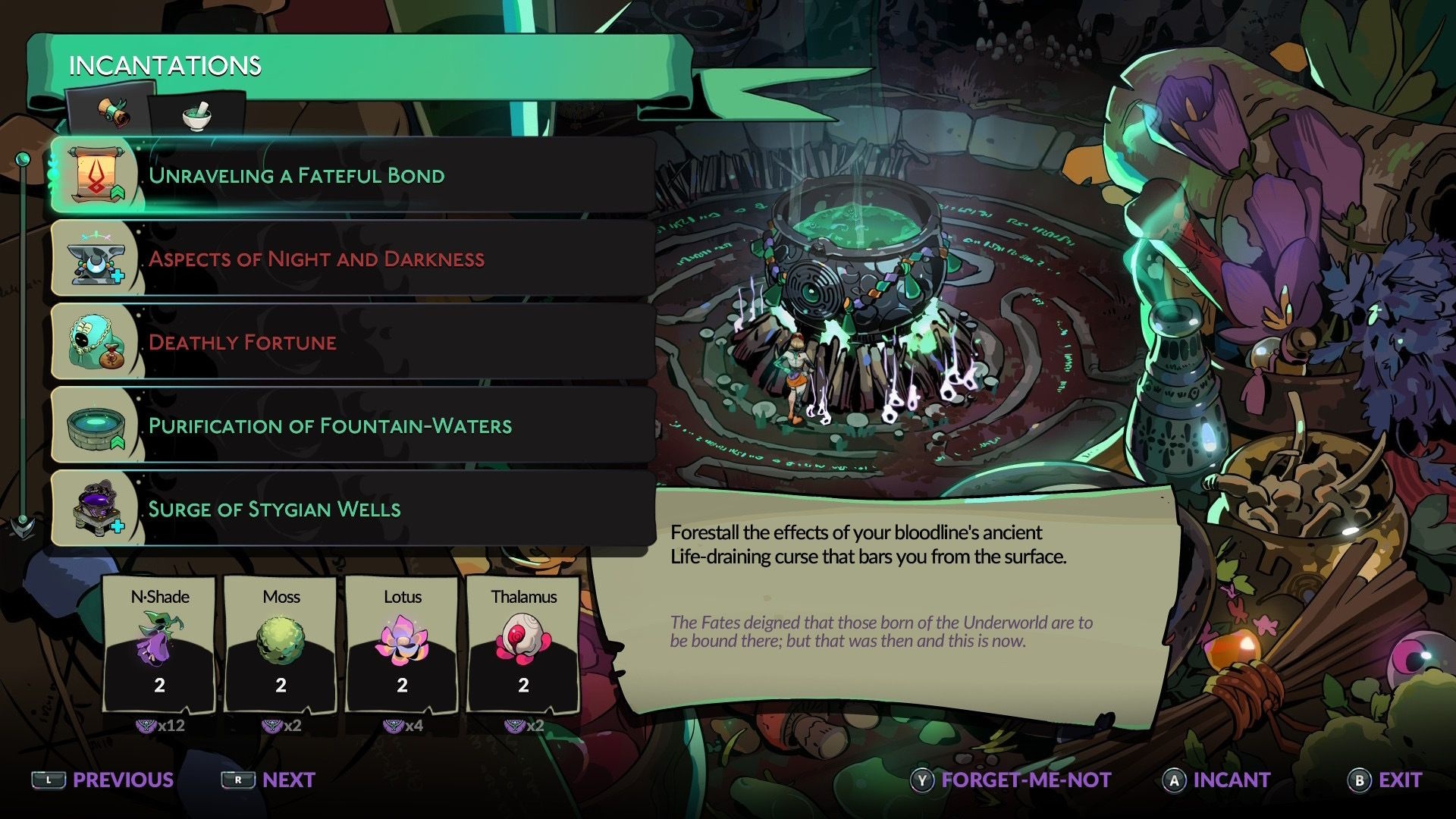
- Cauldron — A hub feature that lets players perform the Night’s Craftwork incantation to exchange resources for permanent upgrades. Some incantations require specific items such as a Moly flower.
- Wretched Broker — A shop that trades currency (Bones) for various resources; the Broker must be summoned by a Cauldron spell.
- Moros tasks — A set of checklist-style objectives that can reward resources; these are tied to summoning via the Cauldron as well.
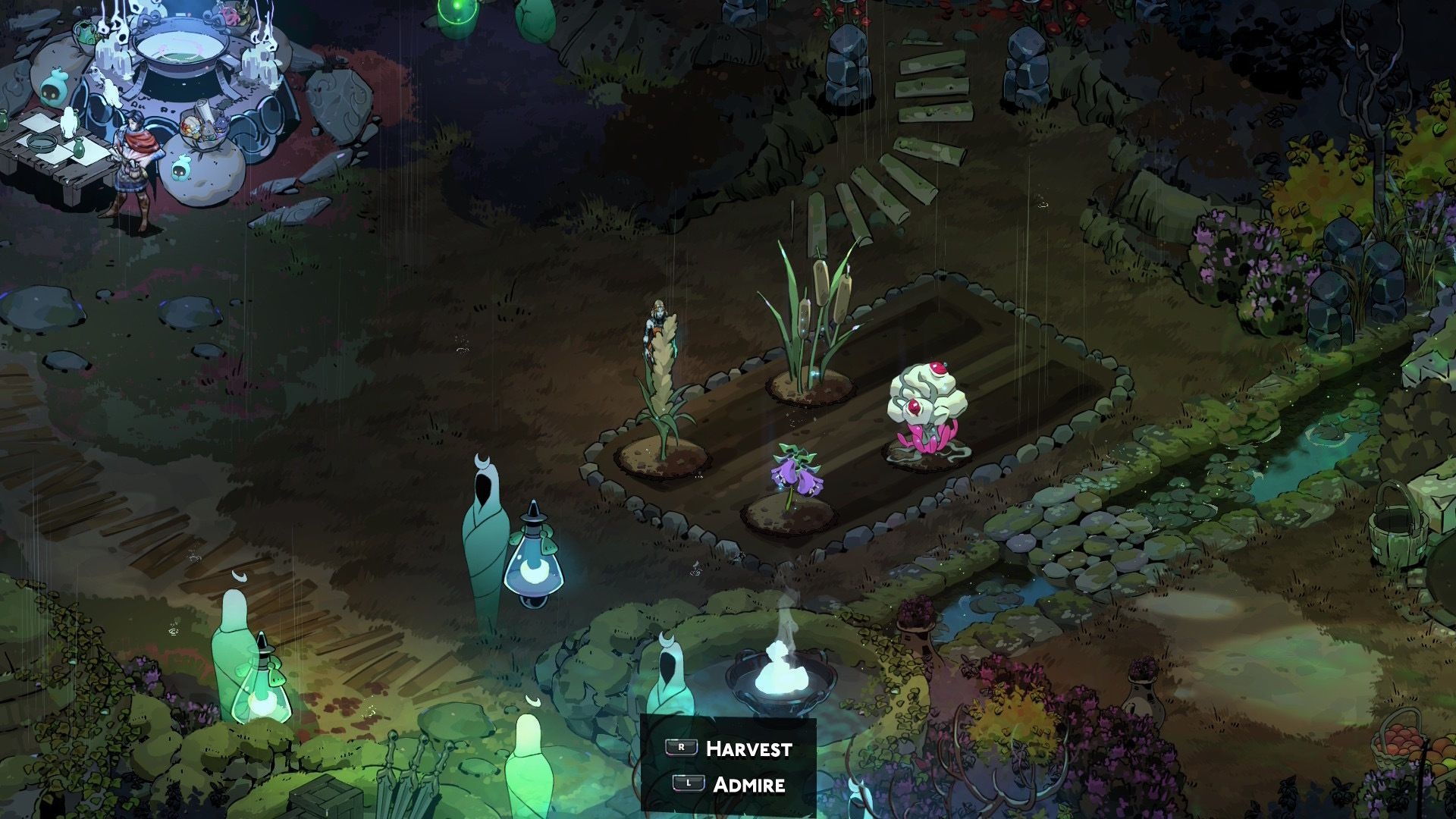
- Farm — A small plot-based mechanic where players plant seeds and wait through runs for plants to grow into specific resources needed for progression.
Resource types listed in the game include, among others: Silver, Bronze, Moss, Iron, Lotus flowers, Cattail flowers, Glassrock, Nightshade, Shaderot, Fate Fabric, Garlic, and Rubbish. Some advancement steps require multiple resources and chained actions. For example, unlocking a second series of biomes requires a Shadow resource obtained after meeting thresholds in Ashes, Psyche, and Fate Fabric, and then completing part of an aboveground segment. Certain plants needed for those biomes — such as Thalamus — must be grown on the farm and rely on seeds that only appear in specific chamber types.
Visuals and audio
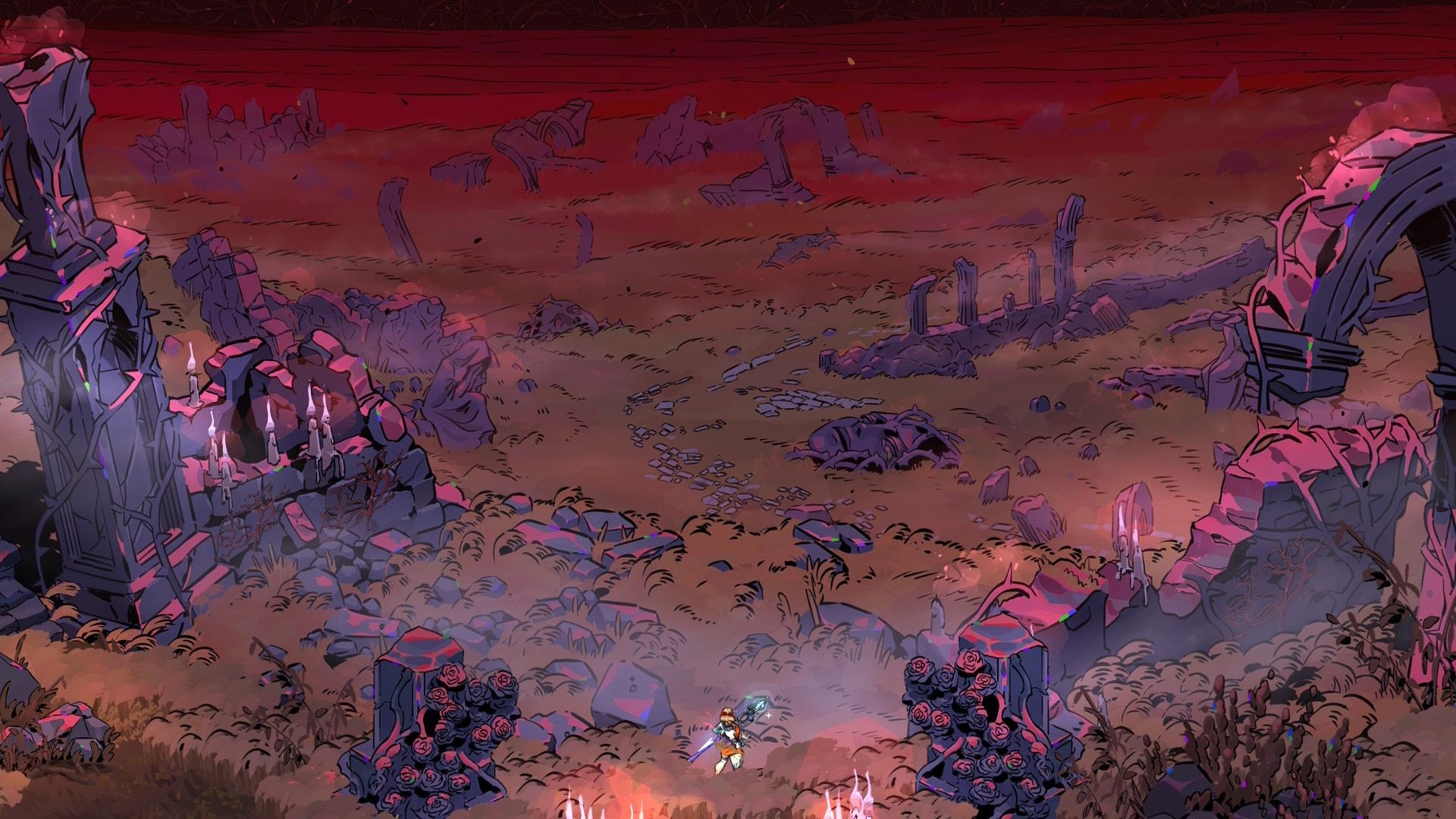
Hades 2 uses a detailed hand-drawn aesthetic similar to previous Supergiant titles. Environment examples in-game include the glades of Erebus and the underwater domain of Oceanus. Composer Darren Korb returned for the soundtrack, and Ashley Barrett performs vocals on several tracks.
Release and platforms
The game left early access and released on September 25 for Nintendo Switch, Nintendo Switch 2, and Windows PC. Supergiant described this as their first sequel; the studio’s previous releases include Bastion, Transistor, Pyre, and the original Hades.
References
The roguelike form and Hades’ influence have prompted many similar titles over the years; examples are listed in a Kotaku feature.