Lego Voyagers Forces Players to Learn Co‑op Puzzles — With Zero Words
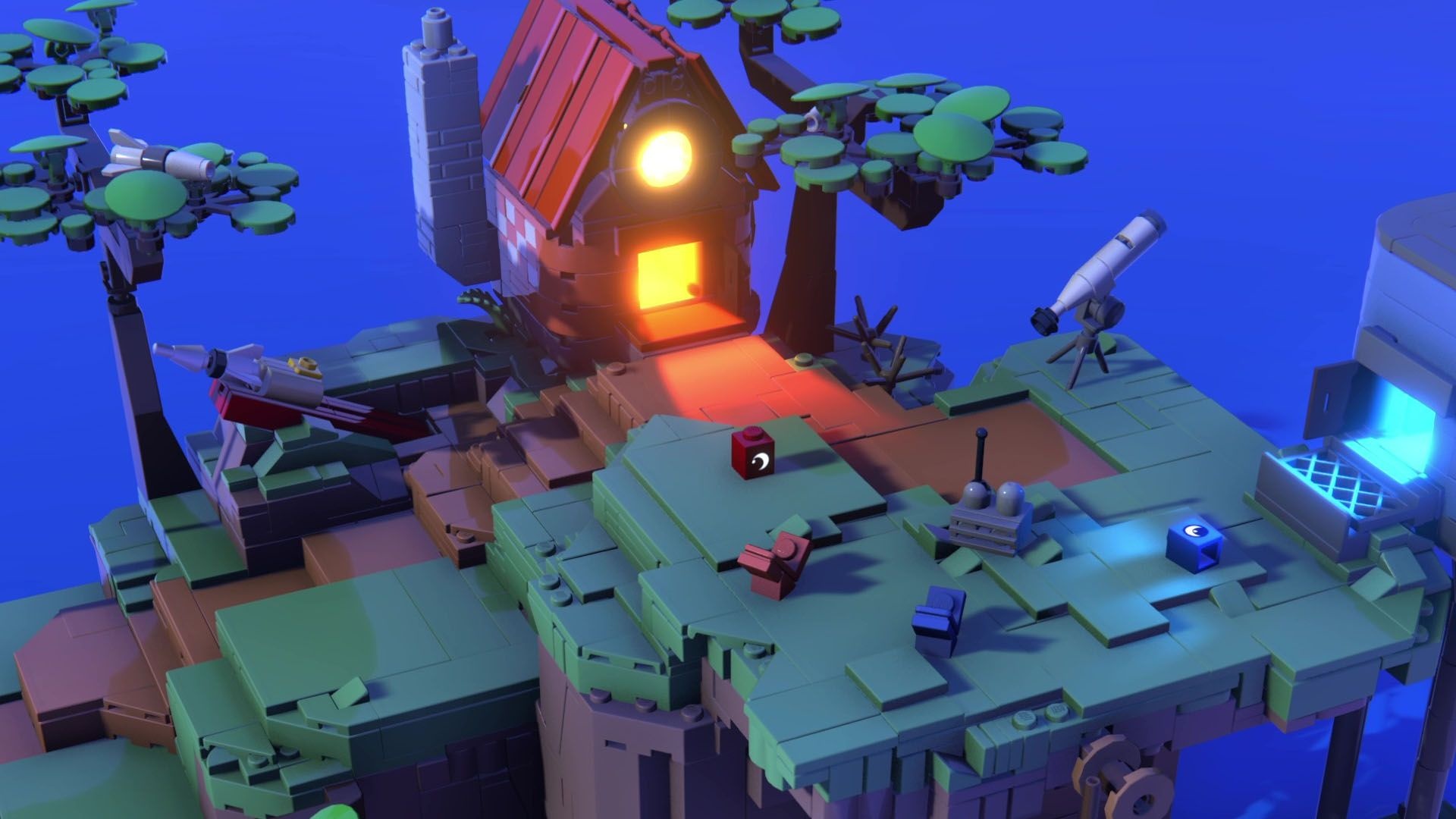
Lego Voyagers is a new two-player puzzle game from Light Brick Studio that asks players to cooperate without any words. The game launches on Sept. 15, and creative director Karsten Lund explained the studio’s approach in a video interview with Polygon: the team removed tutorials, quest logs and written exposition so players must interpret and discover solutions together.
- How the game teaches co-op puzzles
- Design choices: guiding without words
- Toy play and gameplay
- Brick-built art and production
- Dreams, space and the player journey
How the game teaches co-op puzzles
Lego Voyagers removes spoken or written instructions so players must figure things out together. Consequently, there is no quest log and no conventional tutorial system; instead, the level and puzzle design silently indicate what to try next.
According to Karsten Lund, the studio wanted players to use their own judgment while solving problems. “We believe there’s something going on in the interpretive part of the brain that needs to be kept alive at all times, and that it just enjoys things better if it interprets itself or solves its own problems. The worst thing is when a puzzle is spoiled or somebody tells you how to solve it,” Lund said.
Design choices: guiding without words
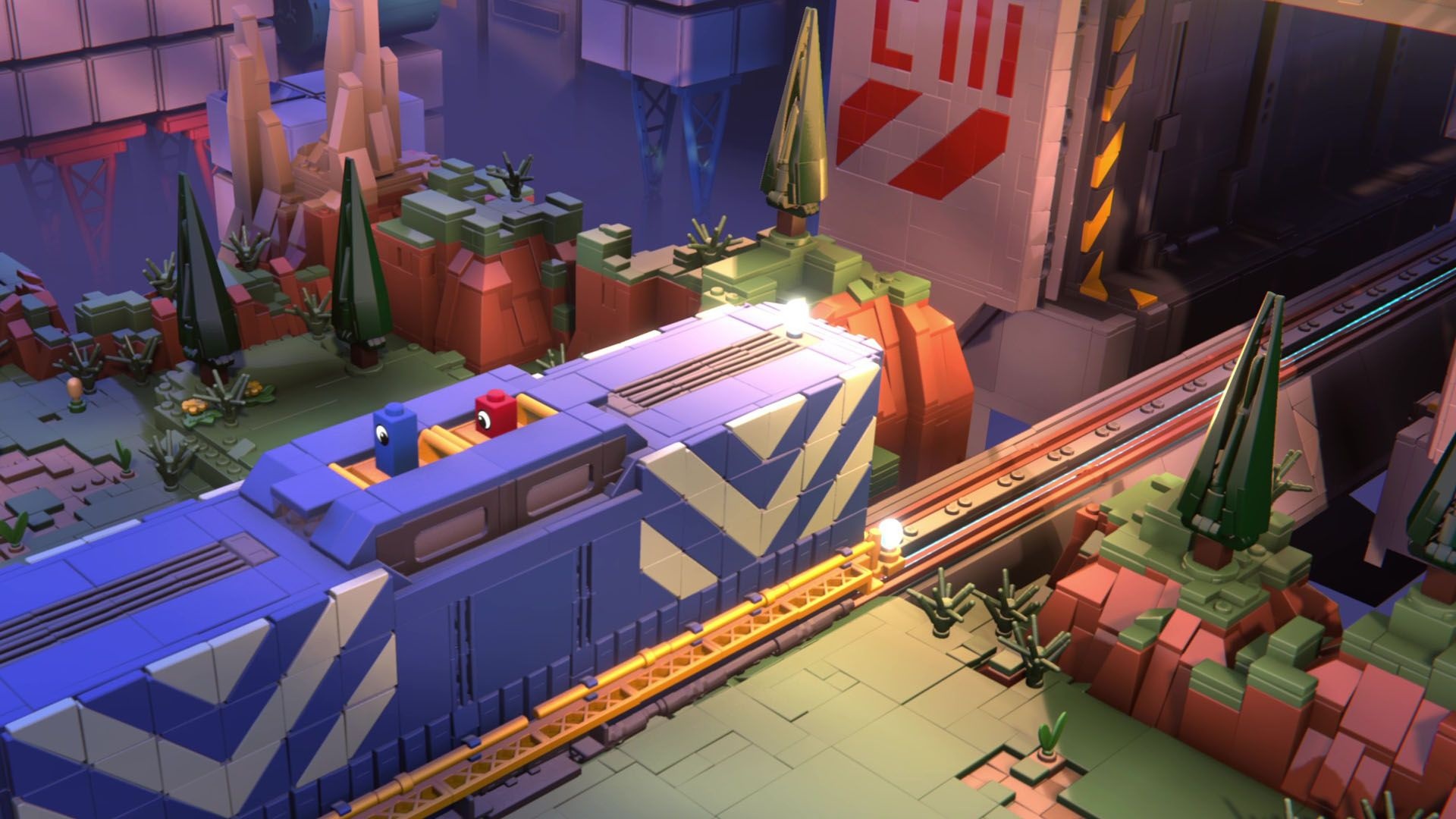
The team balanced freedom and clarity. They allowed players to experiment, but when a solution must be reached the game gives clear visual cues so the point isn’t missed.
“We love to see people try different things until they get it. And if you remove every single tutorial or word or exposition, you have a lot of room for that. But then, when you have to get a point across, you need to be very, very clear,” Lund said.
Toy play and gameplay
Light Brick Studio mixed traditional puzzle design with open-ended “toy play.” The game includes small interactive toys inside levels — such as rockets and popping plants — so players can both solve puzzles and play for play’s sake.
Playful learning is an explicit design goal: the studio wanted players to sometimes make their own rules and experiment, not only chase quantifiable outcomes.
“Toy play and game play, they are very different things,” Lund said. “Where game play is a sort of quantifiable outcome play, where we wanna complete stuff, wanna move further, you wanna ‘beat the game’ — which is fun in itself — toy play is for no reason, just for the sake of it. You make your own rules, you experiment, you try. We wanted to try to add more of that in there, because we believe it also represents the Lego idea.”
Brick-built art and production
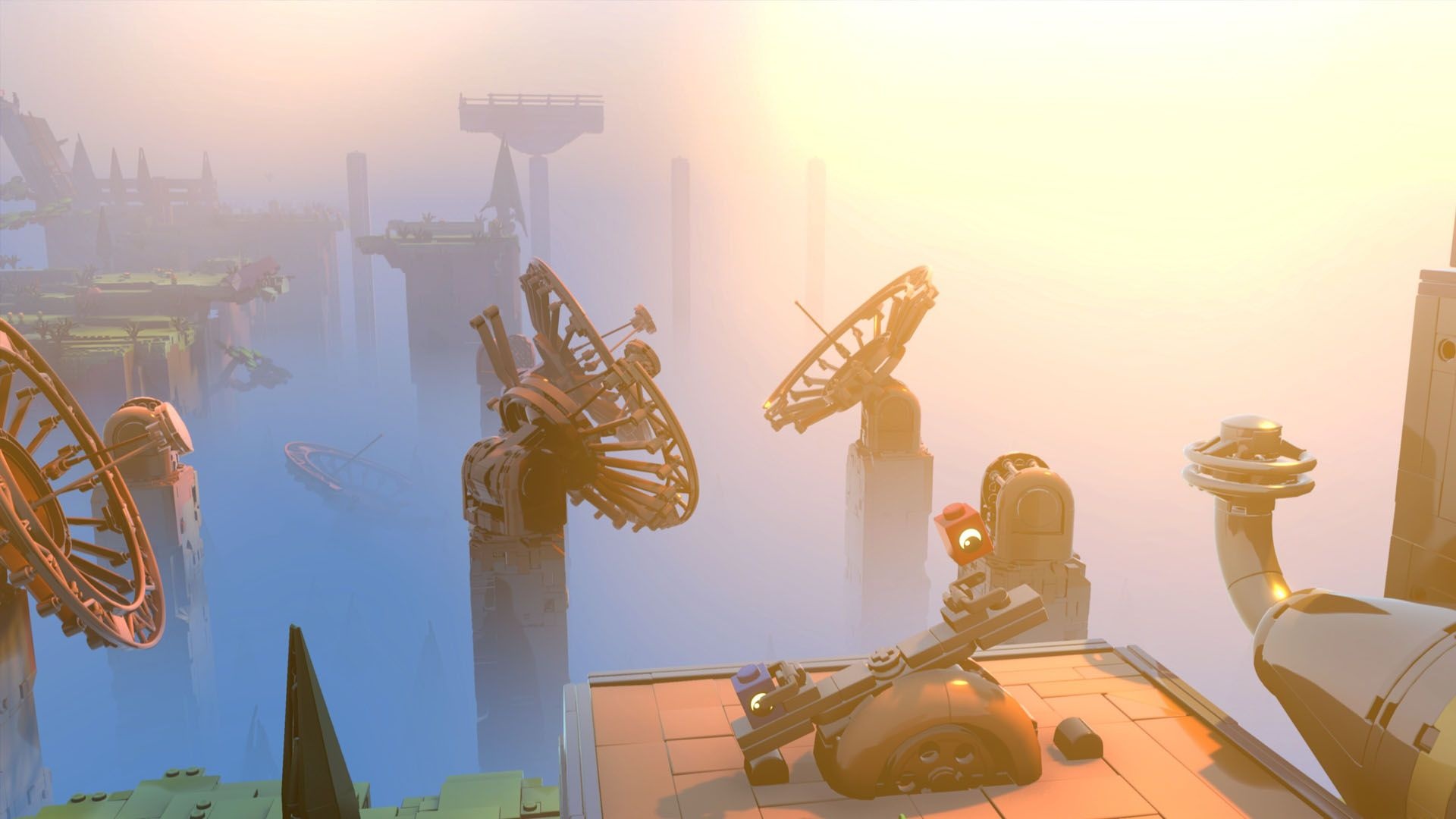
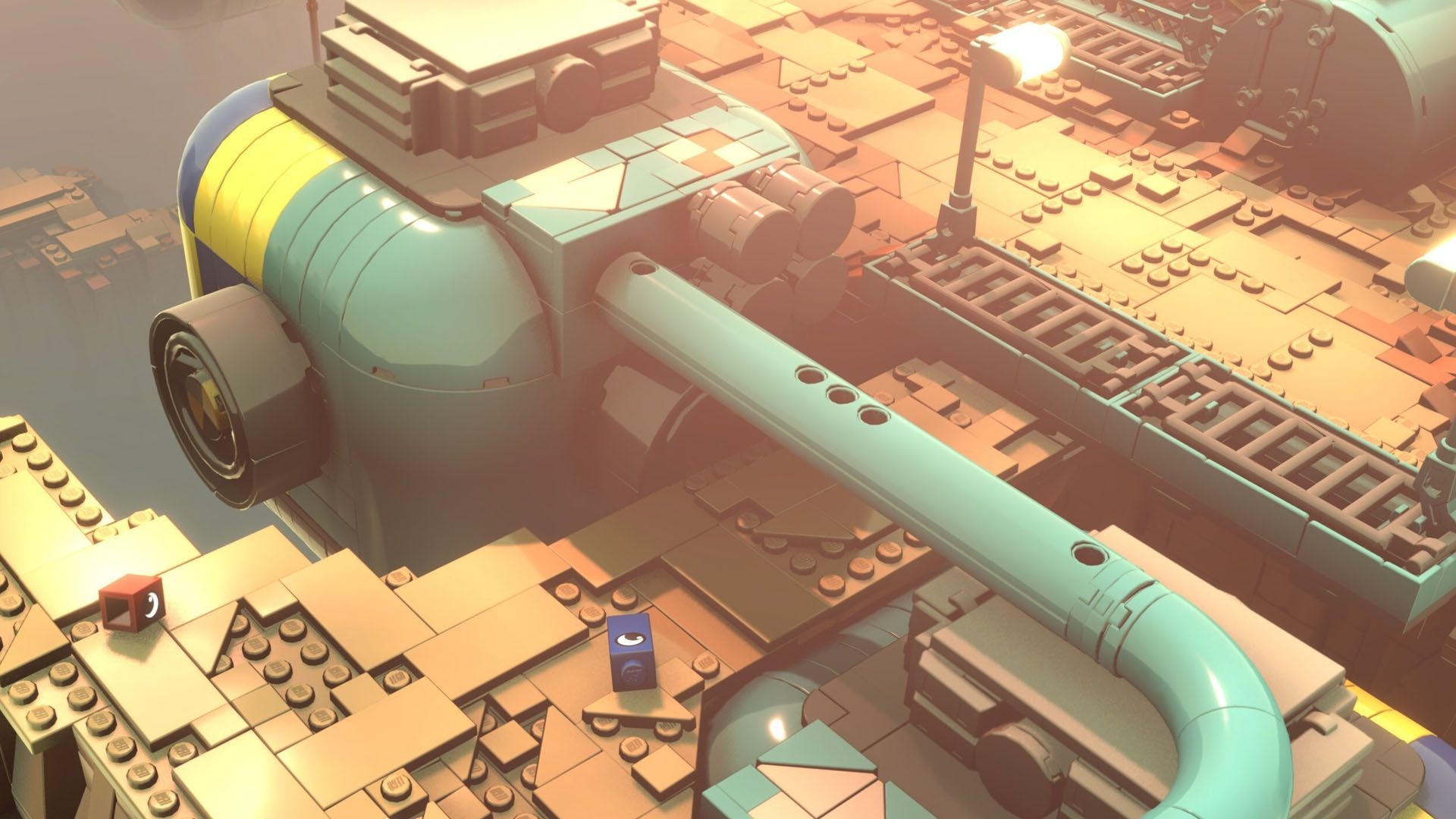
The game’s visuals are built from Lego bricks wherever possible. Lund said the studio employed Lego masters and former Lego employees to find small, native brick combinations that express animals and objects clearly.
“We are trying to celebrate the brick for its own sake. So everything is obviously brick-built in the game, apart from the water. But we also tried to brick-built the entities in the game, like the animals, for instance. We have crabs that are made out of one single brick with two clips, birds that are made of only a few bricks,” Lund said. “Our ethos is to try to use native bricks, if you will, the simplest brick possible, and combine them in very small models but still retain the visual expression of what it is representing.”
Dreams, space and the player journey
The characters in Lego Voyagers are motivated by a shared dream — to become astronauts — and the game frames space as a symbol of that dreaming. The studio built a narrative, but the experience is meant to be shaped by each player.
“What space represents in this game is the dream. And I think that a voyage is a big journey,” Lund said. “These two friends, they just dream about becoming astronauts, which a lot of Lego bricks do, actually. But it’s something we can all relate to. Building our own rocket and diving into that dream. Playing in general is about dreaming, and about pretending something for a period of time.”