Lego Voyagers Makes Two 1×1 Bricks the Cutest Co‑op Duo — and It’s Surprisingly Tricky

Lego Voyagers is a co-op puzzle-platformer from Danish developer Light Brick Studio and publisher Annapurna Interactive. It launches on Sept. 15 for PlayStation 4, PlayStation 5, Nintendo Switch, Windows PC, and Xbox Series X. The game requires two players to progress, has a grid-based building system, and was reviewed on PlayStation 5 from a prerelease code supplied by Annapurna Interactive.
- Gameplay and mechanics
- Controls and building system
- Presentation, world and structure
- Release and review notes
What Lego Voyagers is
Lego Voyagers is a two-player, co-op only puzzle-platform adventure. Players control two tiny Lego bricks — one red, one blue — and work together to traverse a series of handcrafted Lego environments. Light Brick Studio, the developer behind 2019’s Lego Builder’s Journey, built Voyagers as a follow-up that expands into a longer, more traditionally structured adventure.
Gameplay and mechanics
Each player moves a 1×1 brick that can roll, jump, snap onto studs, and attach to other bricks. The core loop centers on snapping bricks to studs, linking the two player-bricks together or to loose bricks in the environment, and rearranging those pieces to form paths and bridges.
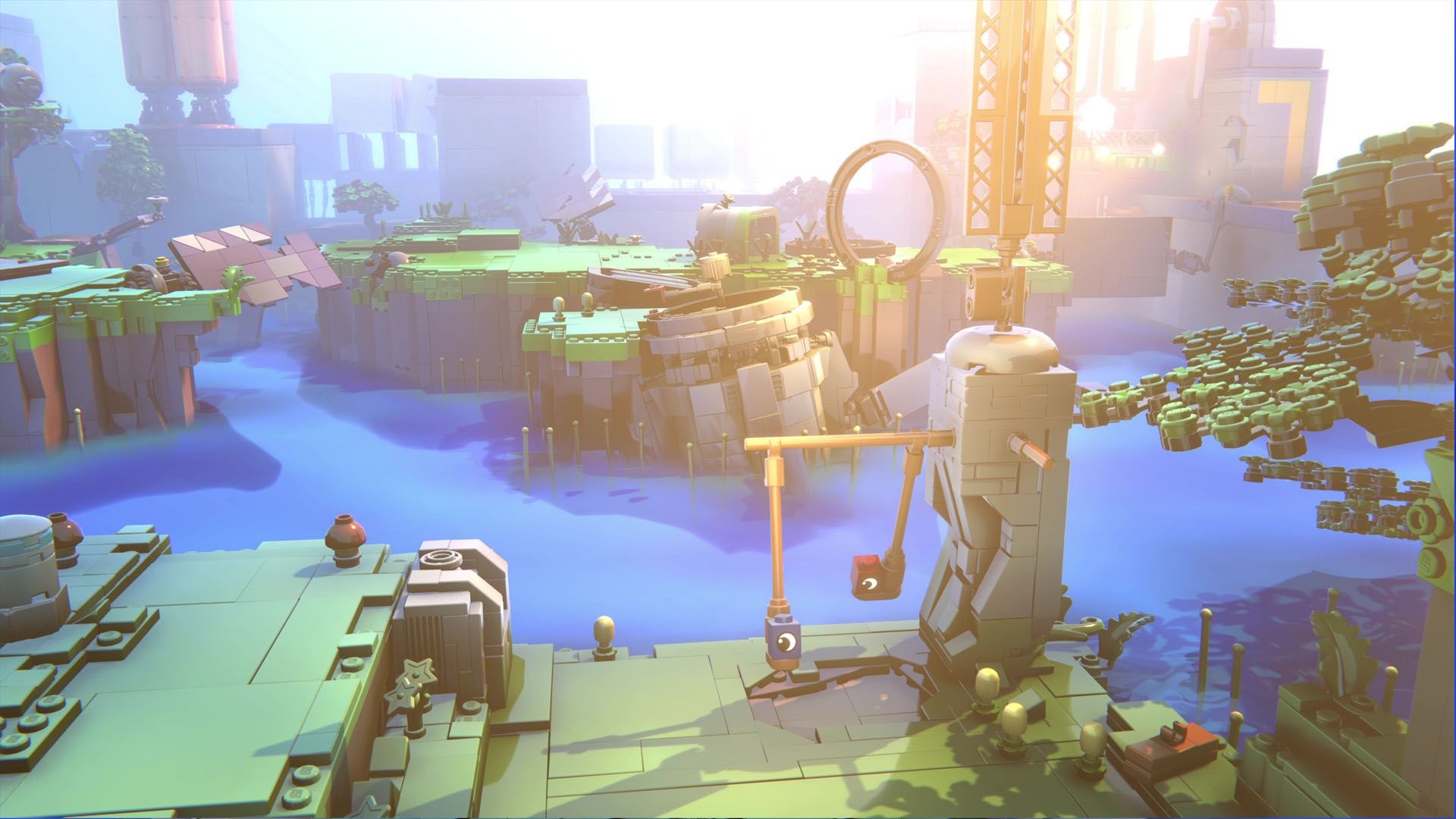
Progression takes the bricks from pastoral scenes — meadows and streams — toward industrial areas such as gantries and satellite dishes. Along the way, players encounter environmental puzzles that require timing, positioning, and coordination between the two bricks. The game is strictly cooperative: puzzles are designed around having two participants rather than a single-player solution.
Controls and building system
The building system snaps the player-brick and carried bricks to a grid and provides a rotate button for orientation. This gives a limited, structured way to place pieces rather than a freeform construction tool. As a result, the system supports puzzle solutions and simple structures like bridges, but it does not enable elaborate, open-ended builds.
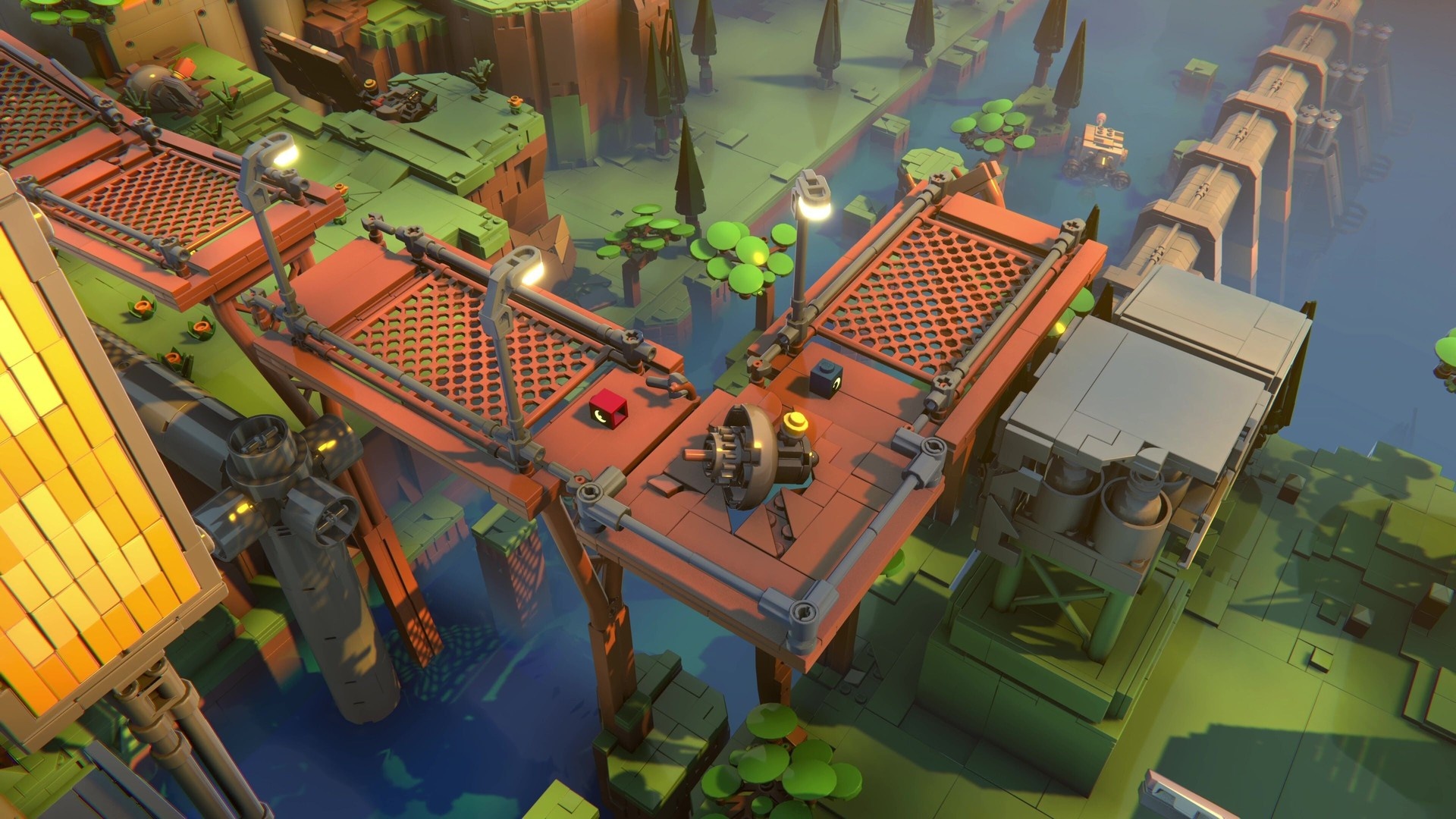
Movement and physics feature a tumbling inertia: bricks roll and wobble, and the combined shapes can move unpredictably. Consequently, some platforming and assembly actions can feel imprecise and require practice to master. The design favors communication between players, including nonverbal cues, to solve puzzles efficiently.
Presentation, world and structure
Voyagers presents its environments in a restrained Lego aesthetic: modular builds, colour-coded elements, and a mix of domestic and technological sets. The narrative setup begins with the two bricks watching a rocket launch; debris from that launch opens their path into the wider world. Developers do not populate the world with other playable bricks during the game, and the environments remain mostly quiet until later events near the end.
Levels are arranged to shift tone and scale as the game progresses, moving from small dioramas to larger mechanical builds. Many puzzles are deliberate and require cooperation rather than fast reflexes, while platforming sections lean on the bricks’ rolling physics.
Release and review notes
Lego Voyagers releases on Sept. 15 for PlayStation 4, PlayStation 5, Nintendo Switch, Windows PC, and Xbox Series X. The review copy used here was a prerelease PlayStation 5 download code provided by Annapurna Interactive.
Light Brick Studio is based in Denmark and previously released Lego Builder’s Journey, which initially launched on Apple Arcade. Voyagers continues the studio’s focus on Lego-focused puzzles and tactile, design-oriented gameplay.