MTG’s Mark Rosewater: The Five-Color Puzzle Was the Biggest Hurdle for Universes Beyond

MTG head designer Mark Rosewater said the toughest part of adapting Universes Beyond sets is fitting Magic’s five-color system into worlds that weren’t built around it. He made the remarks during a press event at Wizards’ headquarters introducing the upcoming Marvel’s Spider-Man set, and he singled out the game’s color pie as a core design challenge.
What Rosewater said
During the press conference, Rosewater described the issue as a major design problem. He explained that translating Magic’s embedded lore — specifically the color pie — into other properties required deliberate solutions.
“It was one of the driving things that had to be solved in design,” he said during the press conference. “It was probably the number one problem to be solved. They did solve it. It’s very cool.”
He went on to note the tension between Magic’s built-in system and outside universes. “One of the big pushes Wizards has been doing for years now is Universes Beyond obviously,” Rosewater said, “with the embedded lore of Magic itself. It’s not necessarily easy, but you have kind of a built-in system for defining colors and stuff. The challenge has been to introduce this somewhat rigid, but somewhat flexible system into universes that were never designed with this in mind.”
“One of the biggest challenges of doing Universes Beyond is making sure the color pie reflects what is going on in the way it reflects the property but doesn’t contradict the color pie. And, yeah, I think it’s one of the hardest things about doing Universes Beyond.”

Why the five colors are a problem
The core of Magic: The Gathering is the five-color pie — white, blue, black, red and green — and their interactions. Therefore, when a set is based on an external IP, designers must decide how those colors map to the new setting. This is easier for some properties, and much harder for others.
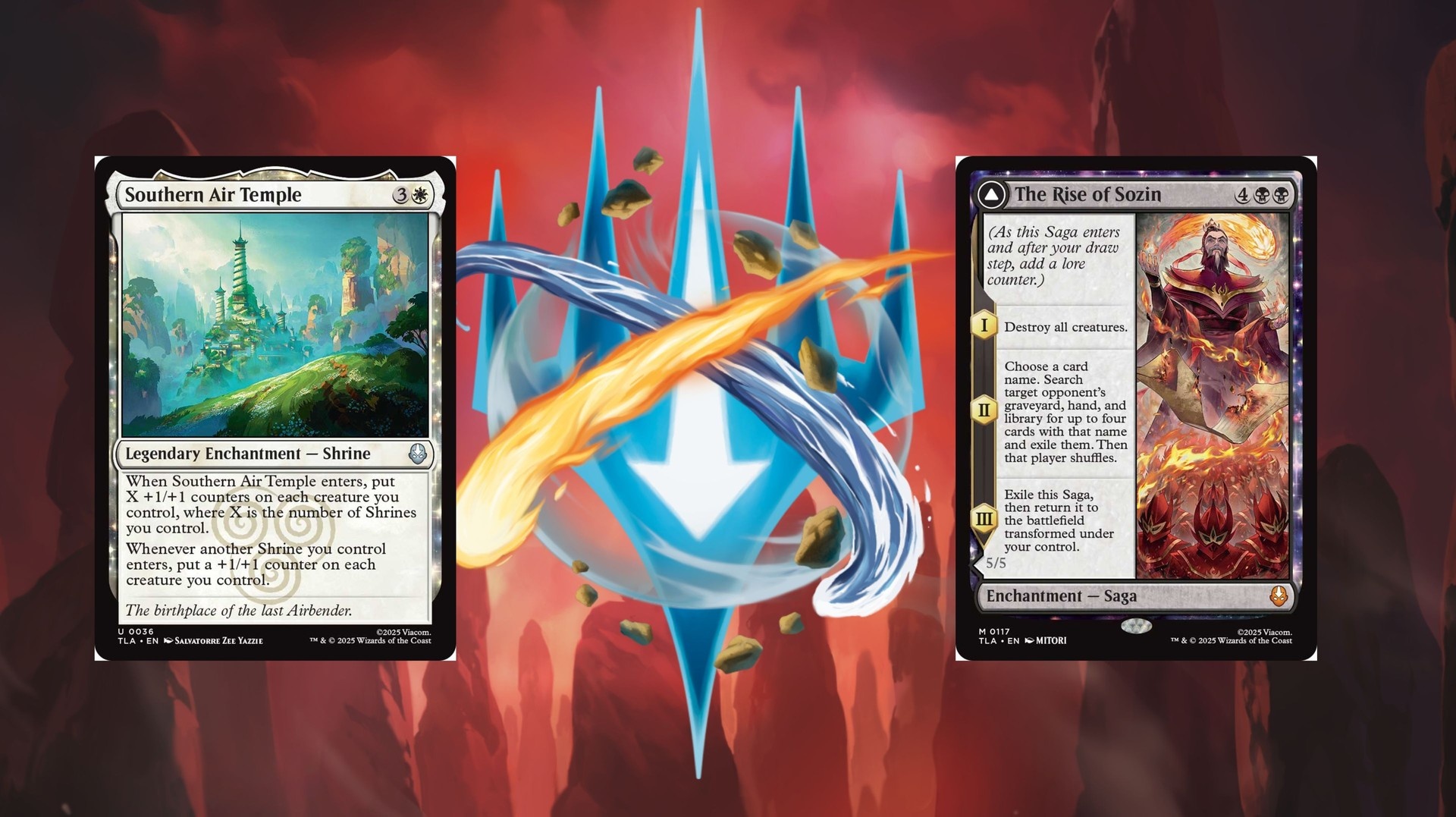
For example, Avatar: The Last Airbender is built around four elements. Consequently, fitting a five-color model into that four-part system creates a clear mismatch. Designers need to keep the resulting cards faithful to the property, and yet not contradict Magic’s established color identities.
Design constraints
Designers must balance two aims. First, they need the set to feel true to the source material. Second, they must preserve Magic’s gameplay and color philosophy. As Rosewater noted, the system is “somewhat rigid, but somewhat flexible,” and that tension is central to the work.
Examples and context
There are concrete market and play impacts tied to Universes Beyond releases. For instance, the Final Fantasy Universes Beyond set became the best-selling MTG set ever, reportedly generating $200 million in sales on its first day.
At the same time, some Universes Beyond cards that were legal in Standard caused controversy. The card Vivi Ornitier notably reshaped the metagame after release, which led to player complaints about balance and format health.
Wizards continues to produce Universes Beyond sets, and designers are iterating on how to adapt the color pie to different worlds. The Avatar set is scheduled for November, and the Marvel’s Spider-Man set was the topic of the press event where Rosewater spoke.
Bottom line: Wizards is aware of the challenge. Designers have identified the color pie as a major design hurdle and say they have worked to solve it while keeping sets true to their source properties.