MTG’s Spider-Man Bonus Sheet Turns Classic Comic Panels into Must-Have Cards — See the Standouts
Wizards of the Coast included a Marvel’s Universe bonus sheet in the Marvel’s Spider-Man Universes Beyond release, and it reproduces a number of classic Spider-Man comic panels and covers. The sheet appears in both Play Boosters and Collector Boosters, and the art on several MTG cards ties directly to specific comic issues, artists, and landmark moments in Spider-Man history.
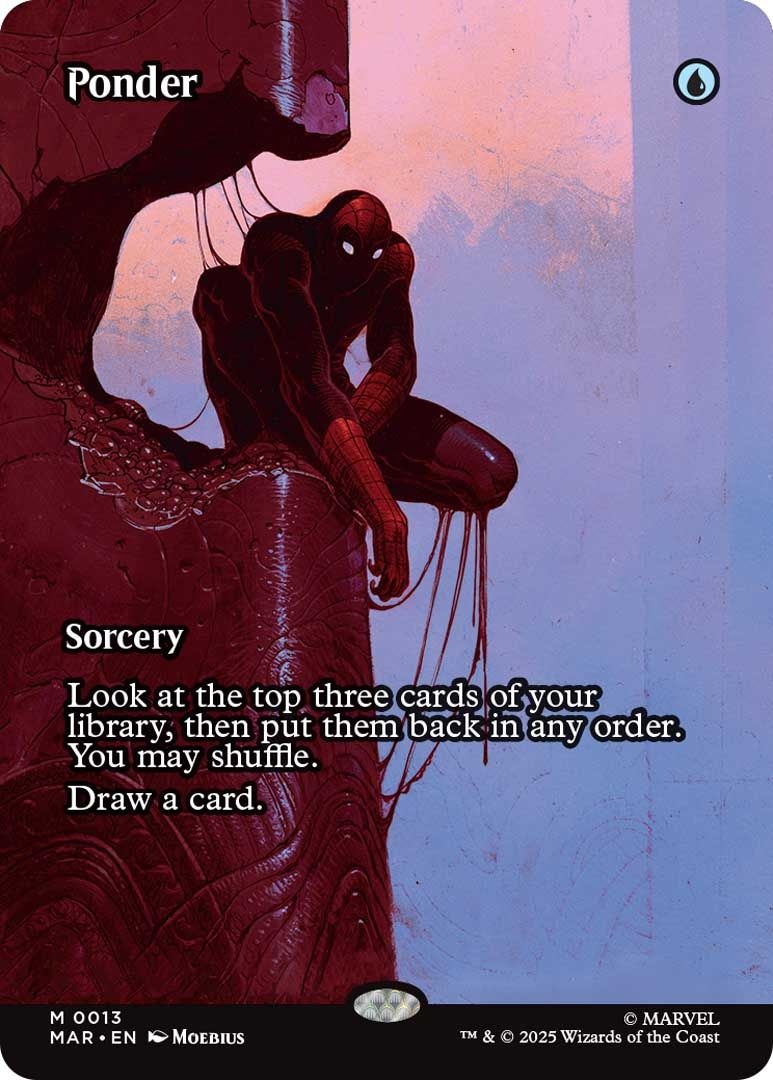
- Ponder — Moebius, Amazing Spider-Man #800 (2018)
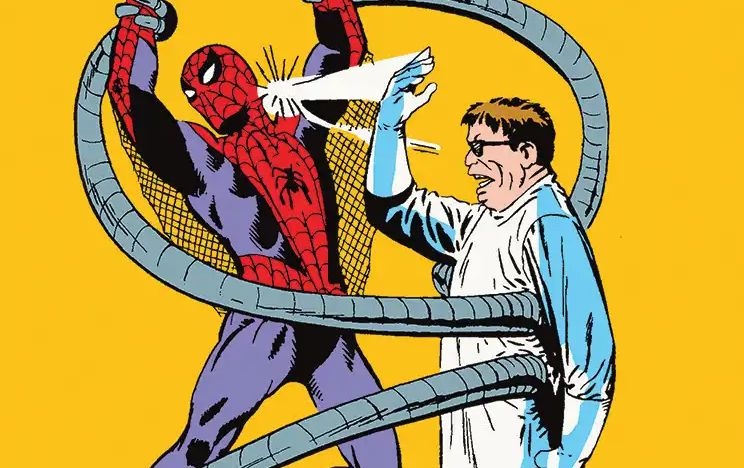
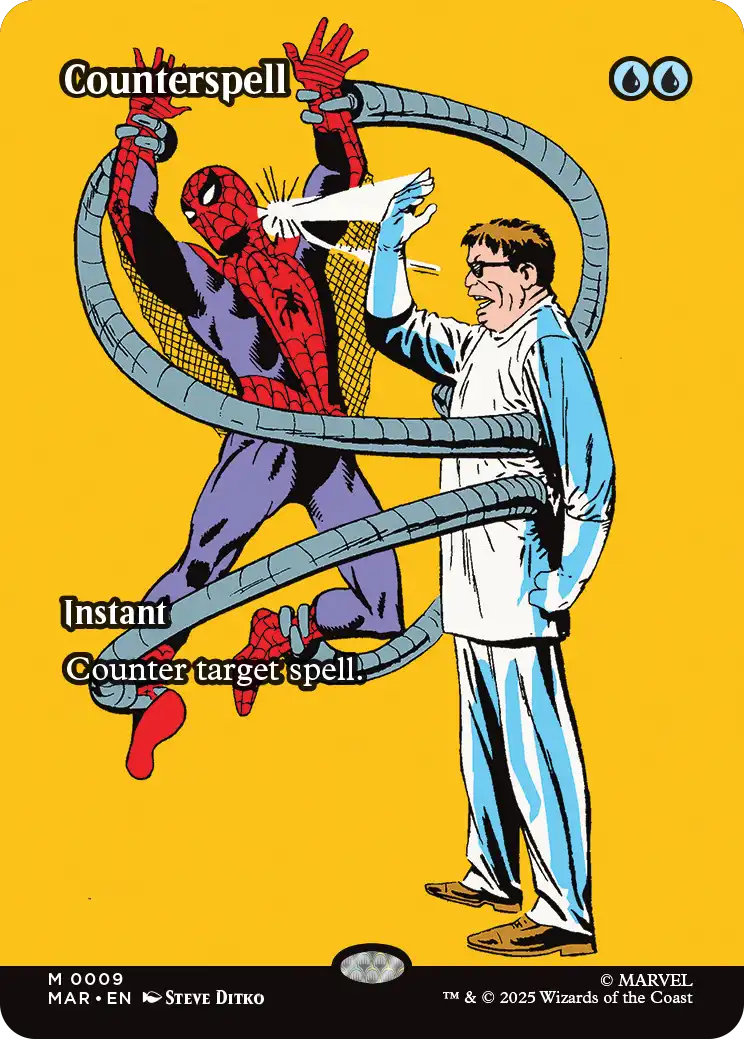
- Counterspell — Steve Ditko / Amazing Spider-Man #3 (1963)
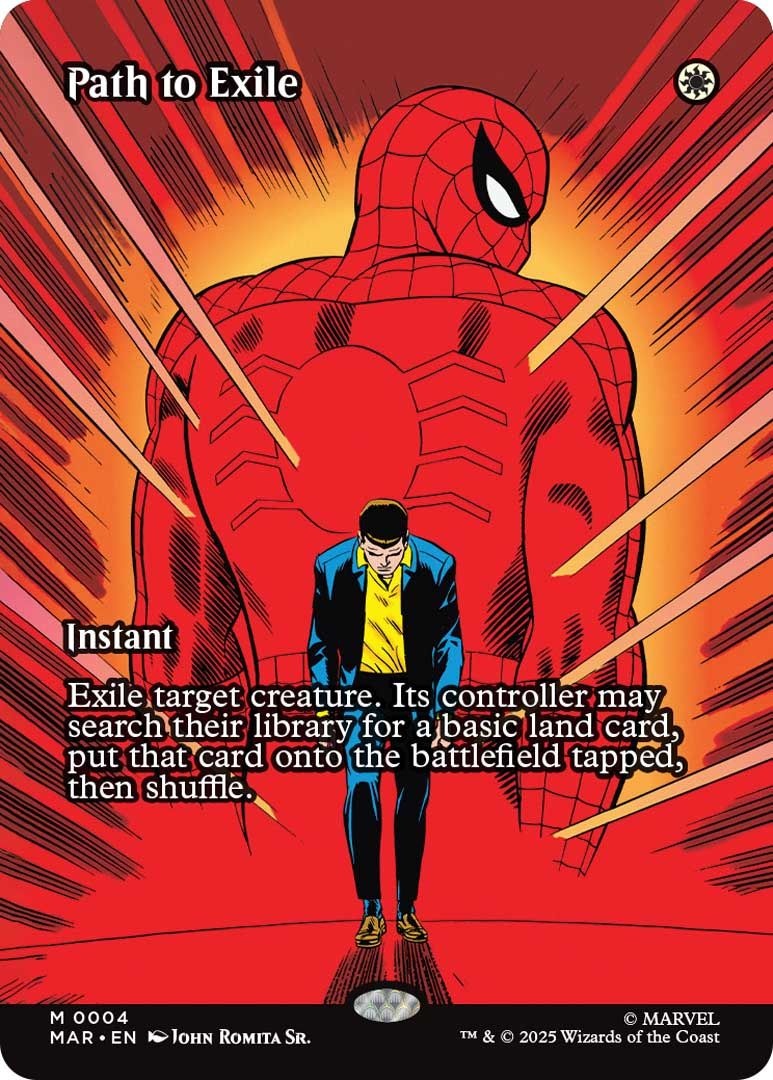
- Path to Exile — John Romita Sr., Amazing Spider-Man #50 (1967)
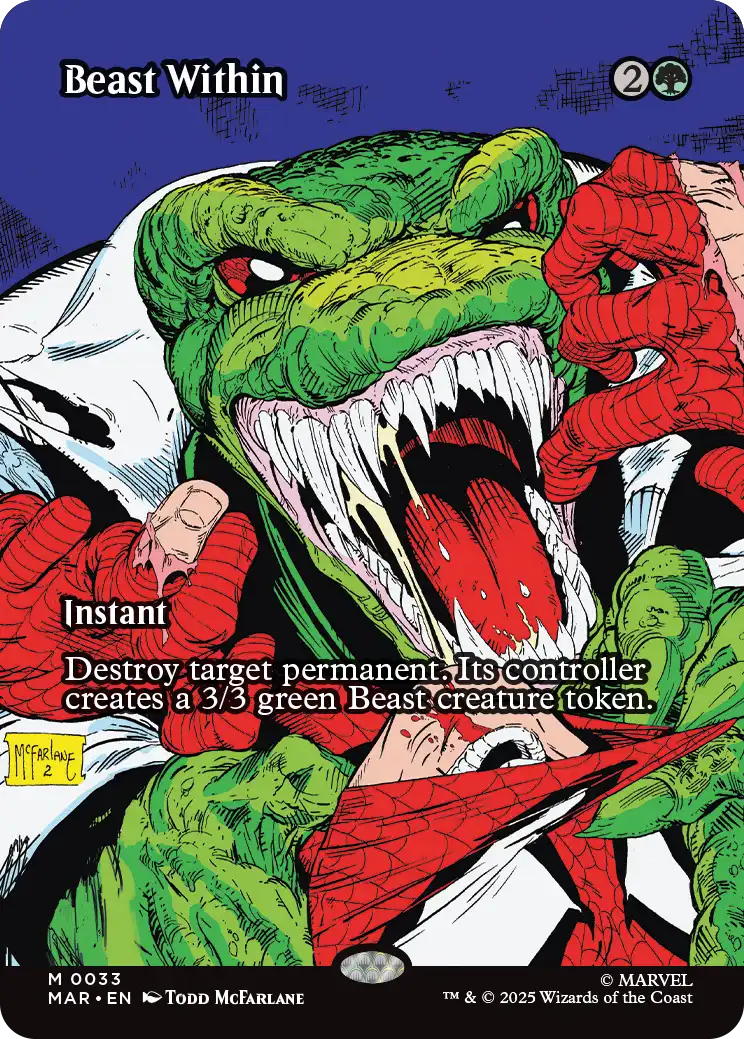
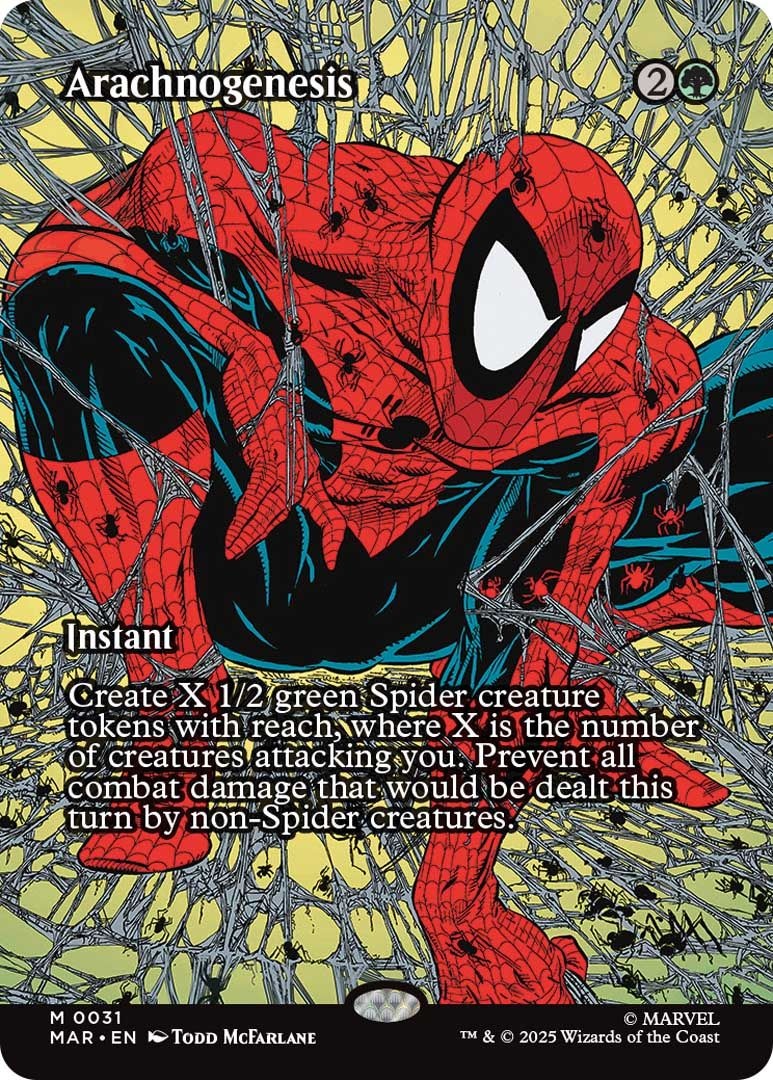
- Beast Within / Arachnogenesis — Todd McFarlane (1987)
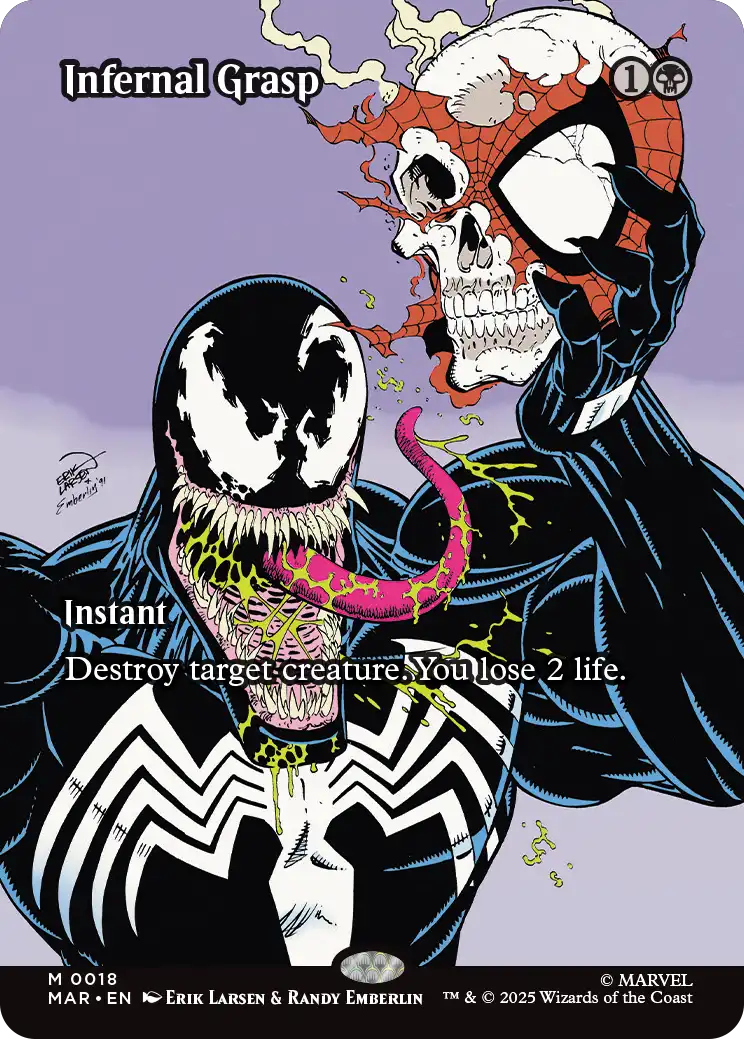
- Infernal Grasp — Erik Larsen, Amazing Spider-Man #347
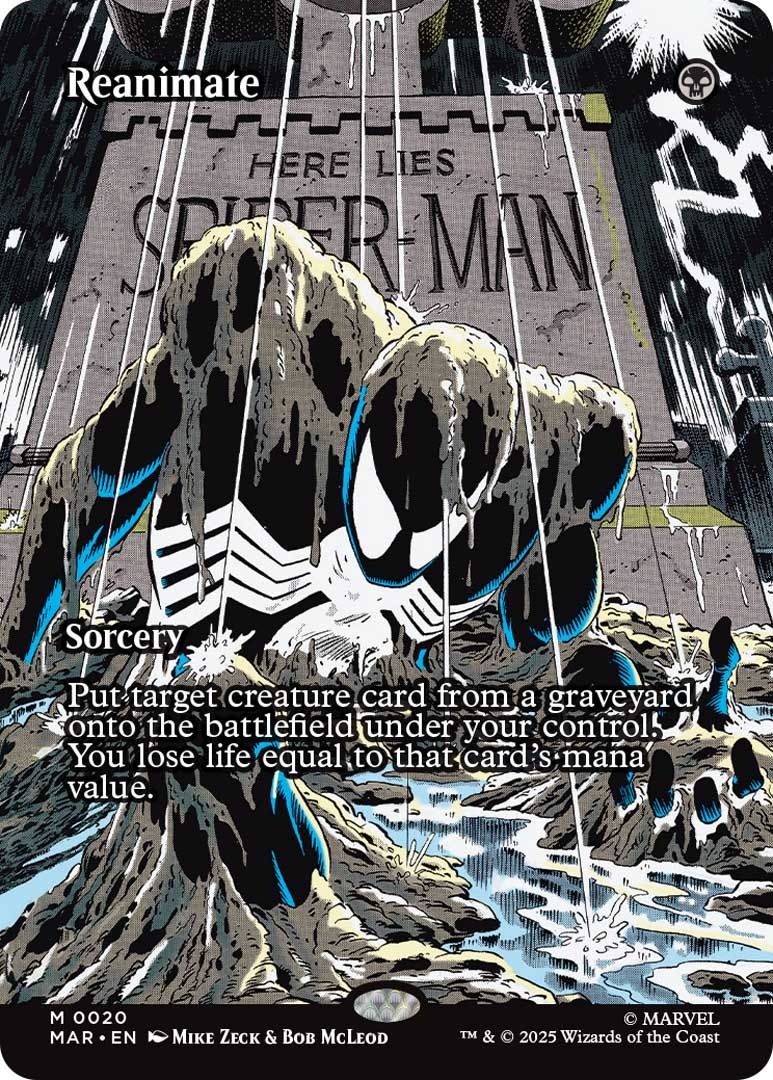
- Reanimate — Kraven’s Last Hunt, Mike Zeck
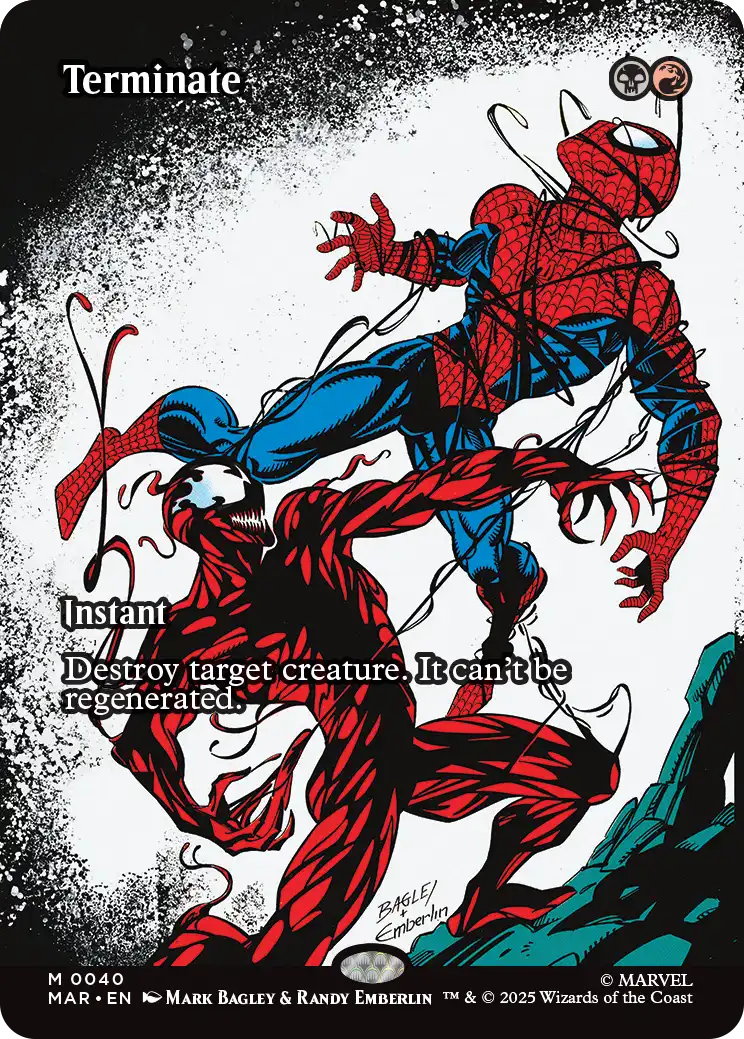
- Terminate — Mark Bagley; likely from the Maximum Carnage era
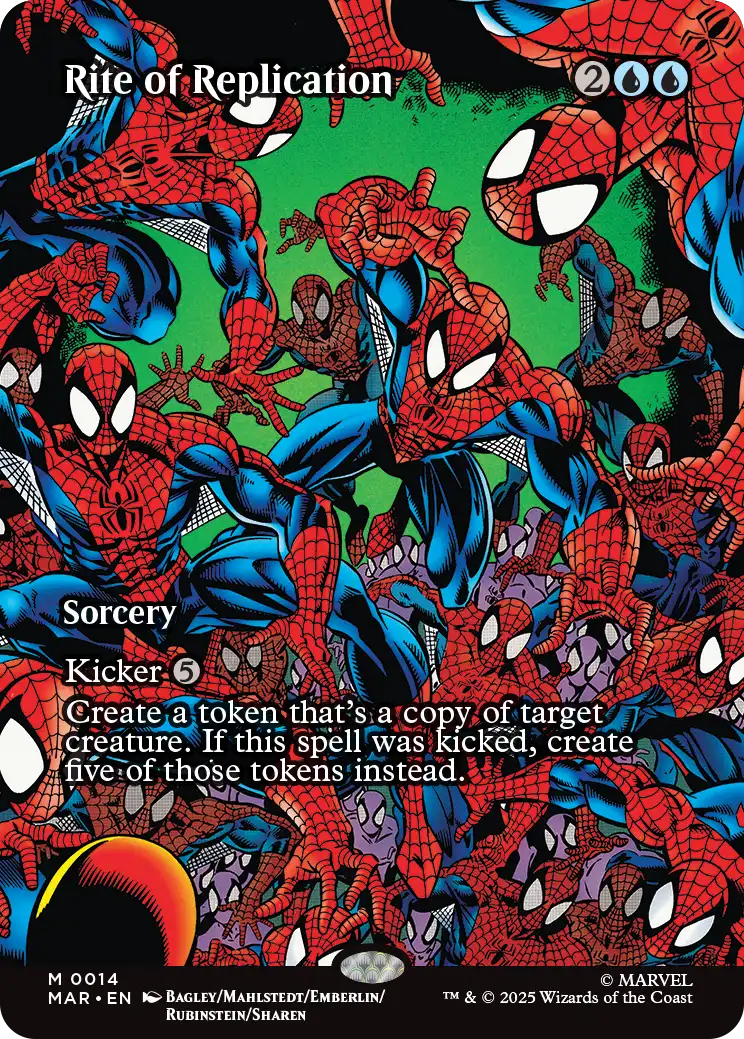
- Rite of Replication — the Clone Saga
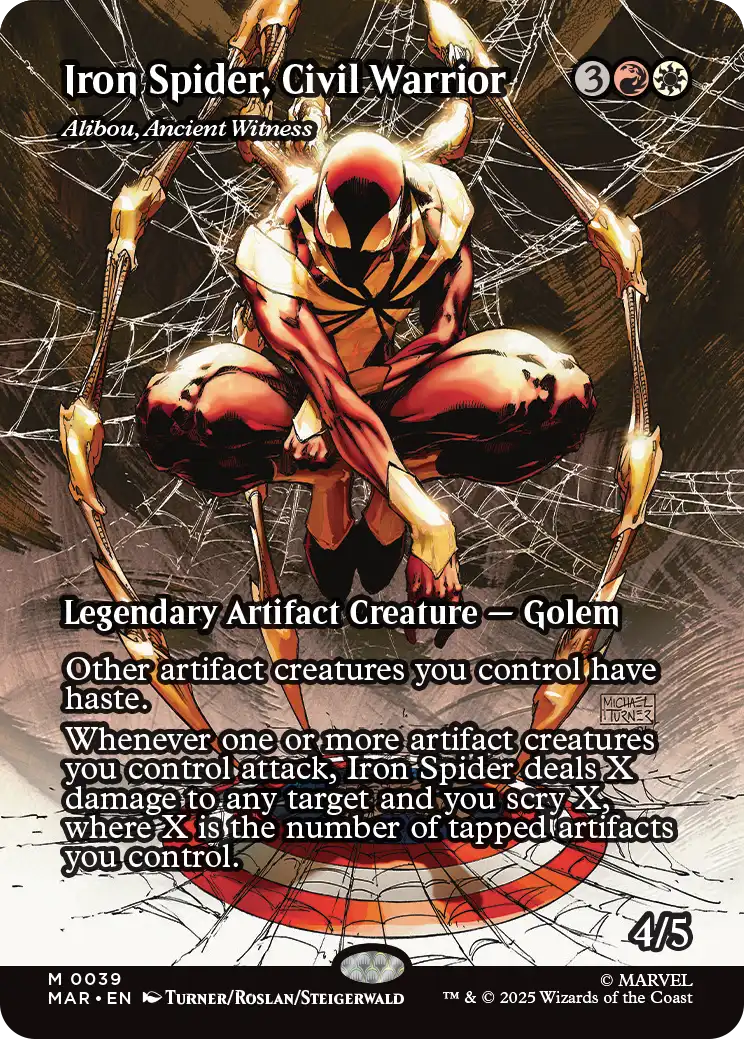
- Iron Spider / Civil Warrior — Civil War unmasking and Stark suit
Ponder — Moebius, Amazing Spider-Man #800 (2018)
The Ponder card uses a Spider-Man image originally drawn by Jean Giraud (Moebius) that appeared in Amazing Spider-Man #800 (2018). Moebius contributed a distinct, surreal visual style to that anniversary issue, and his piece was part of a lineup of top-tier artists celebrating Spider-Man’s history.
Counterspell — Steve Ditko / Amazing Spider-Man #3 (1963)
The Counterspell art reproduces a panel from Amazing Spider-Man #3 (1963), the issue that features Doctor Octopus’s first appearance. The original issue lists Stan Lee as writer and Steve Ditko as artist, and the panel is historically notable as early Spider-Man/Doc Ock material.
Path to Exile — John Romita Sr., Amazing Spider-Man #50 (1967)
Path to Exile showcases the cover art from Amazing Spider-Man #50 (1967), the start of the “Spider-Man No More!” sequence. The cover is by John Romita Sr. and is widely cited as one of the character’s most iconic, wordless compositions conveying Peter Parker’s frustration.
Beast Within / Arachnogenesis — Todd McFarlane (1987)
Two MTG cards — Beast Within and Arachnogenesis — display artwork in the style Todd McFarlane popularized during his run on Amazing Spider-Man starting in 1987. McFarlane’s work emphasized an exaggerated, highly detailed anatomy and a darker, more animalistic take on Spider-Man and his foes.
Infernal Grasp — Erik Larsen, Amazing Spider-Man #347
Infernal Grasp uses cover art associated with Erik Larsen’s depictions of Venom, specifically tied to the Venom Returns arc and the cover of Amazing Spider-Man #347. Larsen contributed visual elements such as an extended tongue and a more monstrous design for Venom during his time on the title.
Reanimate — Kraven’s Last Hunt, Mike Zeck
Reanimate reproduces the climactic imagery from Kraven’s Last Hunt, a story commonly cited as one of Spider-Man’s most influential modern-era arcs. The sequence showing Spider-Man emerging from a grave originally appeared in that crossover and is associated with artist Mike Zeck’s photorealistic approach in the storyline.
Terminate — Mark Bagley; likely from the Maximum Carnage era
Terminate features art credited to Mark Bagley, an artist known for long runs on Spider-Man titles and for co-creating the character Carnage with writer David Michelinie. The panel used on the card is consistent with Bagley’s 1990s style and likely originates from the early-to-mid ’90s period that included the Maximum Carnage event, though a specific single-issue citation was not confirmed.
Rite of Replication — the Clone Saga
Rite of Replication uses Clone Saga-era imagery. The Clone Saga was a major mid-1990s Spider-Man event that produced many memorable and controversial moments. For a concise explanation, see a summary of this convoluted storyline.
Iron Spider / Civil Warrior — Civil War unmasking and Stark suit
The Iron Spider and Civil Warrior cards reference the Civil War event, specifically Spider-Man’s public unmasking and his use of Tony Stark–designed armor during the storyline. Civil War represented a major Marvel crossover that changed several character statuses for a time and introduced story beats such as registration and public identity revelations.