Norman Pinkus Is the Riddler Now — Batman: Revolution Unveils a Bold Burtonverse Reboot with Stunning Joe Quinones Art
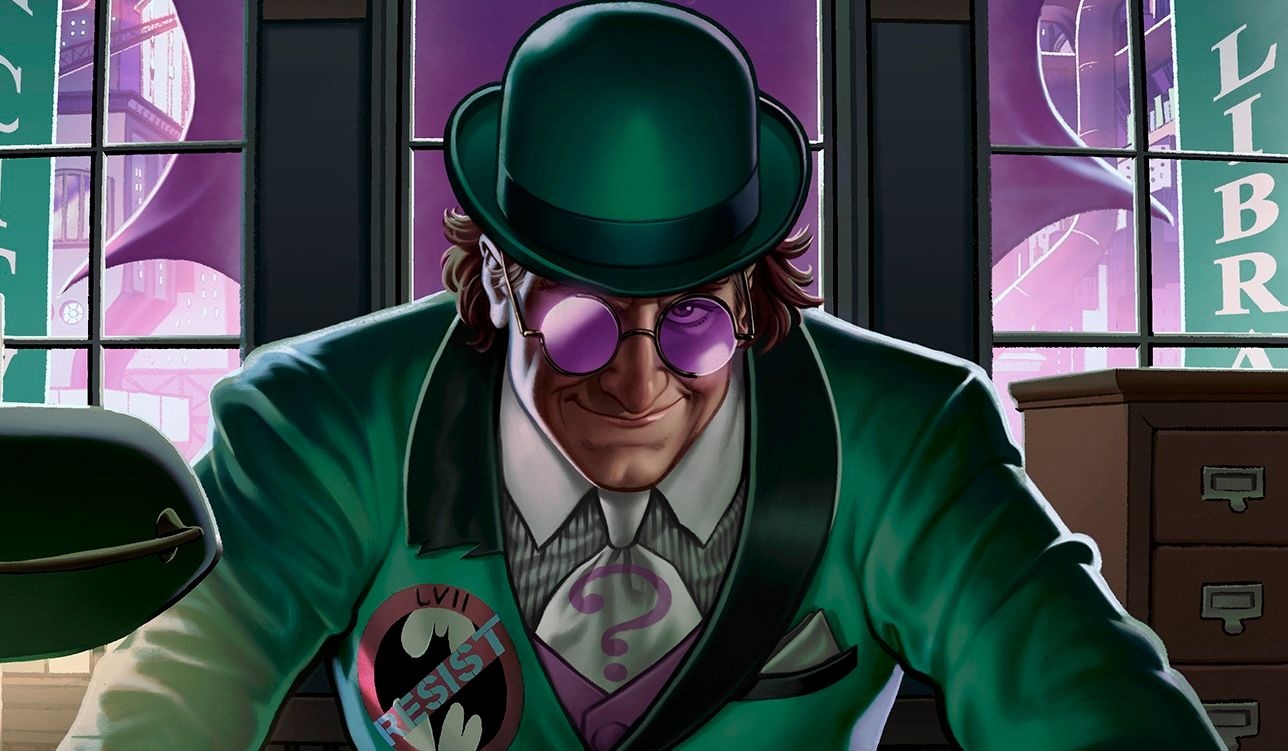
Batman: Revolution, the new novel by John Jackson Miller, introduces a Burtonverse take on the Riddler and shows a fresh villain identity: Norman Pinkus. The book also features exclusive artwork by Joe Quinones commissioned by Penguin Random House, and it arrives in stores on Oct. 21.
New Riddler revealed
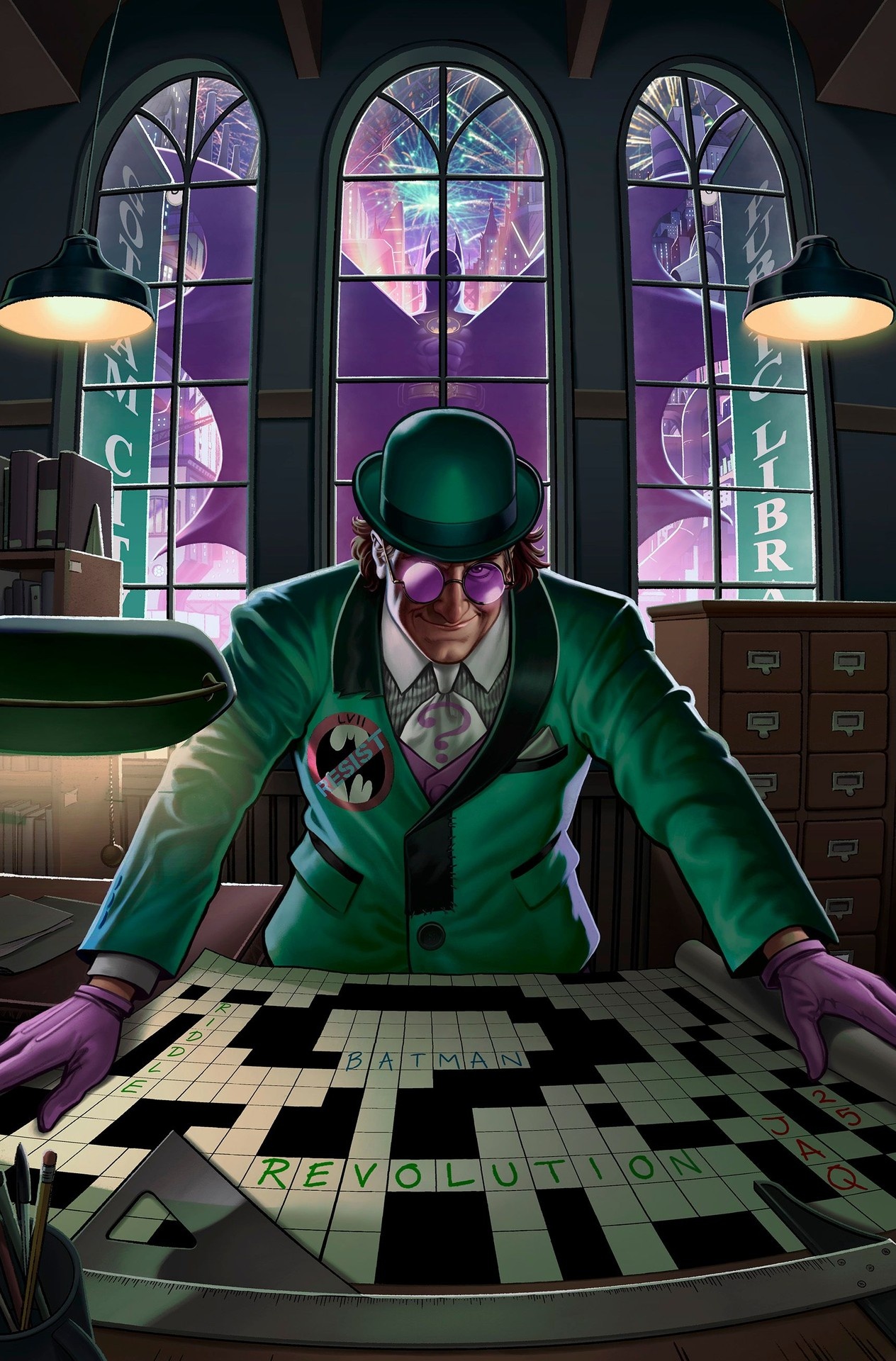
Author John Jackson Miller’s sequel to Batman: Resurrection, titled Batman: Revolution, centers a new version of the Riddler in the Tim Burton–adjacent continuity. Miller moves away from the familiar Edward Nygma name and instead focuses on a character named Norman Pinkus, who works as a daily puzzle writer for the Gotham Globe.
Who is Norman Pinkus?
Norman Pinkus is described in the book as a wordsmith with an encyclopedic memory and the Globe’s go-to fact person. According to Miller, Pinkus literally lived in the library and created puzzle content that echoes real-world word-game crazes. In the novel, Pinkus uses those skills to push Gotham’s citizens to question local leaders and to provoke Batman into intellectual confrontations.
Miller on the Riddler
Miller explains his reasoning and influences in his own words, and his quotations appear unchanged below.
“I’ve never imagined ‘Edward Nygma’ to be anything more than a pseudonym — a nygma is a spot on a sawfly’s wings,” Miller says over email. “But that’s the exact sort of thing Norman would know! A wordsmith with an encyclopedic memory, he literally lived in the library — and became the go-to person for facts at the Gotham Globe […] But he is also a tremendous puzzle-solver, cracking mysteries people didn’t even know existed — and when he decides to put his popularity to work, it’s to get people to question the powers that be in Gotham City. Including the police, Harvey Dent — and Gotham City’s still-new hero, Batman. I think their dynamic, both as allies and foes, is something that’s very new and entertaining. That hidden brilliance is what makes Norman such a compelling Burtonverse figure. Gotham is a city where ordinary people often transform under extraordinary pressure. In Batman Returns, an ostracized Oswald Cobblepot embraced his monstrous Penguin persona. In Miller’s Resurrection, understudy Karlo Babić succumbed to his worst instincts as he melted into Clayface. Miller wanted the Riddler’s metamorphosis to feel cut from the same cloth.”
“To most people’s eyes, Norman Pinkus is a meek, mawkish shut-in; yet he also has a double life, fighting crime by using the voices of characters of his own invention, far more flamboyant than he,” the writer says. “This felt like it would be quite in the spirit of Tim Burton’s films, where we saw nervous secretary Selina Kyle transform into the dynamic Catwoman. We get a similar transformation here, once again the product of tragedy.”
“Even as a kid I wondered whether hiding the clues to one’s crimes in riddles for Batman was the best way to avoid detection!” Miller jokes.
“We bring in bits like his attire and the question-mark motif, while heading in our own direction with the kind of person he was, and how the Riddler persona came to be,” Miller says. “After seeing the world presented in the two movies, I liked the notion that Gotham City was bigger than just Batman and the villain of the day — that there were other characters in Gotham City who might have been actively fighting or committing crimes, hidden until Batman’s presence drew them into the light,” Miller says. “And as we’ll see in Revolution, The Riddler isn’t the only one.”
Artwork and release details
Penguin Random House commissioned artist Joe Quinones to illustrate the new Riddler design for the book; Quinones previously worked on Batman ’89 for DC. The cover and interior art are part of the publisher’s presentation for Miller’s Burtonverse novels.
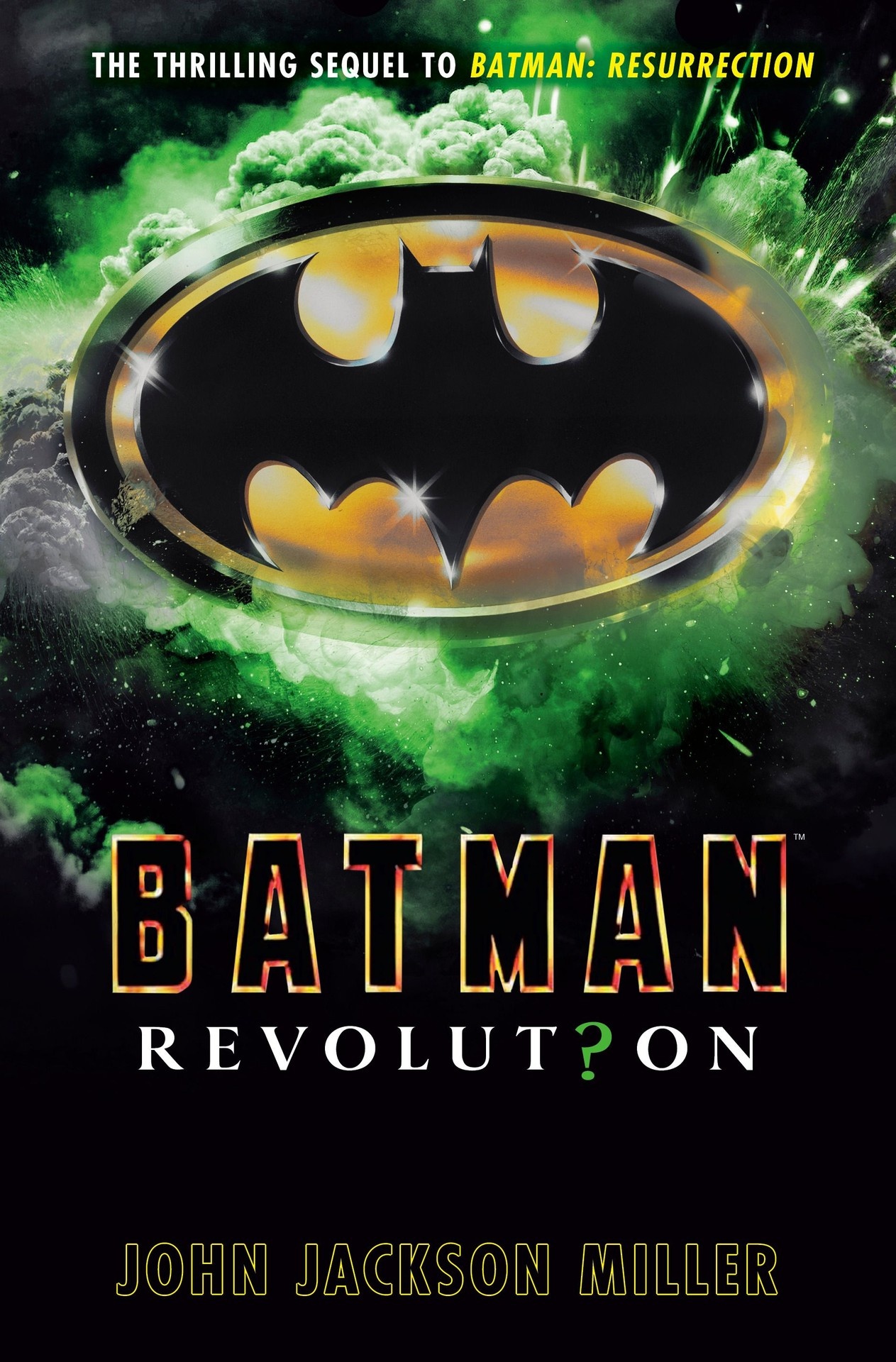
Batman: Revolution is scheduled to arrive in bookstores on Oct. 21. For more information about the publisher and related titles, see Penguin Random House’s website.
For publisher details visit Penguin Random House.