Play a Hugless Ghost and Build Bonds in The Lonesome Guild — Cute, Emotional Action RPG Out Oct. 23
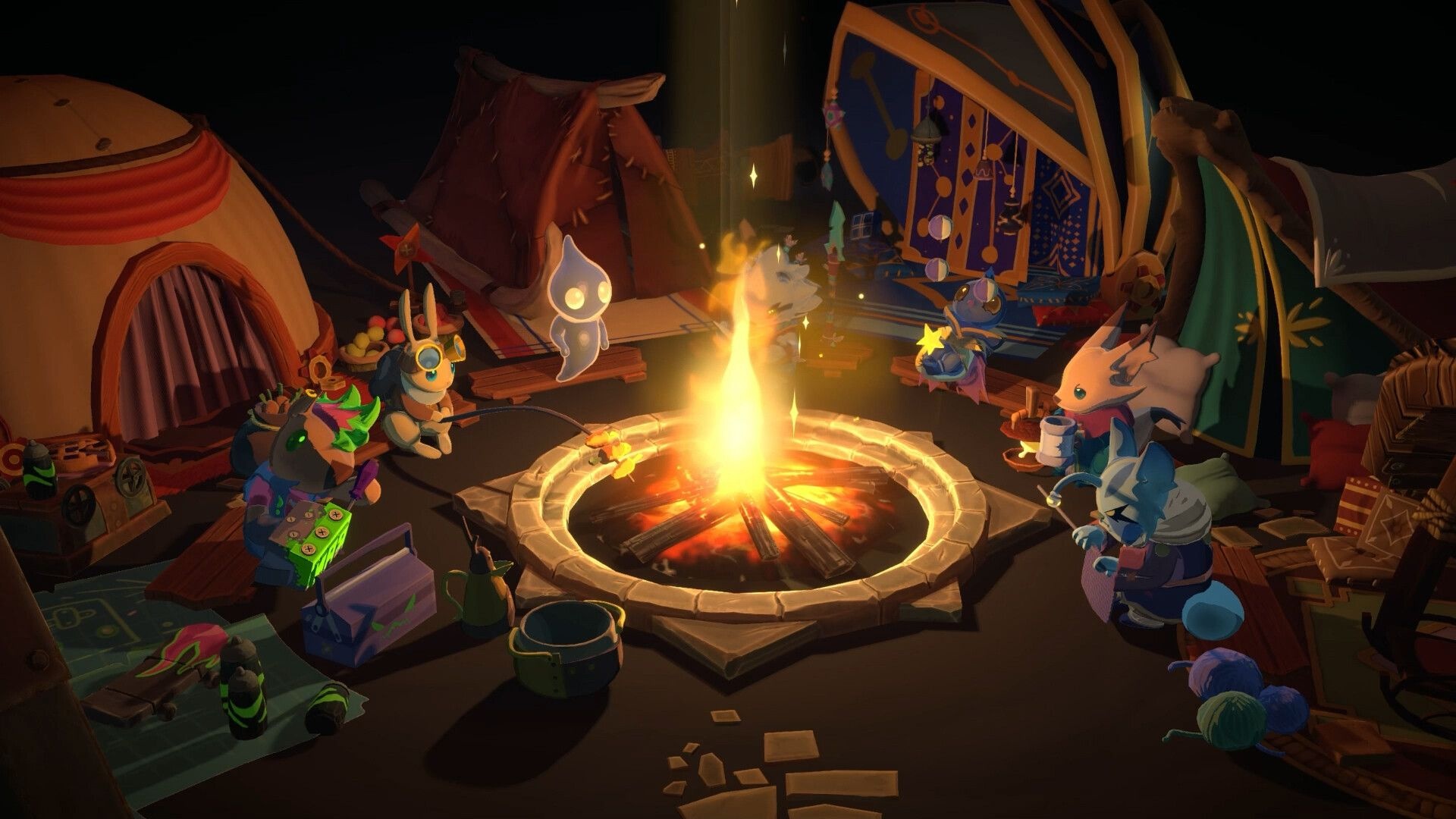
Tiny Bull Studios’ upcoming isometric action RPG The Lonesome Guild centers on loneliness and teamwork, with six playable anthropomorphic characters plus an amnesiac specter called Ghost. The game moved from a tactical design to real-time combat so the team could better tie gameplay to the story, and it launches on consoles and PC on Oct. 23.
- Developer: Tiny Bull Studios; publisher: Don’t Nod.
- Genre and structure: isometric real-time action RPG with six party members + Ghost.
- Key mechanics: party-focused combat, Ghost possession, campfire conversations that unlock skill trees; respec is allowed.
- Platforms and release: PlayStation 5, Windows PC, Xbox Series X; release date is Oct. 23.
What The Lonesome Guild is
The Lonesome Guild started in 2021 and was built around a single theme: loneliness. Producer Luca Cafasso said, “All the thematics of the game, all the game play has been built around this contrast between loneliness and teamwork.”
Characters and loneliness
The central playable cast is a group of six cute, anthropomorphic animals plus Ghost, an amnesiac specter who meets the group in a forest. Ghost cannot physically touch the others, which the developers frame as part of the character’s central loneliness.
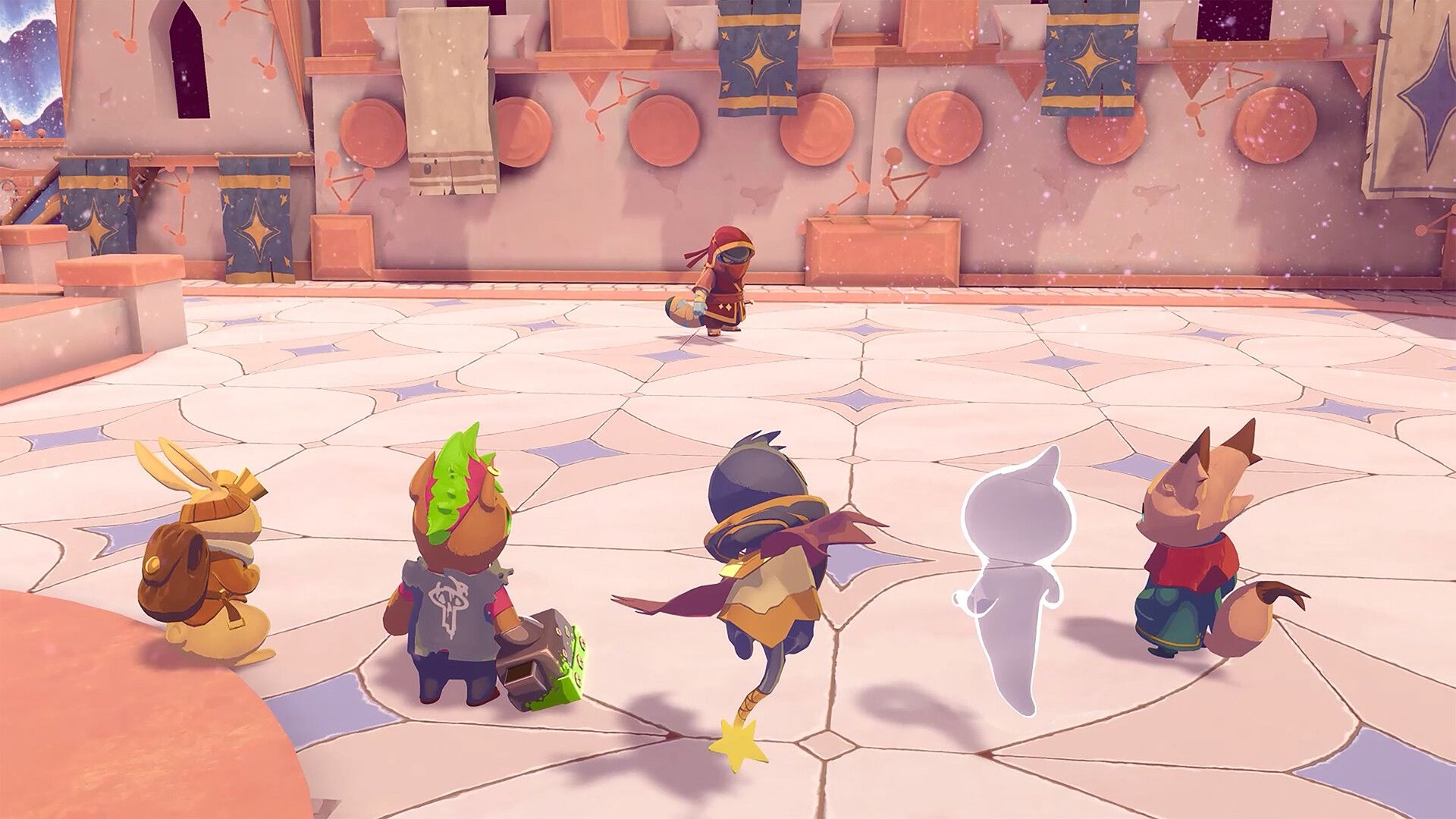
The first two party members introduced are Davinci, a rabbit with mechanical wings, and Mr. Fox, a world-weary guide. Simone Pellegrini explained Davinci’s arc: “He feels he was abandoned by his family because his biome should be in the sky and he’s trying to go back to his family from which he was separated from [for] a lot of years.” On Mr. Fox, Pellegrini said he “decided to go in[to] exile because he didn’t [feel] that he was worthy of guiding his people. So at some point in the story he will be forced to face his people again and overcome his kind of loneliness.”
Personal favorites (from the team)
The team picked favorite characters during the interview. Cafasso said, “We also did this variety of heroes so that any one of us could relate,” and named the Capybara Ran Tran Trum as his pick: “this character with punk hair” and a torn vest. Cafasso added, “His kind of loneliness goes against his family and he has a big fight with his father […] so he react[ed with] strength and stubborn. So I can relate it like that.” Pellegrini chose Mr. Fox: “I like his cynical way of being and his sassy humanism and all his backstory about the sense of responsibility toward the people he has around. It’s something that I can relate [to].”
Not everyone liked every character: “Maybe I personally hate Davinci because he’s this optimist guy that always talks too much. It’s not my way of being. So I don’t like him,” Pellegrini said, while Cafasso defended the rabbit: “But I [am] also glad that Mr. Fox is so effective thanks to Davinci […] the cynicism of Mr. Fox would be not so effective without Davinci too and the dialogues that our narrative designer put together.” “Yeah, but I still don’t like him,” Pellegrini quickly added.
Gameplay and design
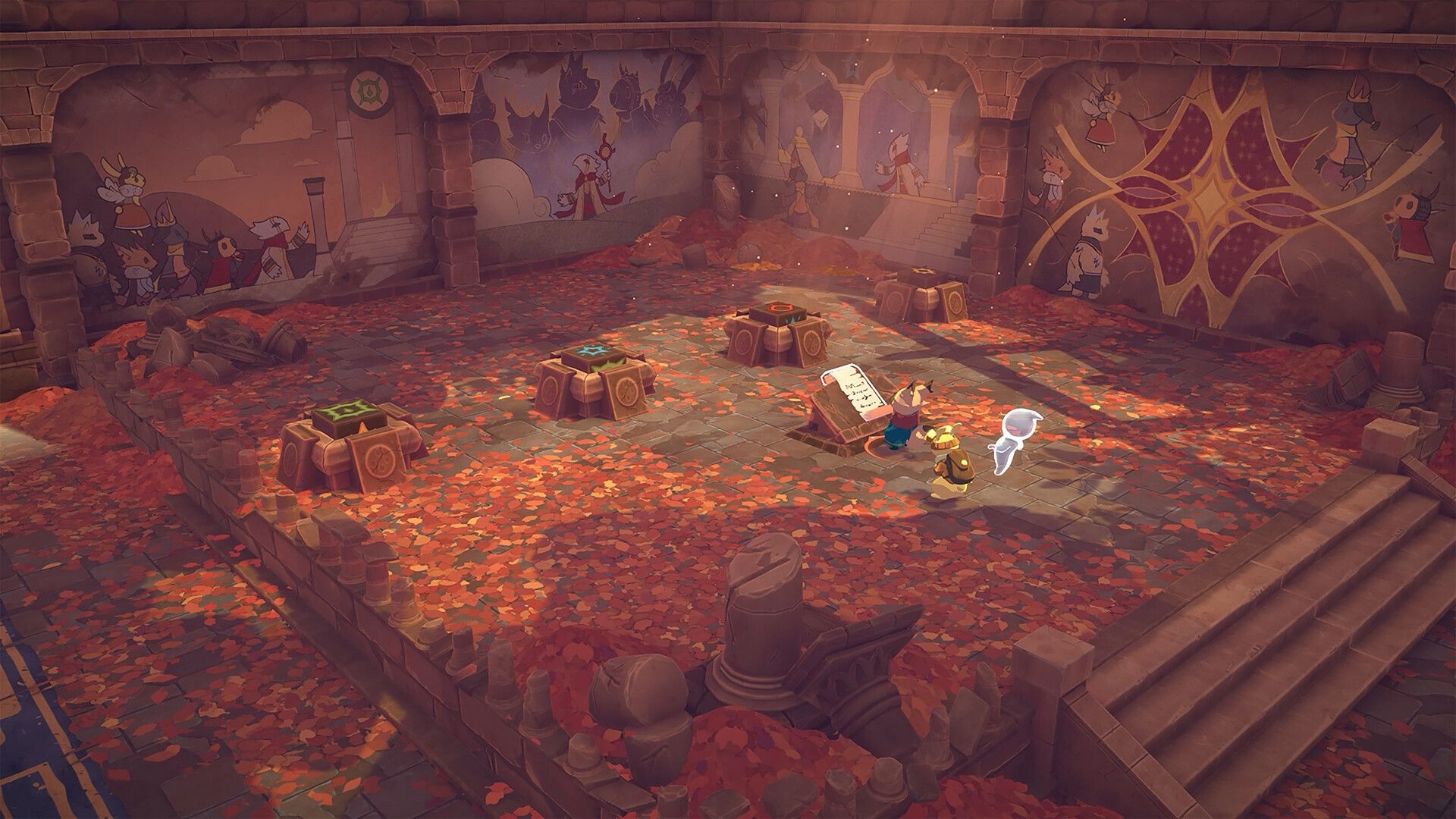
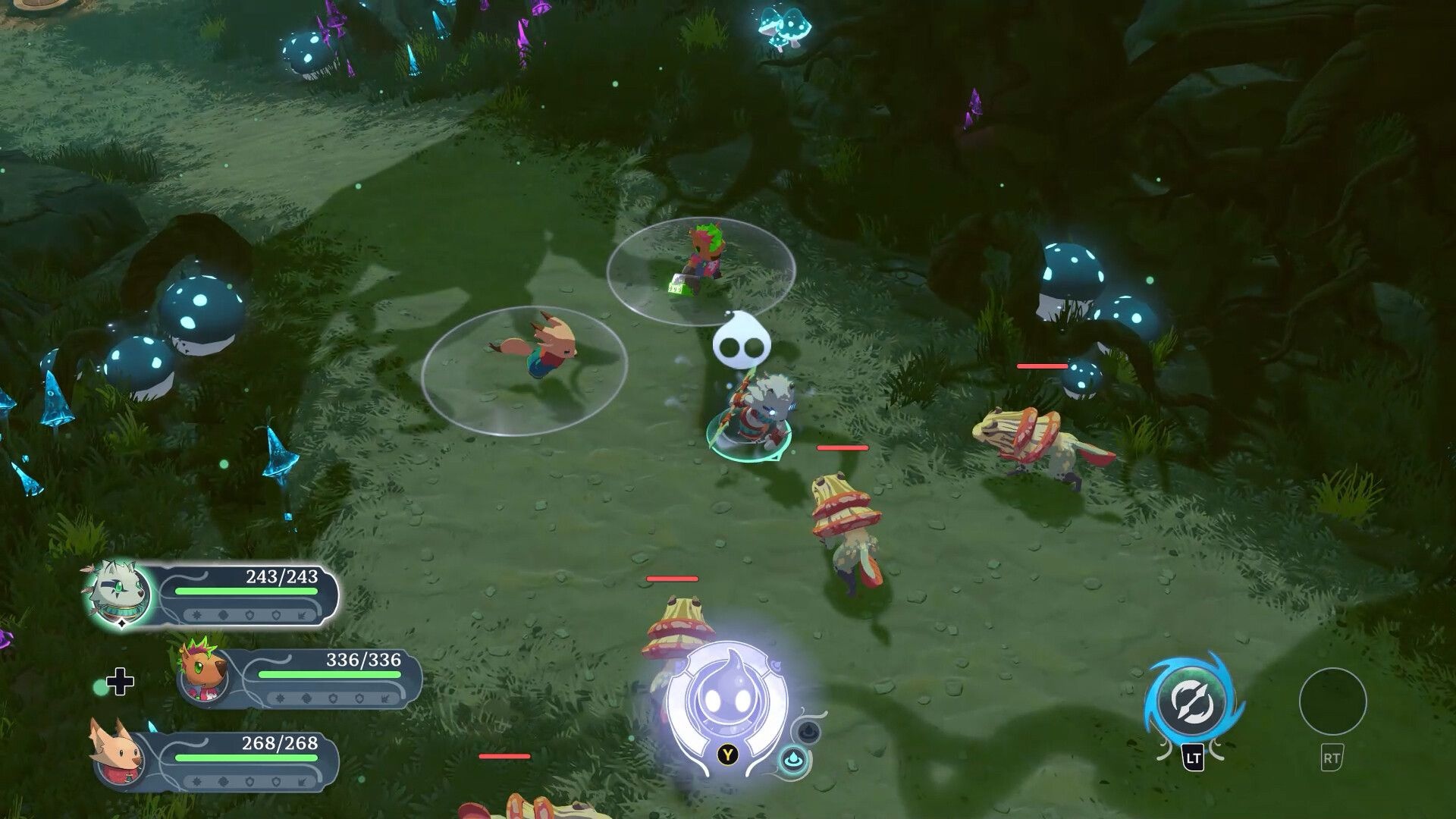
Tiny Bull shifted the game from turn-based tactics to a real-time isometric action RPG because the team felt the tactical approach “wasn’t useful to convey[ing] the story,” Pellegrini said. The new design forces players to use the whole party: “All the combat mechanics try to allow you and force you to use your full party because otherwise you are not so good at combat.”
Team-building is supported by campfire conversations. By befriending Ghost, party members’ skill trees unlock; characters get stronger the closer they get. Cafasso said, “We wanted to make sure [the gameplay] was incentivizing the teamwork and togetherness.” Players can respec skill trees at any time.
Ghost and combat
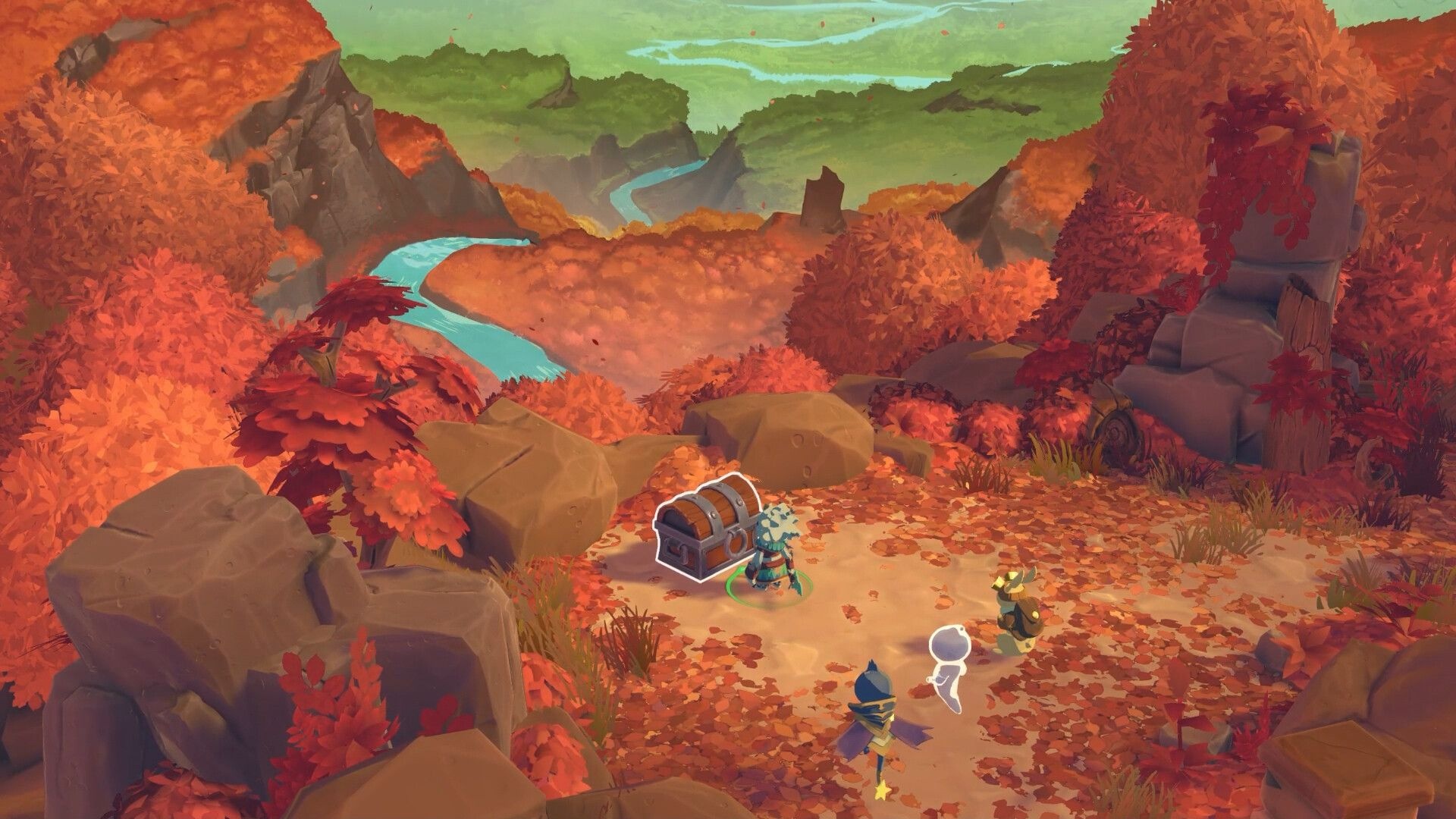
Ghost can possess party members to temporarily enhance their abilities. Cafasso described the feature plainly: “Ghost’s power is the apex of togetherness.” He added that possession mechanics “incentivize[s] you as a player, that wants to play more efficiently, to not just stick on the character that you like most, but to use all the team members as a one character.”
Development background and influences
Tiny Bull began work in 2021, and the project was influenced by the social effects of the COVID-19 pandemic. Cafasso said, “Of course, in Italy [COVID] hit really hard and we were the first western country that started to feel this is serious. The first lockdown [affected] the country’s social relations, the way of entertainment. And so it left that footprint to us. And when our writers pitched the idea to talk about loneliness, that’s also one thing that made us think, okay, let’s push this project more than others’ ideas that we had at the time.”
Design influences named by the team include Tunic, Death’s Door, Ori, and *Pokémon Mystery Dungeon* for the art approach and character cuteness. Pellegrini said the team wanted characters that look like the Pokémon they admired as kids.
Release, platforms and plans
The Lonesome Guild will launch on PlayStation 5, Windows PC, and Xbox Series X, with a release date set for Oct. 23. Tiny Bull is aiming to make the game available to many players and has requested a Nintendo Switch 2 devkit but has not yet received one.
Publisher Don’t Nod joined the project about a year after development began, while the team changed core systems to match narrative goals. Pellegrini said the move to real-time combat was meant to make gameplay and story work together more directly.