Pokémon Legends: Z‑A Runs on Original Switch — Playable in Early Hours, But Expect Frame Drops and Pop‑In
Early playtesting of Pokémon Legends: Z-A on the original Nintendo Switch shows the game is playable in its opening hours, but it has clear technical differences compared with the Switch 2 version. Review units from Nintendo apparently included only Switch 2 copies, so comparisons here come from side-by-side testing during the first several hours of wild zone exploration and Z-A Royale matches.
- Performance targets and frame rate
- Distant animation and frame-rate scaling
- Asset pop-in and loading times
- Battle performance
- Early impressions and caveats
Performance targets and frame rate
Pokémon Legends: Z-A targets 60fps on Switch 2 and 30fps on the original Switch. Consequently, movement is noticeably smoother on Switch 2. On Switch 1, the game runs at the lower target most of the time, but you will see more frequent drops.
For example, frame rate dips happen when entering a new area. Additionally, rotating the camera in crowded spots — such as outside Hotel Z, your in-game home — can trigger severe drops. These are concrete, repeatable issues observed during the early sessions.
{pokemon-legends-za-switch-1_2_20251016_230131.jpg}
Distant animation and frame-rate scaling
Another measurable issue on the original Switch is that characters and Pokémon appear to animate at different frame rates depending on distance. In practice, a child character may move fluidly when right next to you, get noticeably jerkier at about six feet, and look almost like stop-motion at roughly ten feet. The same distance-based change applies to some Pokémon models.
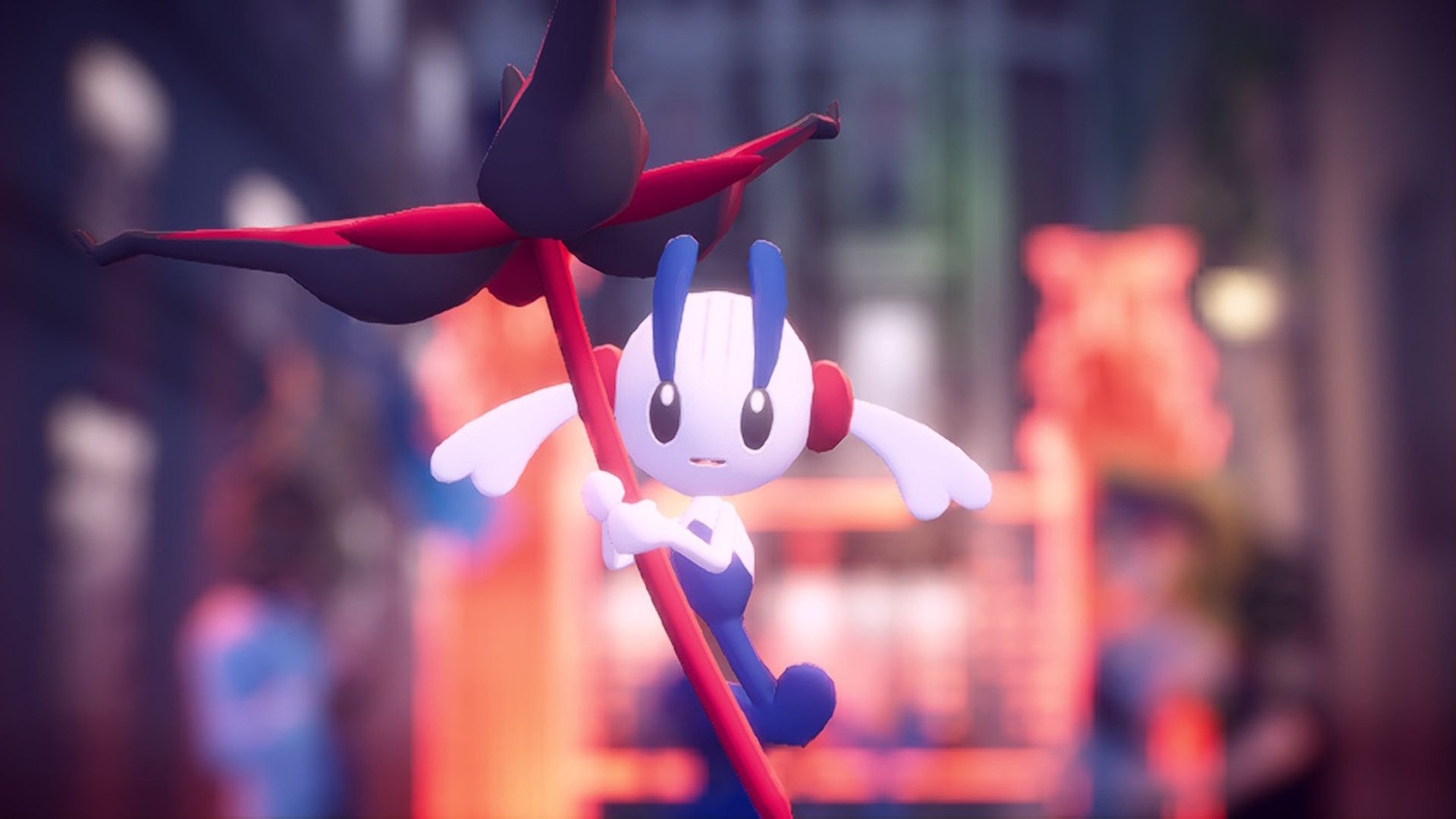
However, this behavior is not uniform. For instance, Fletchling in wild zones often flaps at a stable rate whether nearby or far away, unless another Pokémon is immediately adjacent. Therefore, the distance-based animation changes occur frequently in some contexts and less so in others.
Asset pop-in and loading times
Asset pop-in is noticeable. Many characters and models load only once you approach, and that same pop-in pattern appears on both Switch 1 and Switch 2 builds in the places tested. In other words, some presentation issues are present on both platforms rather than being exclusive to Switch 1.
Regarding transitions, the original Switch commonly takes about two to three seconds longer to switch from gameplay into a cinematic cutscene, and the same delay appears for scripted battles (for example, the first Taunie fight). These timing differences were measured during direct comparisons with the Switch 2 version.
Battle performance
Core combat runs well on the original Switch in early tests. Battles felt smooth, no input lag was detected, and the frame rate generally held up even with multiple attack animations playing. That said, testing so far has not included rogue (raid-style) battles against very large Pokémon on Switch 1; those specific scenarios remain to be tested and could reveal further differences.
{pokemon-legends-za-switch-1_3_20251016_230133.jpg}
Early impressions and caveats
So far, the original Switch version is playable during the opening hours, but it shows distinct technical compromises compared with Switch 2: lower frame-rate targets, distance-based animation inconsistencies, occasional severe drops when loading areas or rotating the camera, asset pop-in, and slightly longer load times. Furthermore, the stability of battles with larger Pokémon models and more complex animations has not been fully evaluated on Switch 1.
We will update this report as more mid- and late-game testing is completed on the original Switch. For now, those playing on Switch 1 can expect a functional experience early on, with visible performance and presentation differences versus Switch 2.