Replaying Enter the Matrix Proves Its Bullet Time Outclasses Max Payne
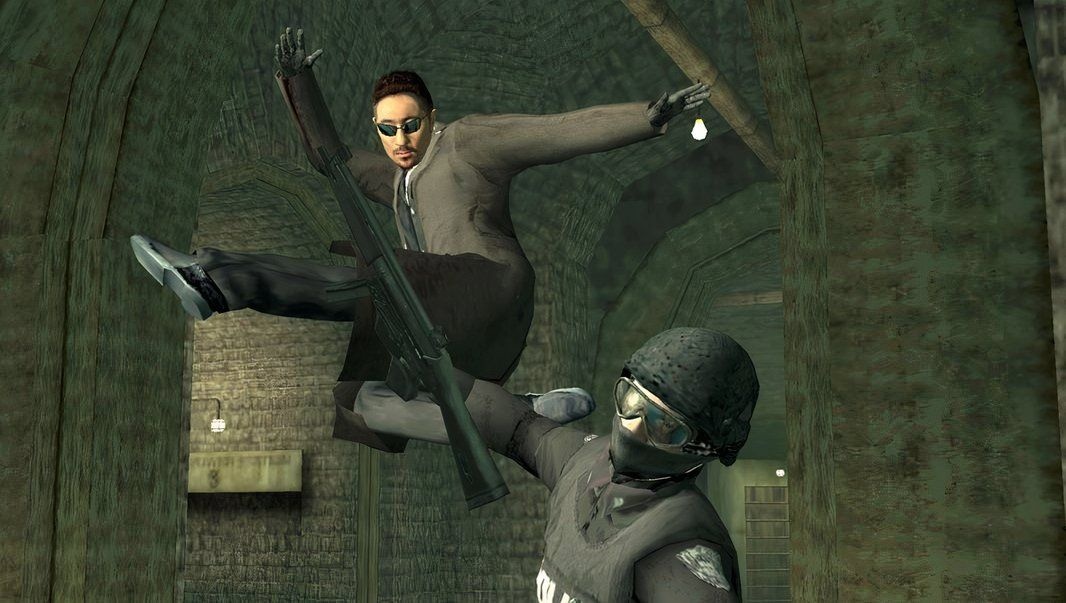
Enter the Matrix (2003) is a licensed action game developed by Shiny Entertainment and released during the seventh generation of consoles. The game is a third-person shooter that also includes hand-to-hand combat and a *bullet time* mechanic that slows gameplay. In addition, the Wachowskis provided over an hour of original footage featuring actors from the films for the project, and Infogrames handled publishing duties.
Sick Tech
Enter the Matrix implements a bullet time system that reduces game-time speed to let players aim, dodge, and perform acrobatic moves more precisely. The mechanic is available in third-person perspective, and it applies both to gunplay and melee. Furthermore, the game supports vaulting and aerial animations while bullet time is active, which lets players chain movement and attacks in ways that are different from normal-speed play.
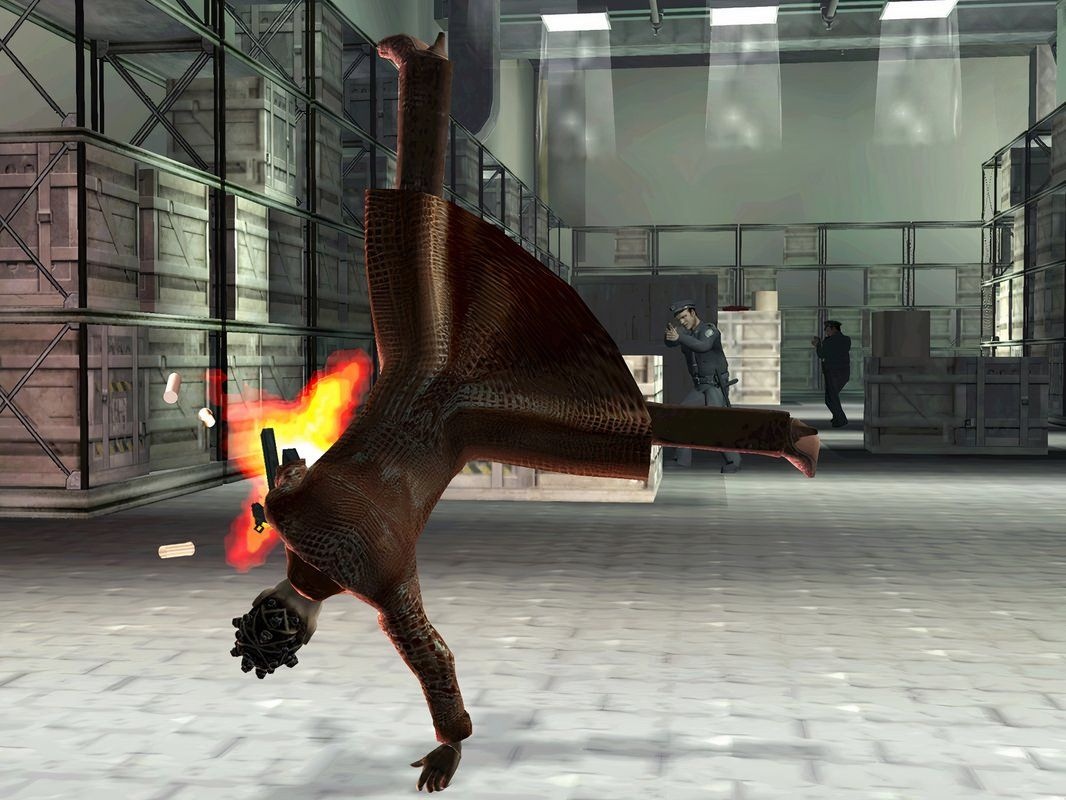
Technically, the engine blends slowed animation, altered hit detection, and camera changes when bullet time is triggered. As a result, the game switches the player into a distinct control state: inputs map to different, often faster-looking, animations while temporal scale is reduced. However, the release is also documented as having stability and bug issues across platforms, which affected some players’ experiences.
Good Gamefeel
Bullet time in Enter the Matrix is tied to specific combat options. When activated, players can access extended melee combos, modified firearm handling, and cinematic moves like flips and spins. In practical terms, this means the same control inputs produce different outcomes depending on whether bullet time is on or off.
On a recent replay of the game, the author observed a short sequence that highlights this system: while running past a wall, activating bullet time allowed the character to vault off the wall, perform a double spin in midair, and fire dual uzis, eliminating two nearby enemies by the time the sequence ended. Thus, bullet time functions as both a defensive tool and a way to chain flashy offensive moves.
Skills as Stories
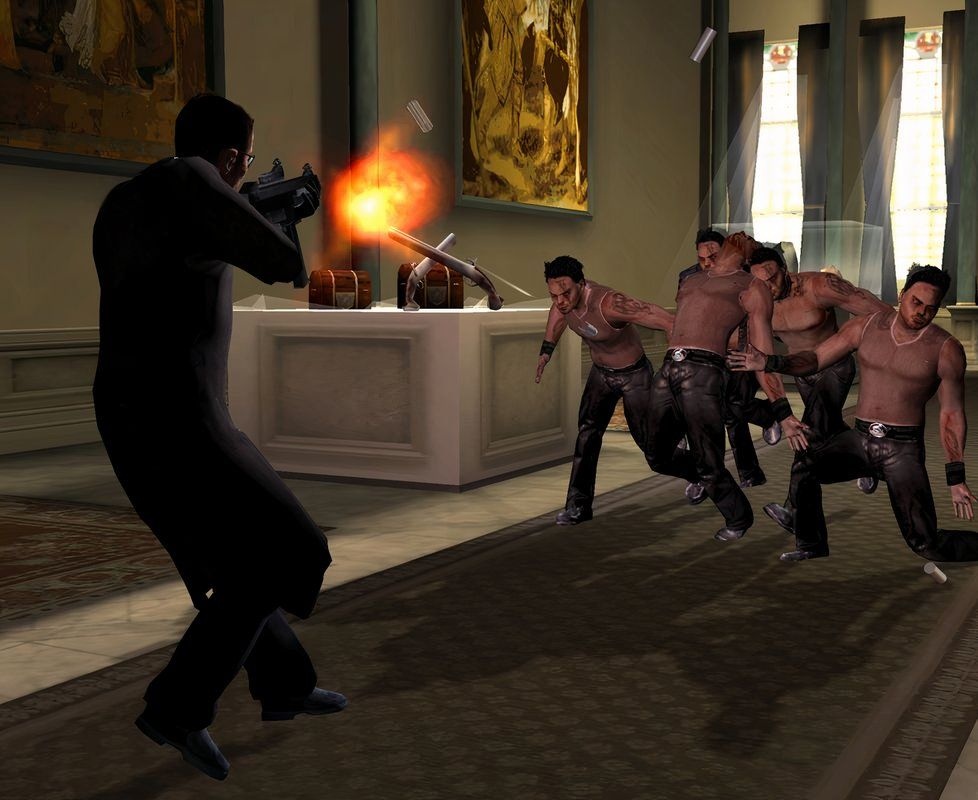
Historically, Max Payne (2001) is widely credited with popularizing the bullet time mechanic in games after The Matrix film (1999) showcased slow-motion combat on screen. Enter the Matrix followed in 2003 with its own implementation that attempted to match the films’ choreography and cinematic feel. Importantly, Enter the Matrix pairs its bullet time with film footage and character animations to reinforce the connection between the license and the gameplay.
Finally, there is a contemporary context: a modern Max Payne remake has been reported as being in development, which means comparisons between how each game uses bullet time could return to public discussion as new versions arrive. For now, Enter the Matrix remains a documented example of a licensed title that integrated cinematic slow-motion into both gunplay and melee systems.