Screamer Reboot Turns Arcade Racing into Anime Twin‑Stick Brawler — Yes, There’s a Sassy Corgi Racer
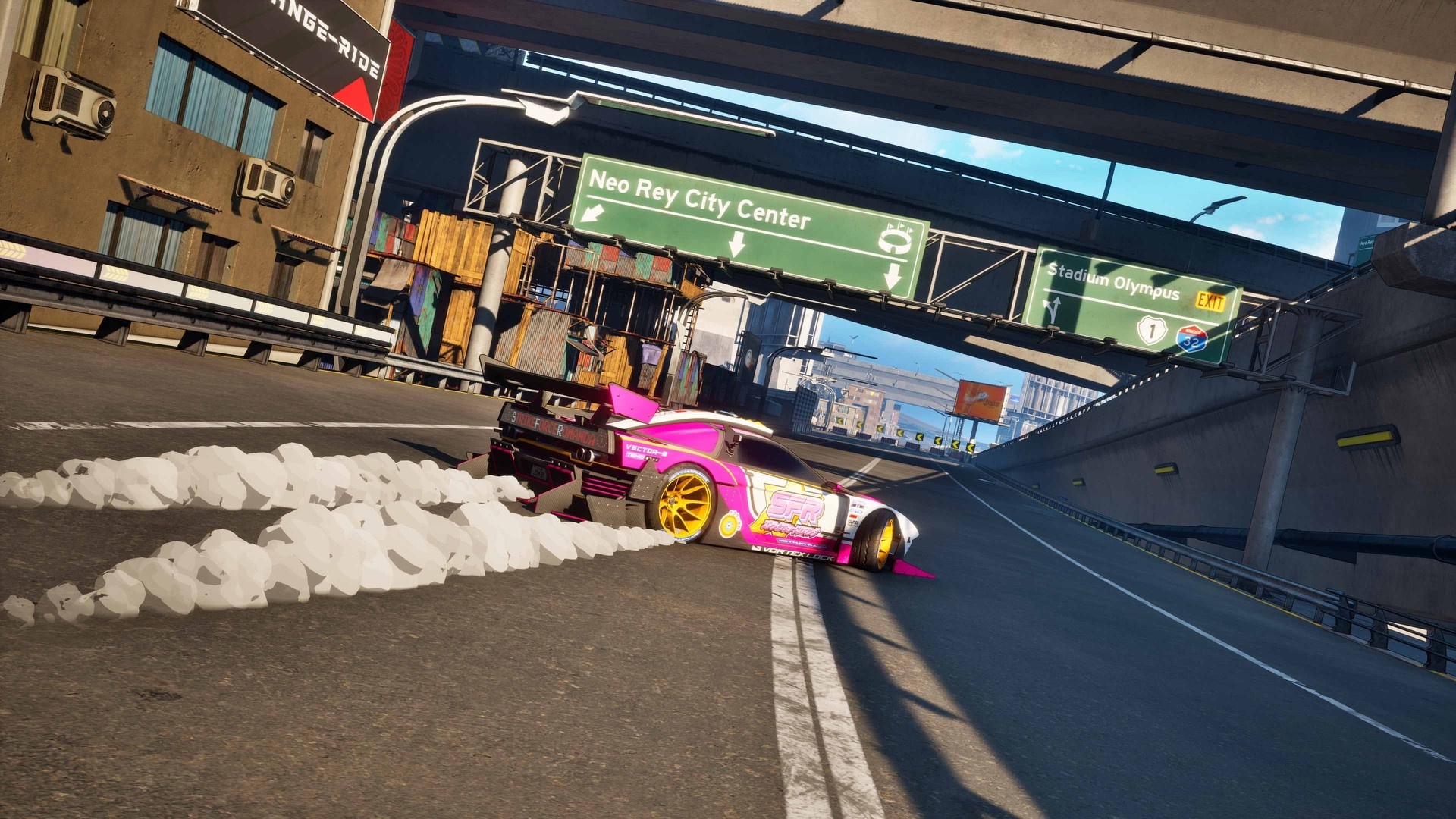
Screamer is a revived arcade-style racing game from Milestone, the studio behind MotoGP and Hot Wheels Unleashed. The new title updates Milestone’s 1990s franchise with a stylized, anime-tinged look, team-based characters, and layered racing systems. It is scheduled for release in 2026 on PlayStation 5, Windows PC, and Xbox Series X.
- The game is a modern reboot of Milestone’s 1995 Screamer series.
- It uses a twin-stick control scheme on controllers: left stick to steer, right stick to drift.
- There is a manual-timing gear-shift system that grants speed boosts when executed correctly.
- An Echo System uses two meters—Sync and Entropy—to power boosts, defenses, and attacks like Overdrive.
- Racers come in teams of three, with distinct strengths and personalities, and the game includes animated story cutscenes.
Background
The original Screamer released on MS-DOS in 1995 and was a bright, fast arcade racer known for drifting and dramatic crashes. The new Screamer keeps that arcade energy but moves toward a more technical, stylized presentation with an almost cel-shaded anime feel.
Controls and core mechanics
Screamer introduces a twin-stick driving method for controllers: you use the left analog stick to steer and the right analog stick specifically for drifting. In testing on a PlayStation 5 DualSense, players report it takes some practice, but independent steering and drift control becomes intuitive after a while.
Additionally, the game has a timed manual shift mechanic. Vehicles will shift automatically, yet if you manually shift up at the right moment—indicated by a tachometer that changes color—you gain a short speed boost. This adds a rhythm element to gear changes.
Echo System: Sync and Entropy
Screamer features an Echo System with two linked meters. The Sync meter builds during racing and can be spent on boosts or shields that reduce impact from attacks. Spending Sync fills the Entropy meter, which fuels offensive moves like Strike and the high-risk Overdrive.
Overdrive dramatically increases speed but removes braking, leaving both the user and opponents vulnerable. The system creates decision points: use resources for short-term defense and speed, or save up for powerful attacks.
Characters and teams
Racers arrive in diverse, international rosters, and each character has defined strengths, weaknesses, and a racing personality. Teams are organized in groups of three, similar to the team structure seen in some fighting games, and each team shares an aesthetic or allegiance.
The game’s story is told across these teams with animated cutscenes. In addition, characters speak their own regional languages in the scenes, which is presented in the game’s world context.
Director Federico Cardini said that players who “forget what you know” about racing games and embrace the chaos and complexity of Screamer will get the most out of it.
Presentation and release details
Screamer leans into an anime-inspired visual style, and the roster includes some unexpected entries, such as a corgi racer. The narrative framing explains why teams compete and introduces mechanics gradually throughout the story mode.
If you want to revisit the original series, the 1995 Screamer is available on GOG. For the upcoming game, Milestone has announced a 2026 release window for PlayStation 5, Windows PC, and Xbox Series X. You can find the original on GOG.