Seamus McNally Winner Consume Me Turns Teen Dieting Into a Fast-Paced WarioWare-Style Diary
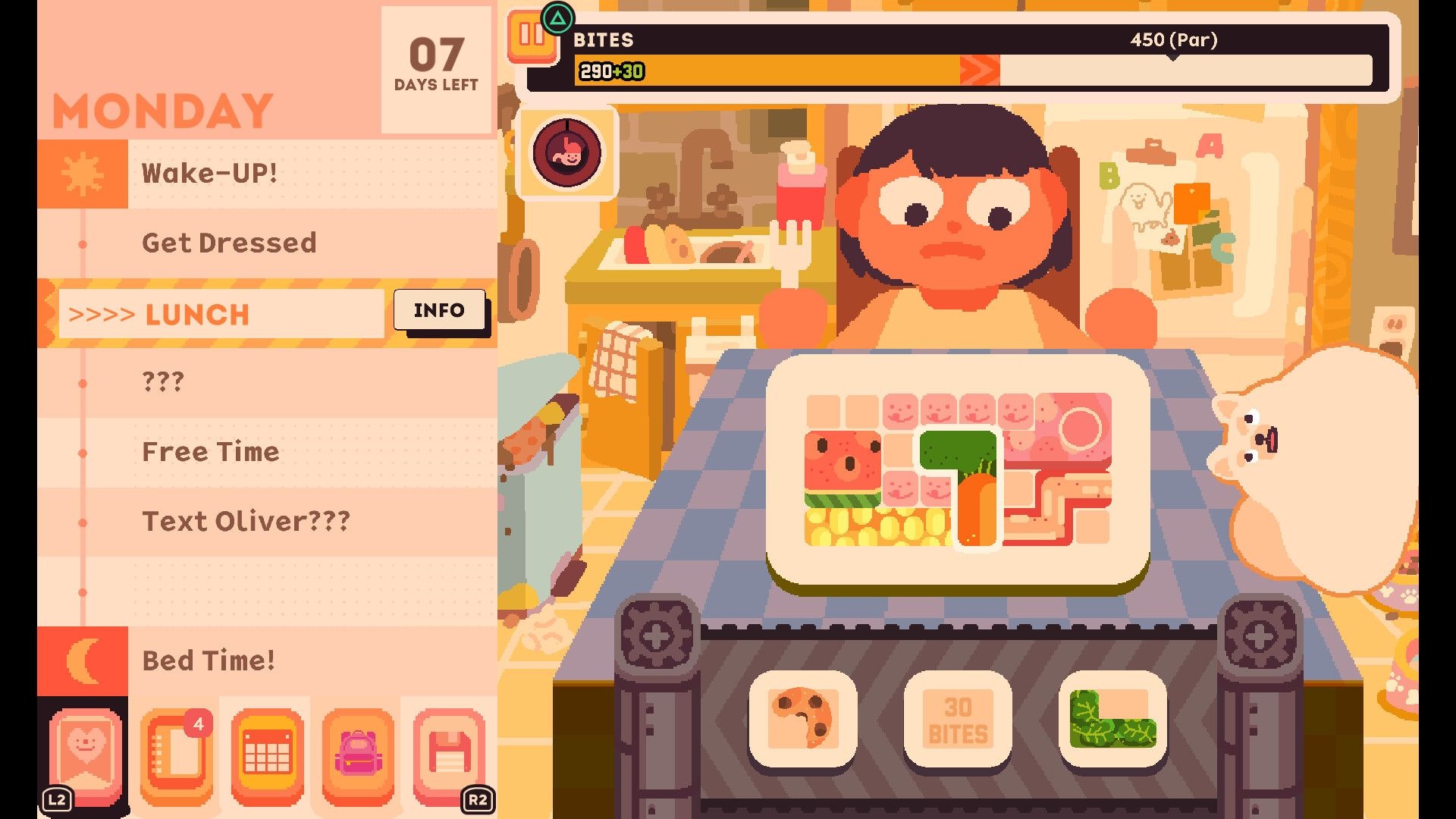
Consume Me is an autobiographical life-sim by Jenny Jiao Hsia and AP Thomson that explores dieting culture through daily choices and bite-sized minigames. The game won the Seamus McNally Grand Prize at the Independent Games Festival and is set to release on Sept. 25 for macOS and Windows PC. It includes an eating-disorder content warning and was reviewed on a Steam Deck using a prerelease code provided by Hexecutable.
- Gameplay and systems
- Visuals and presentation
- Structure and themes
- Epilogue and development
- Release and review notes
Overview
Consume Me is a small, personal game based on Hsia’s teenage years. It frames dieting and body image as ongoing pressures that compete with school, chores, relationships, and test prep. The title explicitly warns players that it depicts an eating disorder, and the narrative follows a teenage character named Jenny in New York City.
Gameplay and systems
The core loop asks players to balance a “bites” meter with an energy meter across each week. Players pack a lunchbox by placing food items into spaces while tracking how many bites each item adds to the day’s total. If the player eats too much, they must spend free time exercising to burn calories. Conversely, eating too little can trigger a snack attack that wastes a cheat day.
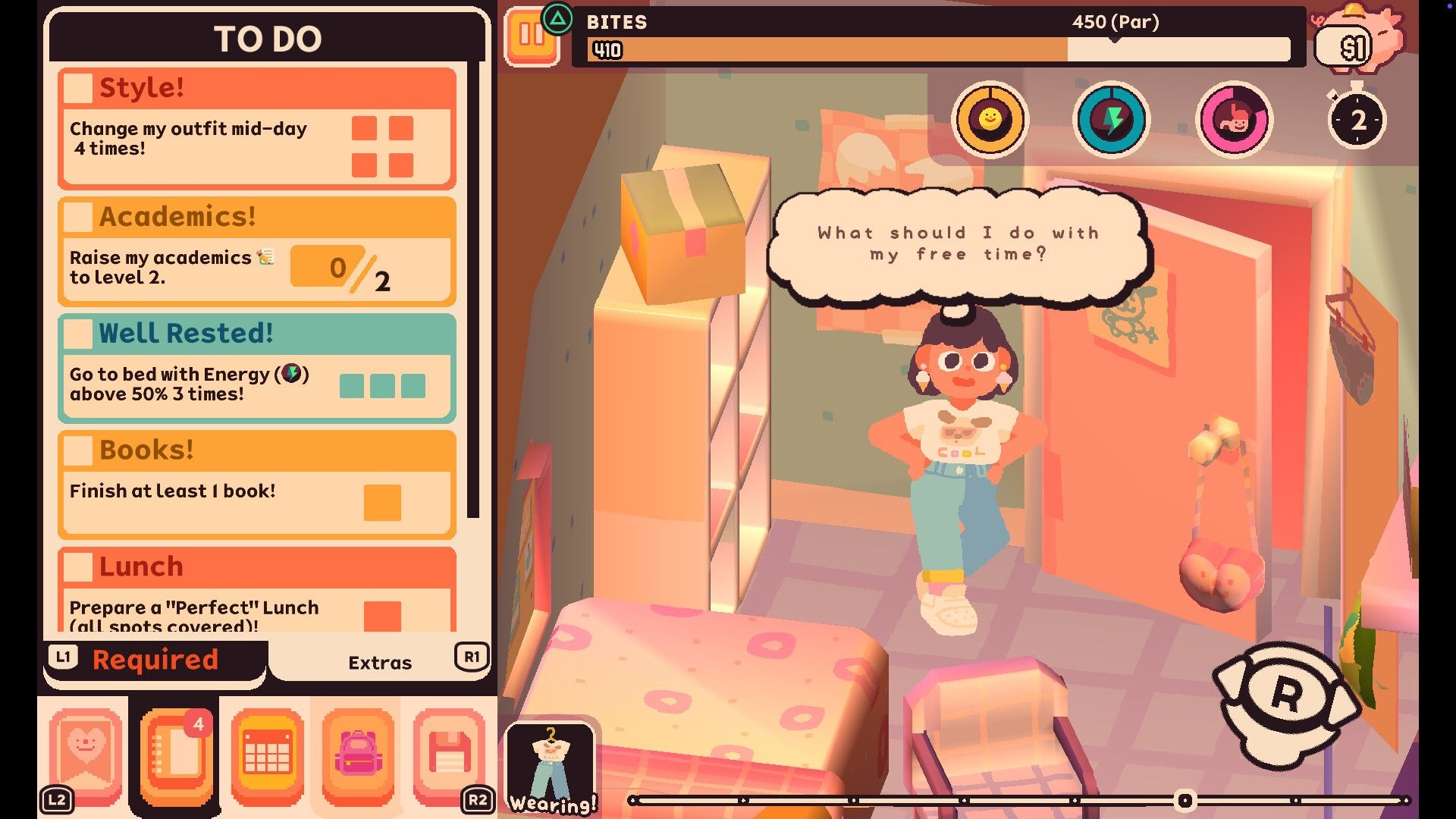
Moreover, the game borrows a Persona-like daily structure: players choose how to spend limited actions each day. Choices include studying, doing chores, socializing, exercising, and sleeping. Each action affects multiple meters, so decisions carry clear trade-offs. For example, doing makeup in the morning grants a daily perk, and outfits offer specific bonuses for activities like yoga or dog-walking.
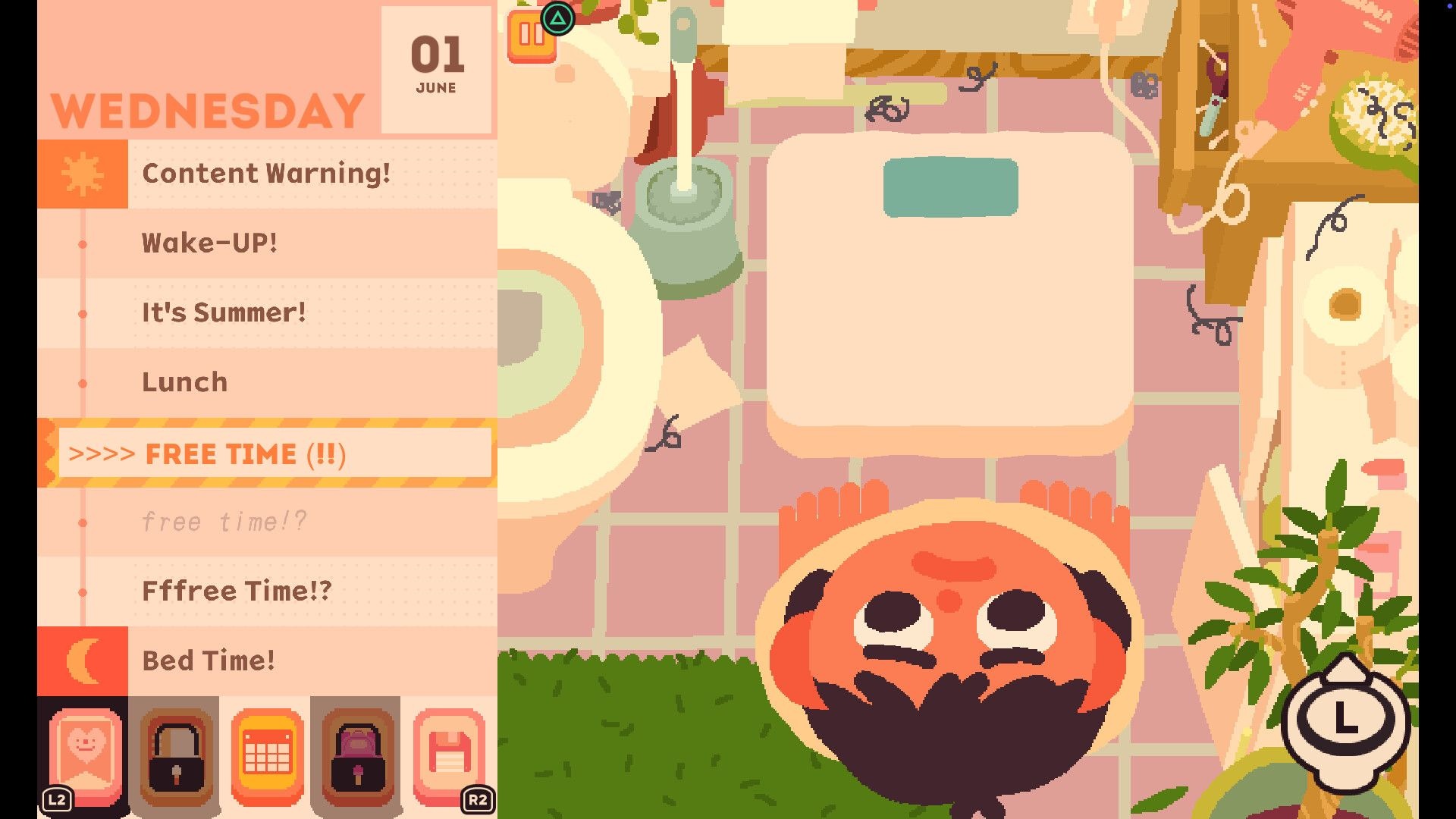
The game presents many tasks as short minigames. These microgames vary in pace and style, and they intentionally resemble the quick shifts of WarioWare: players move through fast, focused interactions with little time to pause between tasks. This helps the game simulate the experience of juggling responsibilities.
Visuals and presentation
Consume Me uses bright colors, playful doodles, and a notebook-like interface to present its story. The aesthetic keeps the tone accessible even when the subject matter is serious. Text and visuals are often framed as Jenny’s personal notes, photos, and sketches, which emphasizes the autobiographical nature of the work.
Structure and themes
The game deliberately avoids a single dramatic climax. Instead, it shows how priorities shift over time: dieting begins as the central focus, then gradually recedes as deadlines, relationships, and tests demand attention. As a result, the mechanics and narrative emphasize accumulation and trade-offs rather than a tidy moral resolution.
In short, the game aims to reflect the messy, ongoing process of growing up. Choices matter, but the story resists reducing the protagonist to a single struggle or definitive turning point; goals and fixations evolve across chapters.
Epilogue and development
The game’s epilogue includes a montage about its creation. That sequence shows a discussion between Hsia and Thomson about how the story should end, and it explicitly references the real-life uncertainty of that period in Hsia’s life. The epilogue frames the game as one page in an ongoing life rather than a conclusive statement.
Release and review notes
Consume Me will be released on Sept. 25 for macOS and Windows PC. The version in this report was played on a Steam Deck using a prerelease download code supplied by Hexecutable. For players interested in other autobiographical indie works, the game sits alongside titles such as Dys4ia in its approach to personal storytelling.