Surf a Sword, Save the Oceans — Giant Squid’s Sword of the Sea Lets You Ride Flying Turtles and Chase High Scores
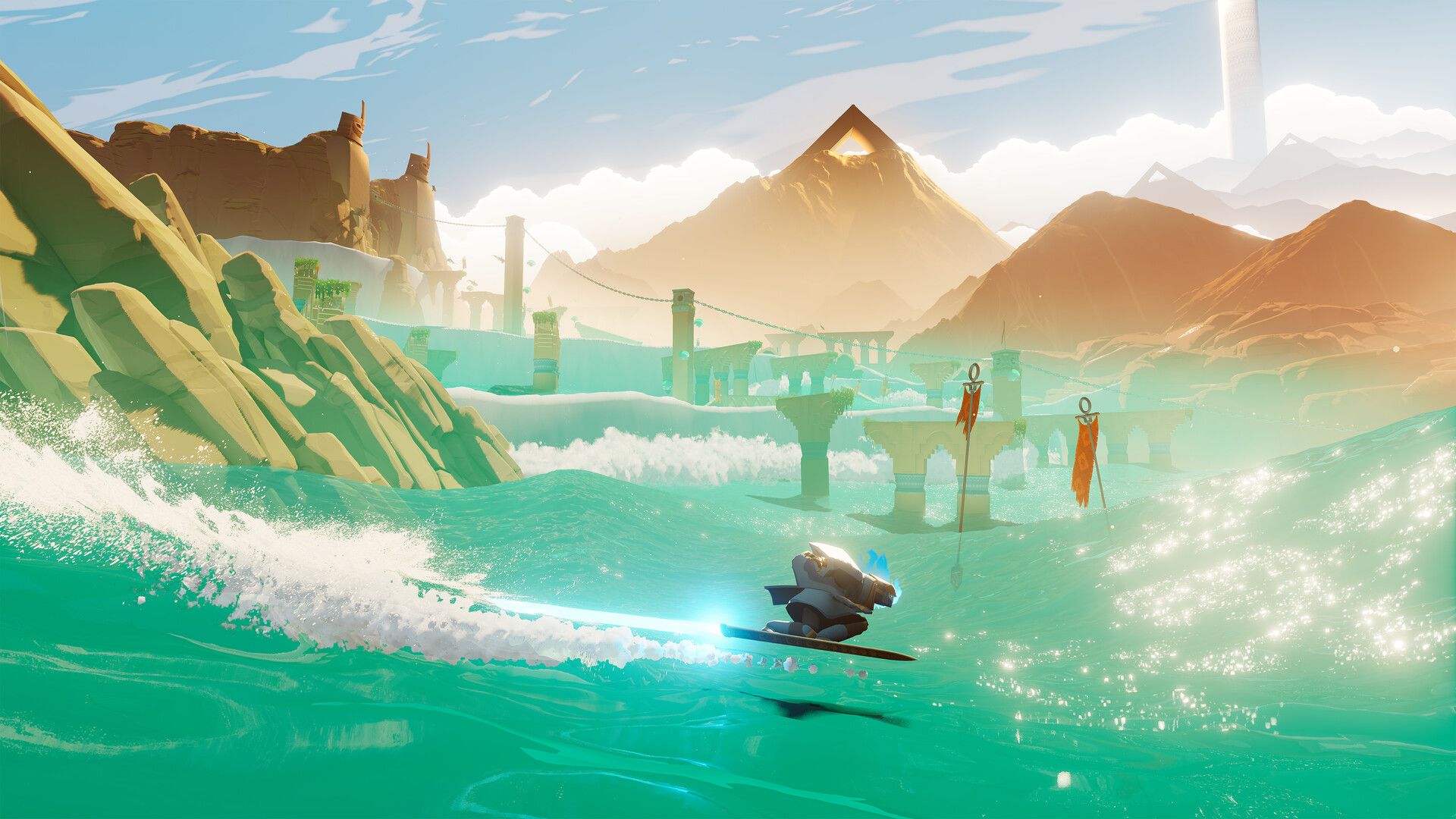
Sword of the Sea is Giant Squid’s new movement-focused game that asks players to restore drowned oceans while surfing on a sword. The game launched on August 8 for PS5 and Windows PC. It mixes fast movement, open hub areas, collectibles, and environmental themes into short, replayable runs.
- What the game plays like and its core movement mechanics
- How the levels and collectibles support environmental themes
- Replay incentives, score systems, and progression
- Release details and review platform note
Movement and core mechanics
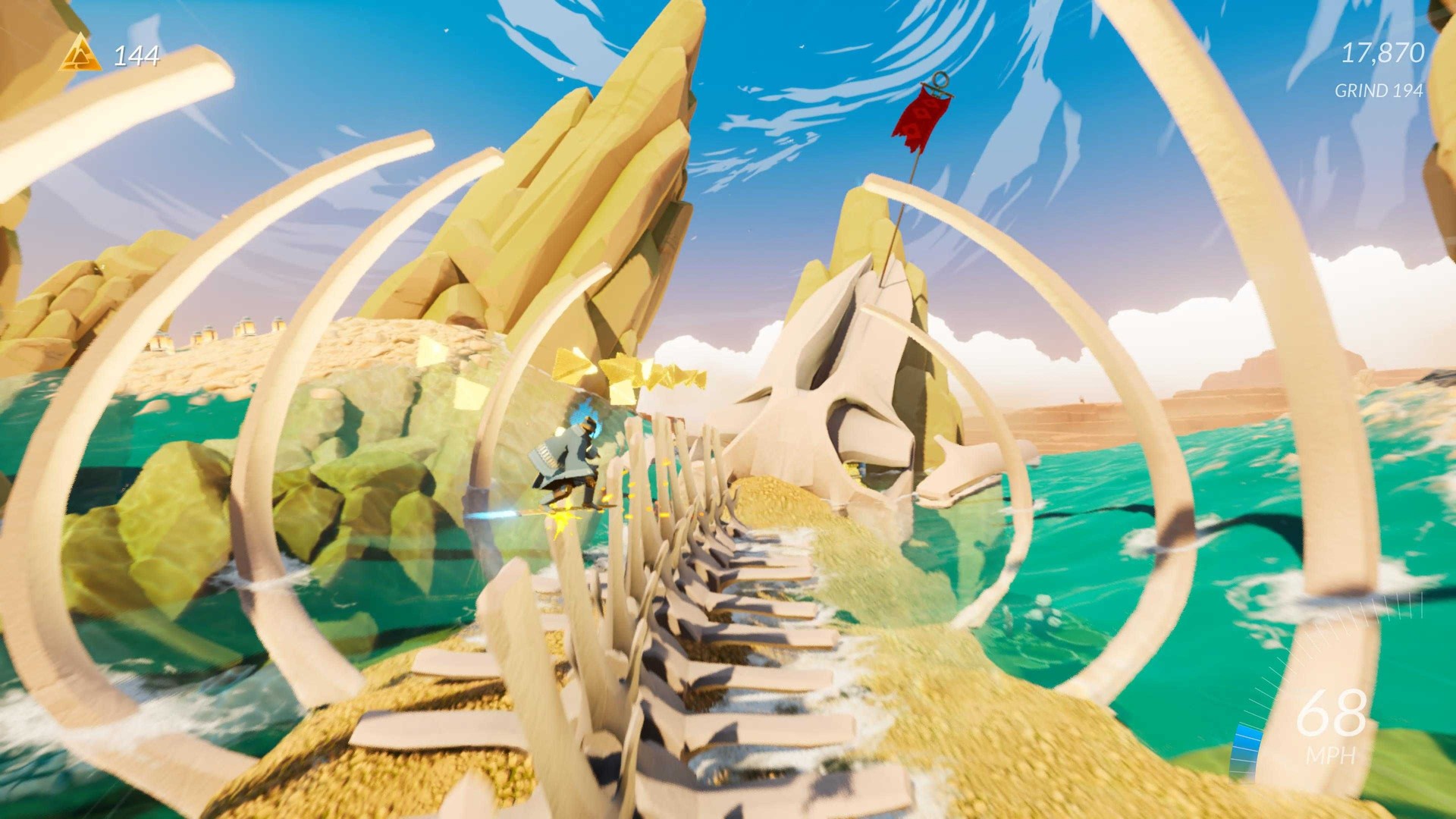
Sword of the Sea centers on continuous movement. Players surf across sand and water, grind on oversized chains, and perform tricks to build momentum and points. Moreover, the game’s controls are built around fluid traversal rather than combat, and many actions are tied to maintaining speed and chaining maneuvers.
Additionally, the game includes a score and trick system. Players earn currency during runs to unlock new tricks and movement options, and higher scores are possible on repeated playthroughs as players learn routes and advanced moves. Early coverage indicates a single playthrough can last roughly three hours for a first run, and players often replay levels to unlock everything and chase higher scores.
Levels and exploration
The game is organized into a few hub worlds. Each hub presents a distinct biome—such as dry deserts and extreme climates—and contains collectible lore, high-score challenges, and optional routes. In addition, many bodies of water are initially covered by rolling desert sand; as players restore flow to an area, aquatic life reappears and level traversal changes accordingly.
Themes and story
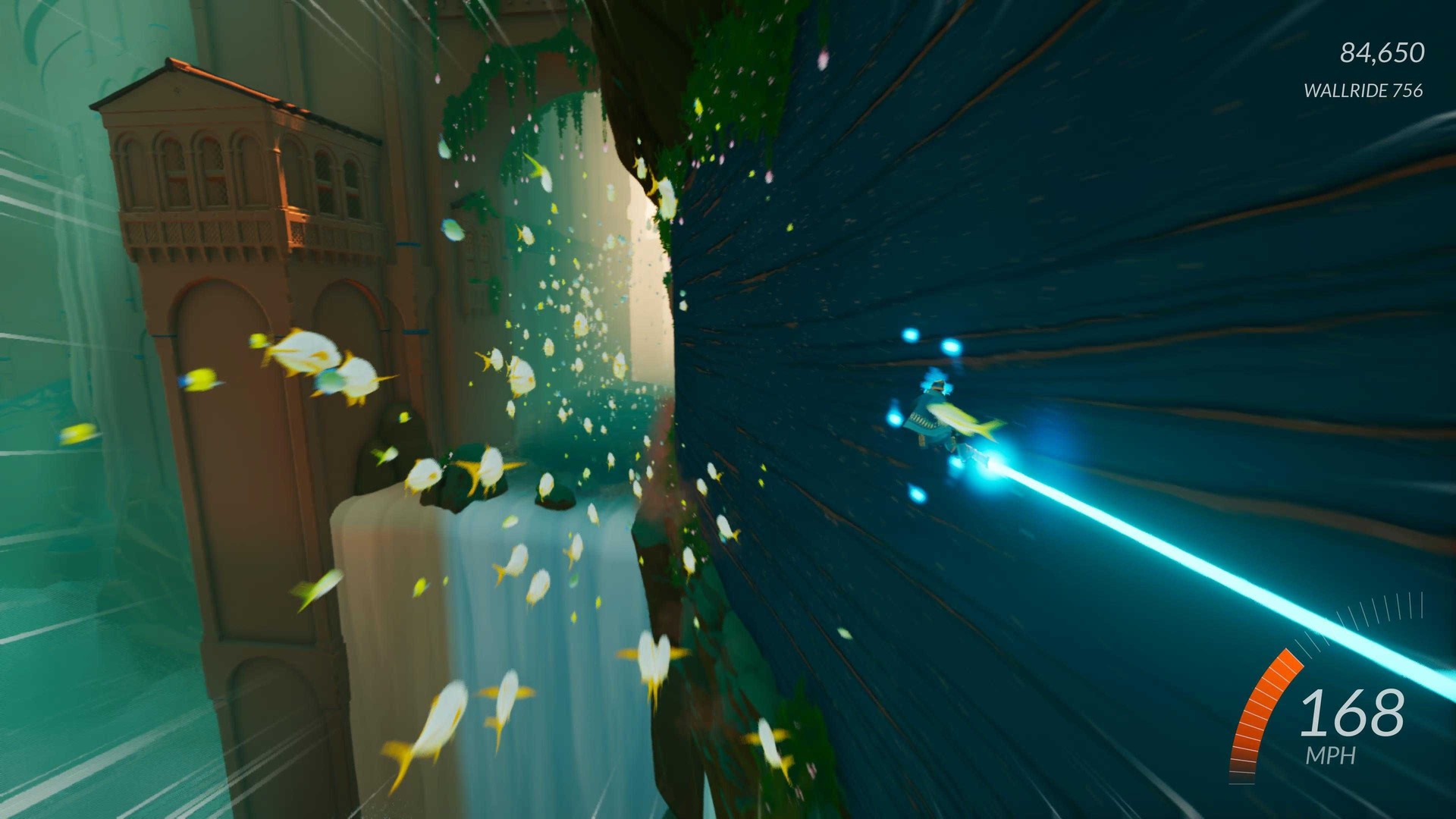
Sword of the Sea uses environmental change as a central motif. The opening world is a dry, almost colorless desert that contrasts with later, more water-filled areas. Therefore, the game frames environmental transformation through player actions as they restore water and life to each hub.
Furthermore, the game’s portrayal of varied extreme weather and biome change aligns with broader discussions about climate variability and impacts. For background on how climate change can include more than warming, see this NASA explanation:
Animals, collectibles, and lore
Throughout levels, players encounter aquatic animals—some of which fly or swim above exposed sand—alongside statues and ruins that hint at the world’s history. Collectible lore pieces provide additional context about gods, wars, and past civilizations, and they are optional for players who want deeper story details.
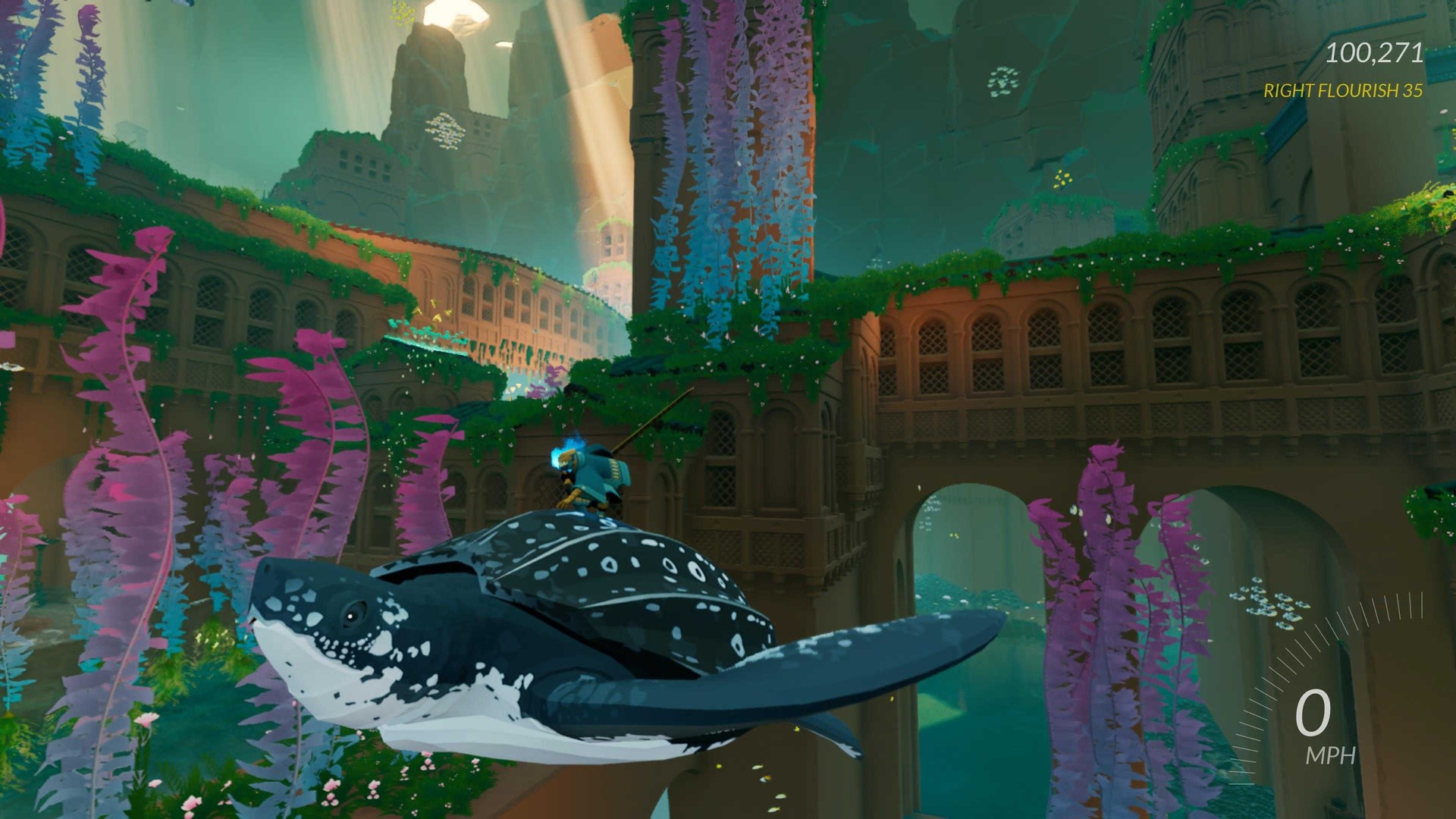
The game also features turtles and other marine species as visible in-world fauna. For general information on real-world turtle conservation status, see the World Wildlife Fund page on sea turtles:
https://www.worldwildlife.org/species/sea-turtle
Replayability and progression
Replay is encouraged by the game’s unlock system and score mechanics. Players collect currency during runs to buy tricks and movement upgrades. Consequently, a first playthrough may not grant access to all abilities, and scoring higher on subsequent runs is a clear incentive.
Release and review notes
Sword of the Sea released on PS5 and Windows PC on August 8. Review coverage referenced here used a PS5 prerelease download code provided by Giant Squid.