Warhammer 40,000: Dark Heresy Puts You in the Inquisitor’s Seat — Choose the Truth, or Invent It
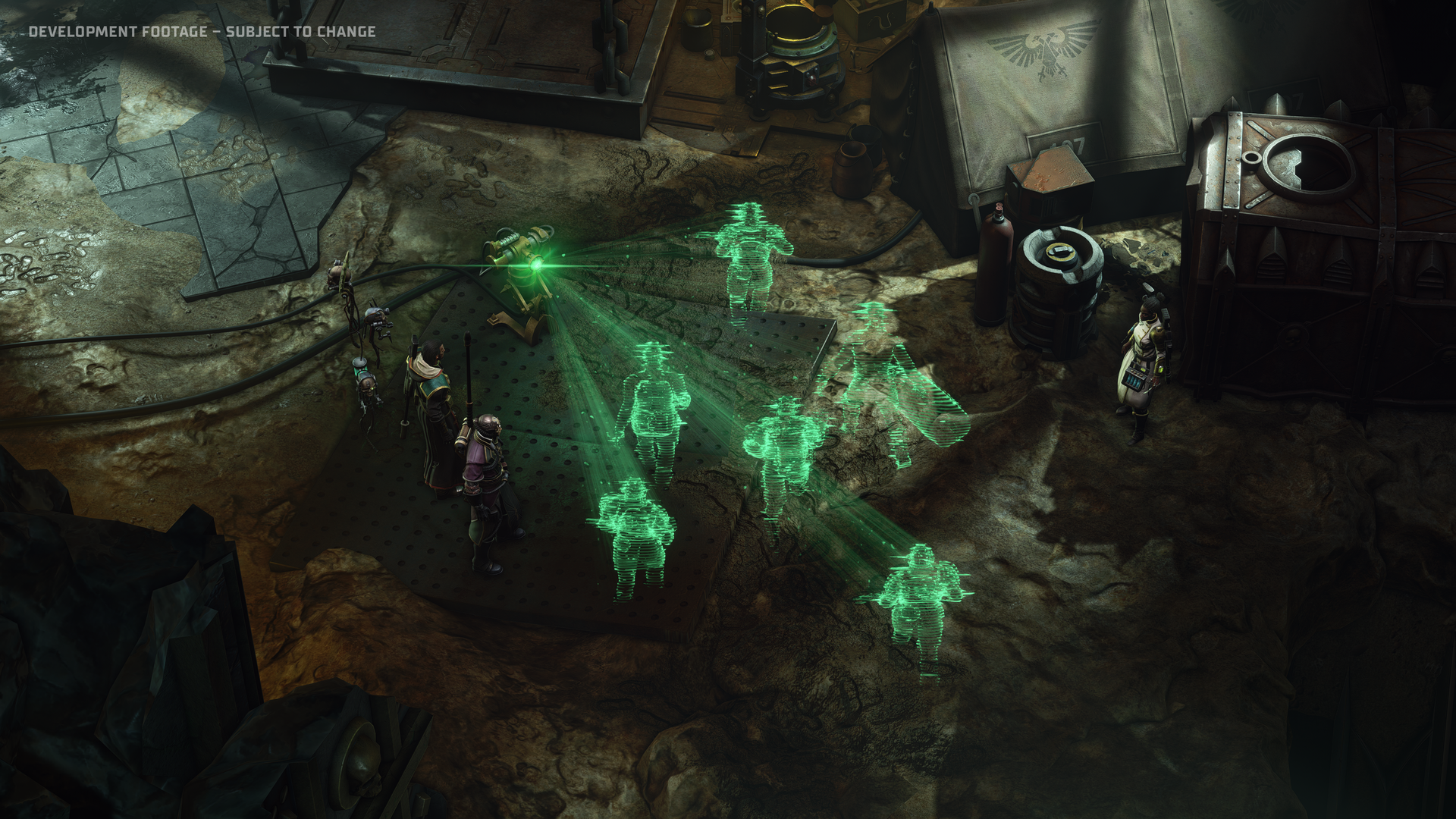
Owlcat Games is adapting the Dark Heresy tabletop RPG into Warhammer 40,000: Dark Heresy, an isometric CRPG that casts players as an Inquisitor investigating disappearances and larger threats in the Calixis Sector.
- What the Gamescom demo showed: investigation journal, dropdown answers, and consequences.
- Visual and level design details, plus a sample mission and environment notes.
- Turn-based combat systems: cover, armor durability, crit effects, initiative, and morale mechanics.
Demo context and investigation systems
At Gamescom, a hands-off demo picked up at the game’s 15-hour mark, where the player-led Inquisitor commanded a five-person party on Scintilla. The demo focused on an excavation site tied to disappearances, and it also introduced the larger mystery of the Tyrant Star. Importantly, evidence collected in the field — such as a bisected body — is recorded in an investigation journal. There, you can read your interpretation of facts and view extra details based on your companions’ perspectives.
Moreover, party members’ awareness skills can reveal additional clues, but the player decides how to interpret the evidence. After searches, the game presents a set of questions (for example, “Who ransacked the camp?” and “Why are there work boot tracks here?”). Players choose answers from a dropdown; missed clues can remove some options. Choices do not trigger correction prompts and will not stop progress, yet they have consequences ranging from conversational remarks to delayed story outcomes. In the demo, impressing a local Inquisitor resulted in an invitation to take a new companion, expanding the party to six.
Visuals and environments
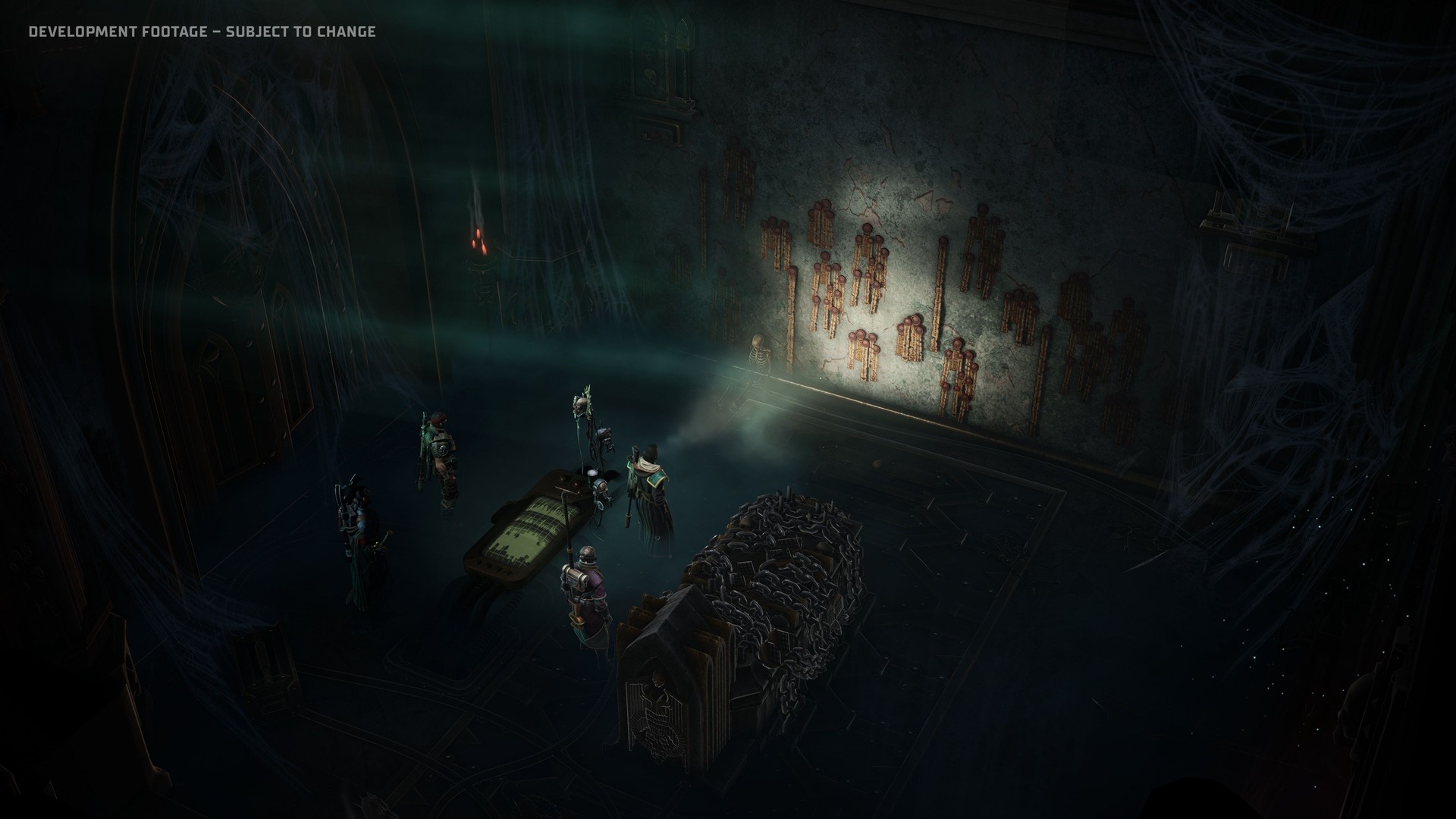
Owlcat has updated the visuals from 2023’s Warhammer 40,000: Rogue Trader, and the demo showed detailed environments with platforming between makeshift bridges and excavation scaffolding. The world includes devotional cages, tubular mushrooms, whispering crowds, and a large two-mouthed fish seen during a fishing scene. These elements appeared during exploration and narrative beats.
Sample mission: hostage negotiation
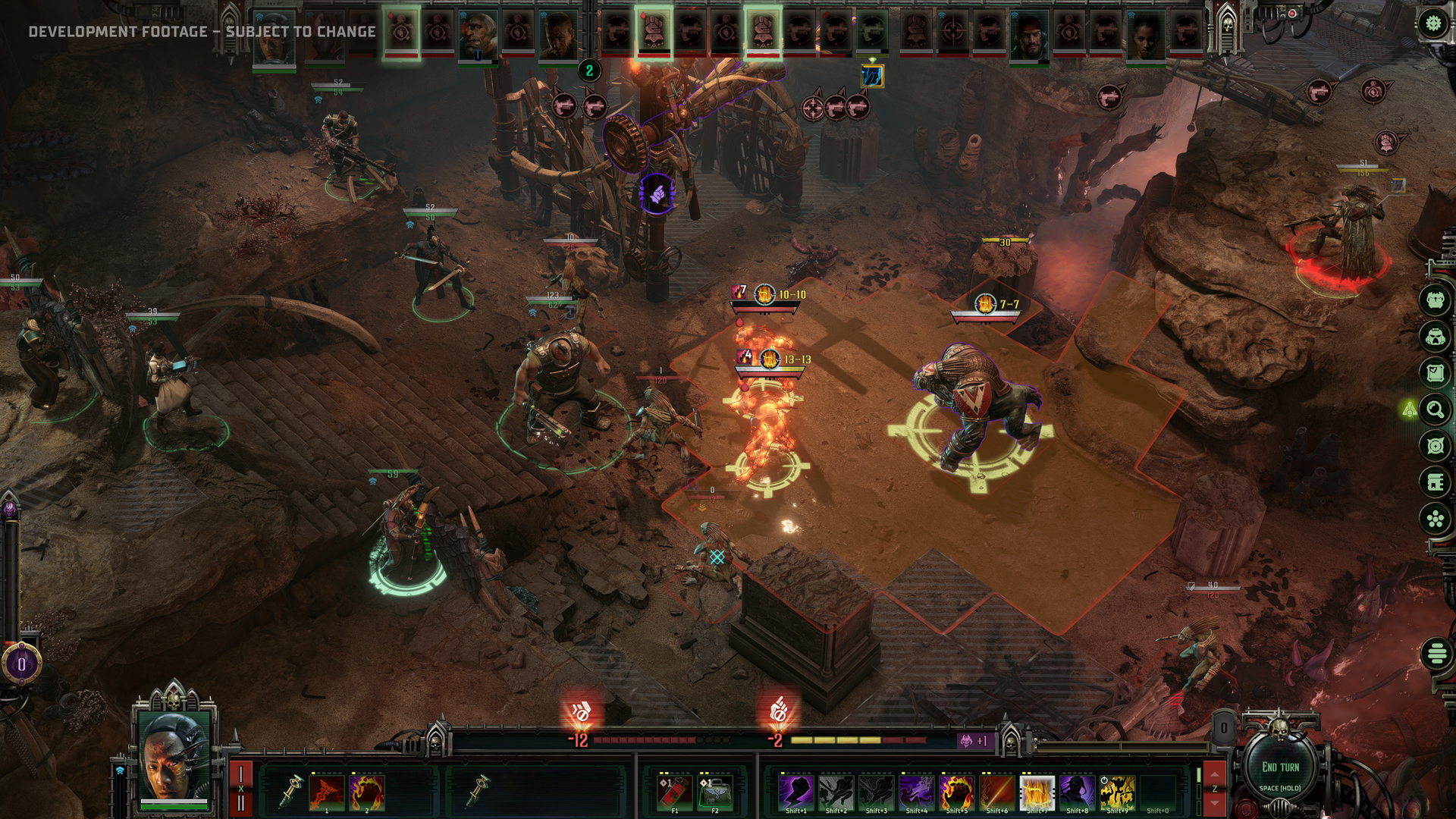
The demo’s next mission involved a hostage situation where a local gang held divers captive. In that encounter the player used subterfuge — offering poisoned alcohol to lower the gang’s guard — which affected the opening of the fight. The encounter then transitioned into turn-based combat where positioning and pre-battle setup mattered.
Combat systems and mechanics
The turn-based combat retains many systems from Rogue Trader, but with notable changes. For cover, objects either provide full cover while they have hit points or they simply block line of sight without offering protection. This means cover can be destroyed to remove its defensive benefit. Every unit has armor durability, which absorbs wounds and critical hit effects.
Critical hits apply special effects depending on the body part hit. Characters with precision attacks can target specific limbs to cause status effects — for example, aiming at legs to immobilize a foe or at arms to force weapon drops. However, crits are not guaranteed, and randomness in the system (such as initiative rolls and saving throws against psychic disciplines) can affect planned strategies.
Initiative, concentration, and morale
Initiative is determined by a random roll that sets character order. That order is especially important for concentration abilities, which trigger at a set point in the turn sequence unless interrupted by enemy actions. In the demo, a concentration countdown threatened a hostage’s life, and interruptions could change the outcome.
Dark Heresy also includes a morale system derived from Rogue Trader’s momentum mechanic. Raising morale can turn a character heroic, granting a large buff and a free ability. Conversely, killing a faction’s commander can reduce enemy morale, potentially causing disarray (for example, enemies shooting each other). Faction morale can recover if they drop player characters, and the game offers surrender conditions that differ by faction, letting players choose to end combat early or finish the encounter.
How systems interact
The demo emphasized synergy across systems: lowering an enemy’s armor opens them to precision attacks and crit-focused follow-ups, while positioning and cover manipulation affect both mobility and concentration timers. Randomness in initiative and crit chance means plans can fail, and morale swings can shift a fight’s pacing.
Availability and developer background
Owlcat Games developed the title and has a track record of narrative-driven CRPGs. The demo information above was observed at Gamescom and describes systems and moments shown during that hands-off session. No release date or platform list was provided in the demo notes.