Why Once Upon a Katamari’s 10 Time-Travel Worlds Make Rolling Bigger and Funnier Than Ever
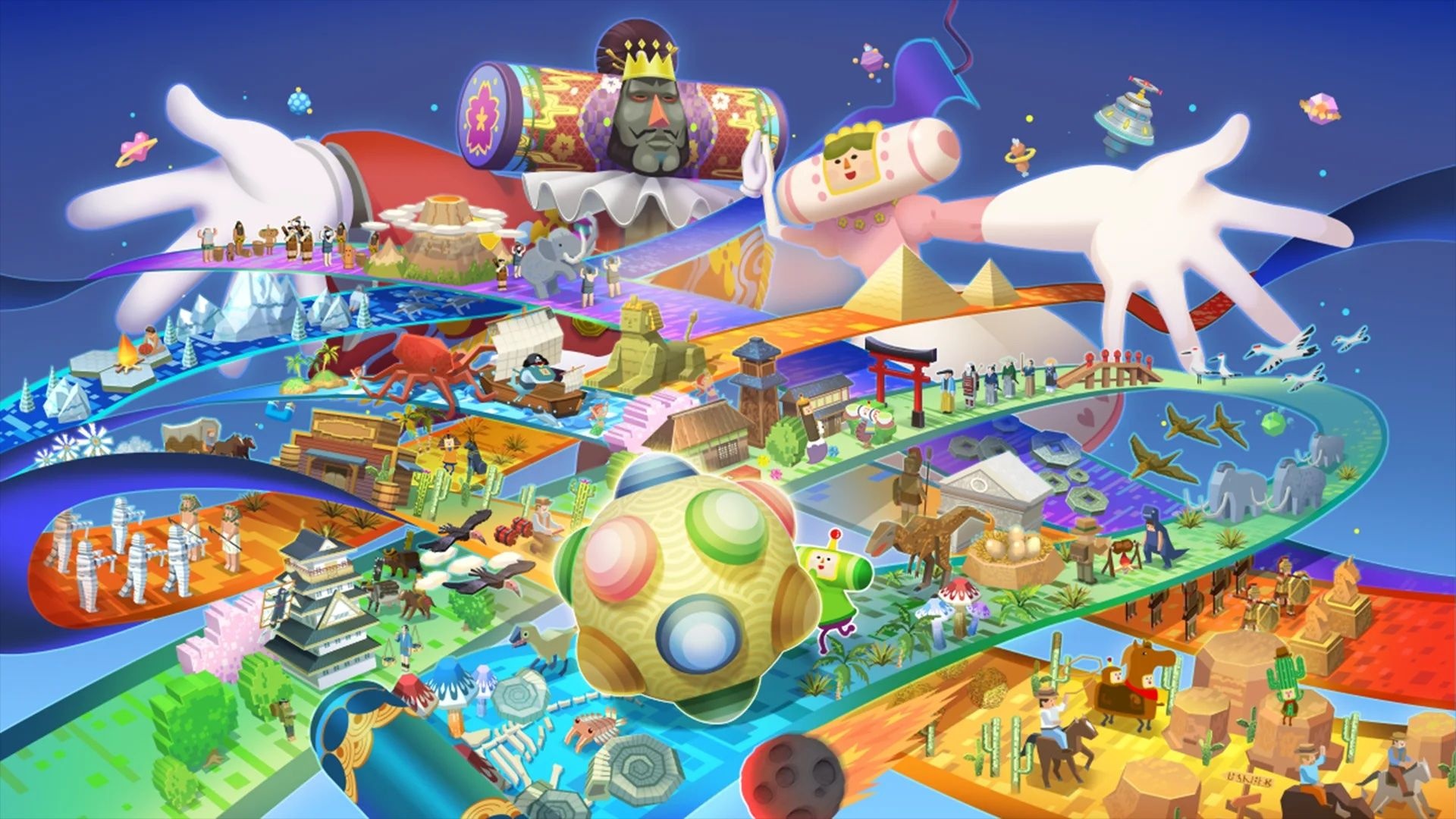
Once Upon a Katamari is the latest entry in the Katamari series, and it was released on Oct. 24 for Nintendo Switch, PlayStation 5, Windows PC, and Xbox Series X. The game keeps the series’ simple premise—“Roll ball, make ball big.”—and adds new maps, challenges, and mechanics while staying close to the original gameplay loop.
- Game overview
- Maps and stages
- Gameplay and challenges
- Controls and camera
- Freebies (power-ups)
- Collectibles and progression
- Technical notes and release
Game overview
Once Upon a Katamari presents a time-travel framing story: the King of All Cosmos accidentally destroys the Earth and the stars, and the player controls the Prince to roll a Katamari and restore the night sky. The title uses papercraft-style graphics that reference low-poly aesthetics and origami-inspired shapes. Moreover, the game is described as the first new console Katamari title in 14 years.
Maps and stages
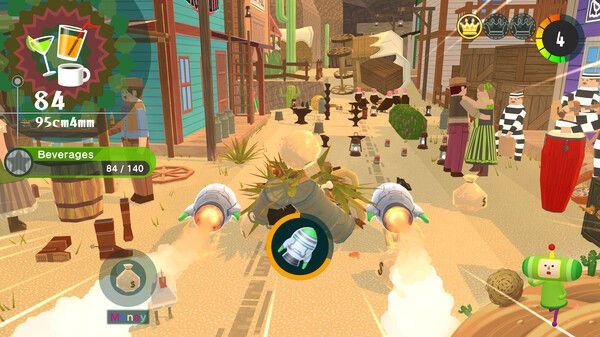
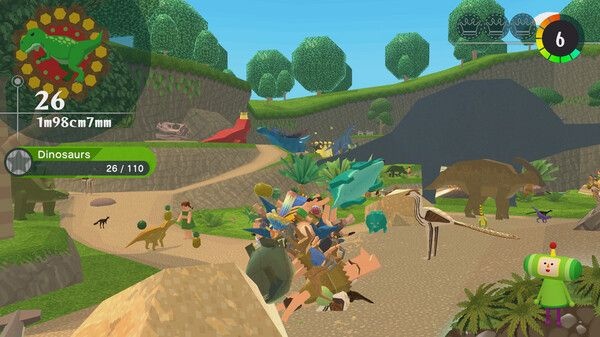
The game includes 10 distinct maps, each centered on a historical or thematic setting. Examples listed by the developer include Edo Japan, the American Frontier, and the Jurassic Era. Each map contains several stages that riff on that setting; for instance, the Frontier map contains gold-mines, a saloon, and a stage focused on collecting different tumbleweeds.
Gameplay and challenges
Core gameplay retains the series’ original loop: start small, roll up objects to grow, and unlock larger items over time. Most stages are timed. Typically, stages last around five to 10 minutes, and timed runs are the most common challenge type.
Players begin able to pick up very small items, then navigate among small objects until they reach a size that lets them collect bigger things. The end of a timed stage often becomes more chaotic, with larger objects—such as dinosaurs or trees—becoming collectible in the final minute.
Controls and camera
Once Upon a Katamari offers two control schemes. First, an “original” scheme uses both left and right sticks for a tank-style steering method. Second, a “simple” scheme uses only the left stick for movement. The right stick does not independently move the camera; instead, it repositions the Prince around the Katamari’s circumference to change trajectory.
As a result, camera control is more limited than in many modern games, and players will need to adapt to the fixed-perspective behavior and the two available control layouts.
Freebies (power-ups)
The game adds temporary power-ups called freebies, described as similar to kart-game boosts. Examples include a magnet that draws nearby objects and a stopwatch that pauses the countdown. However, each freebie has a short duration, so their window of effect is brief.
Collectibles and progression
Collect-a-thon elements appear in several traditional forms: unlockable player avatars (often called “cousins”), music tracks, and cosmetic items that do not affect gameplay. Additionally, each stage contains three hidden crowns. These crowns must be collected to unlock subsequent maps and stages, which enforces a gate-based progression model and requires replaying stages to find all crowns.
Technical notes and release
Once Upon a Katamari was released on Oct. 24 for Nintendo Switch, PlayStation 5, Windows PC, and Xbox Series X. The game was reviewed on PlayStation 5 using a prerelease download code provided by Bandai Namco. For context, previous releases in the series include remasters such as Katamari Damacy Reroll (2018) and We Love Katamari Reroll + Royal Reverie (2024).