You’ll Want to Hike a Walking Lighthouse — Inside Double Fine’s Surreal Puzzle Game Keeper
Keeper is a third-person puzzle adventure from Double Fine Productions that turns an abandoned lighthouse into a walking protagonist and pairs it with a bird sidekick named Twig. Recently, creative director Lee Petty spoke about the game’s design after an exclusive preview at Gamescom, explaining how Keeper uses minimal controls, wordless storytelling, and handcrafted environments to deliver a short, surreal journey.
- Gameplay and controls
- Puzzles and design philosophy
- Story and presentation
- Visuals and inspiration
- Director notes
Game overview
Keeper is presented as a short, wordless adventure set in a post-human world. There are no human characters; instead, the player controls a lighthouse that “grows little legs” and hikes across varied landscapes toward a mountain peak. The game aims to be a kind of palate cleanser—brief and unlike many traditional adventure games.
Gameplay and controls
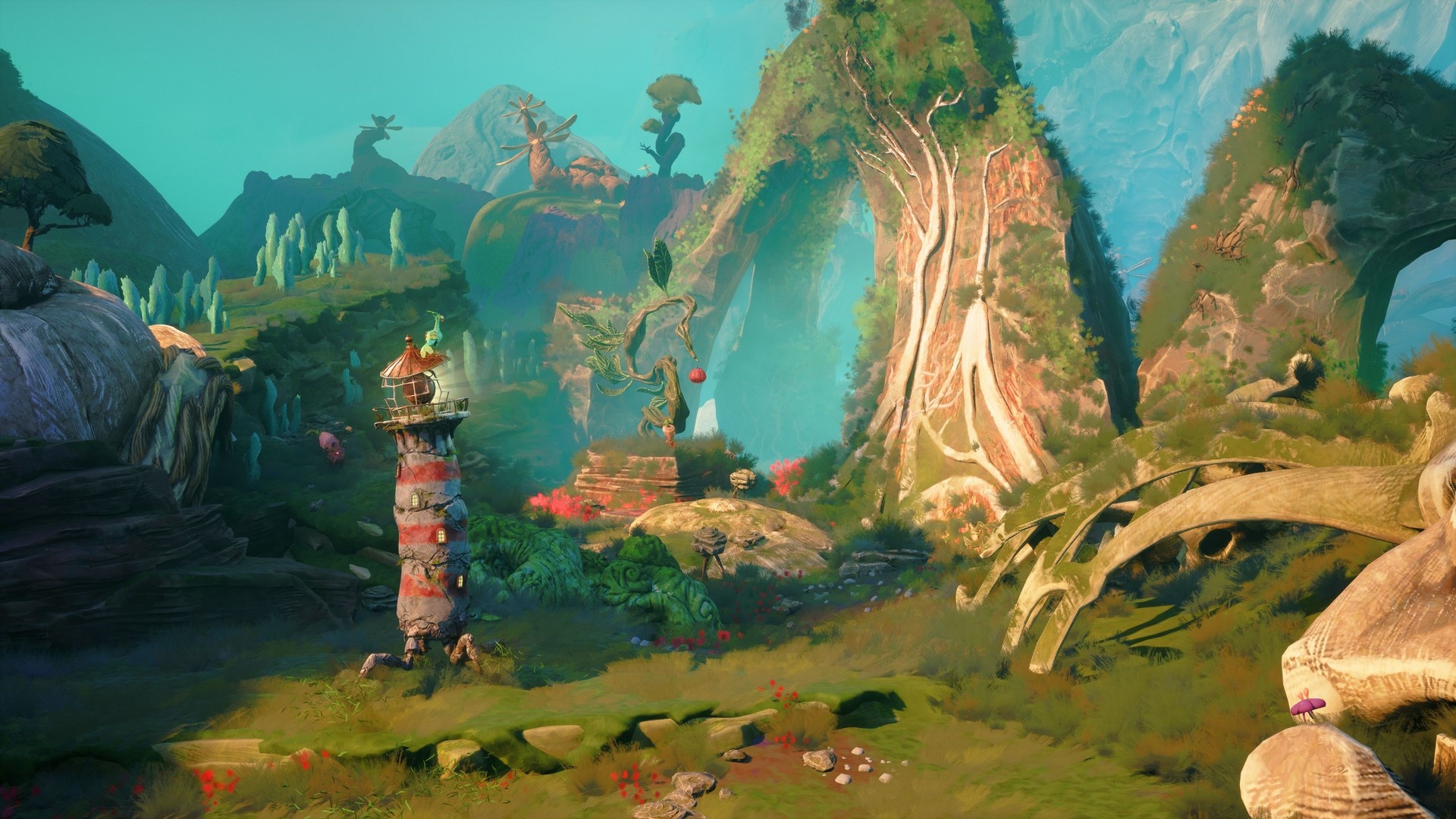
The lighthouse interacts mainly through its headlight, which has a default mode and a focused mode. Players can use the light to affect the environment: aim it at plants to make them grow, shine it to make creatures squint, and reveal secrets. In addition, the bird companion Twig perches on the lighthouse, shows paths, triggers secrets, and can be directed to lift objects, pull levers, or attach to creatures.
Importantly, Keeper removes common game pressures: players cannot die, there are no skill trees, and there is no item grinding. The control set is intentionally small so that interactions stay focused and approachable.
Puzzles and design philosophy
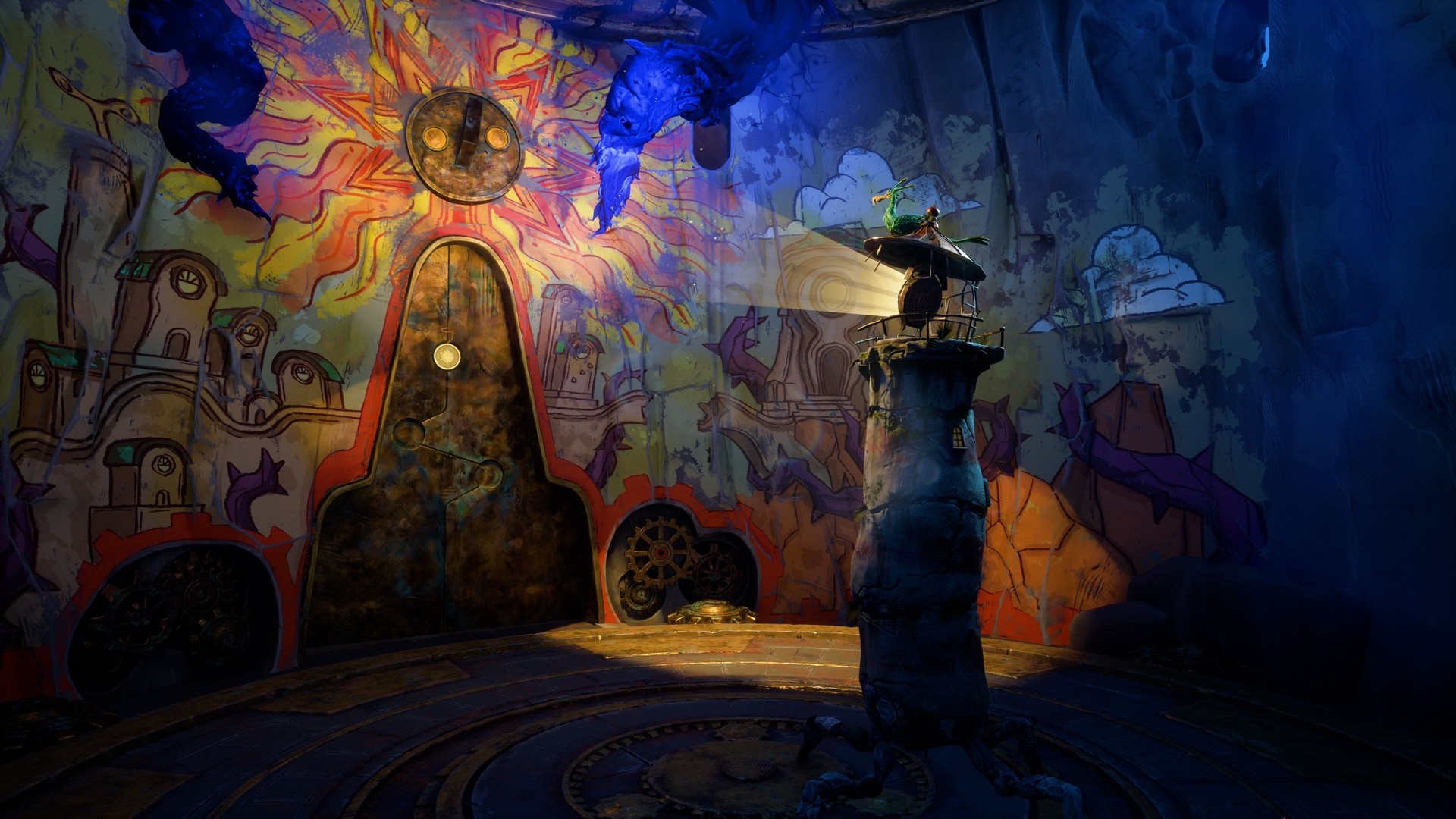
Double Fine designed Keeper’s puzzles to be integrated into the world rather than presented as obvious obstacles. Petty said, “When we set out to design the puzzles, we wanted to create puzzles that felt very integrated into the world and the characters there. In a typical adventure game, you might find a problem first.”
Consequently, players often wander into puzzles without explicit instructions. The team also favored unique, handcrafted setups over repeating the same concept across many areas. As Petty put it, “We do that to some extent, as it’s not like everything is done exactly once and thrown away, but there is a lot of unique setup.”
Story and presentation
Keeper tells a wordless story about companionship and change. The lighthouse and Twig travel together, conveying emotions and story beats without dialogue. Petty described the communication approach succinctly: “Keeper communicates less than a typical game.”
To convey emotion, the interface includes an emote button for Twig. For example, the bird may hunker down in darker areas instead of offering a chirp, and other creatures will respond with ambient noises or mirrored gestures. The game also uses music and sound effects to support its non-verbal storytelling.
Visuals and inspiration
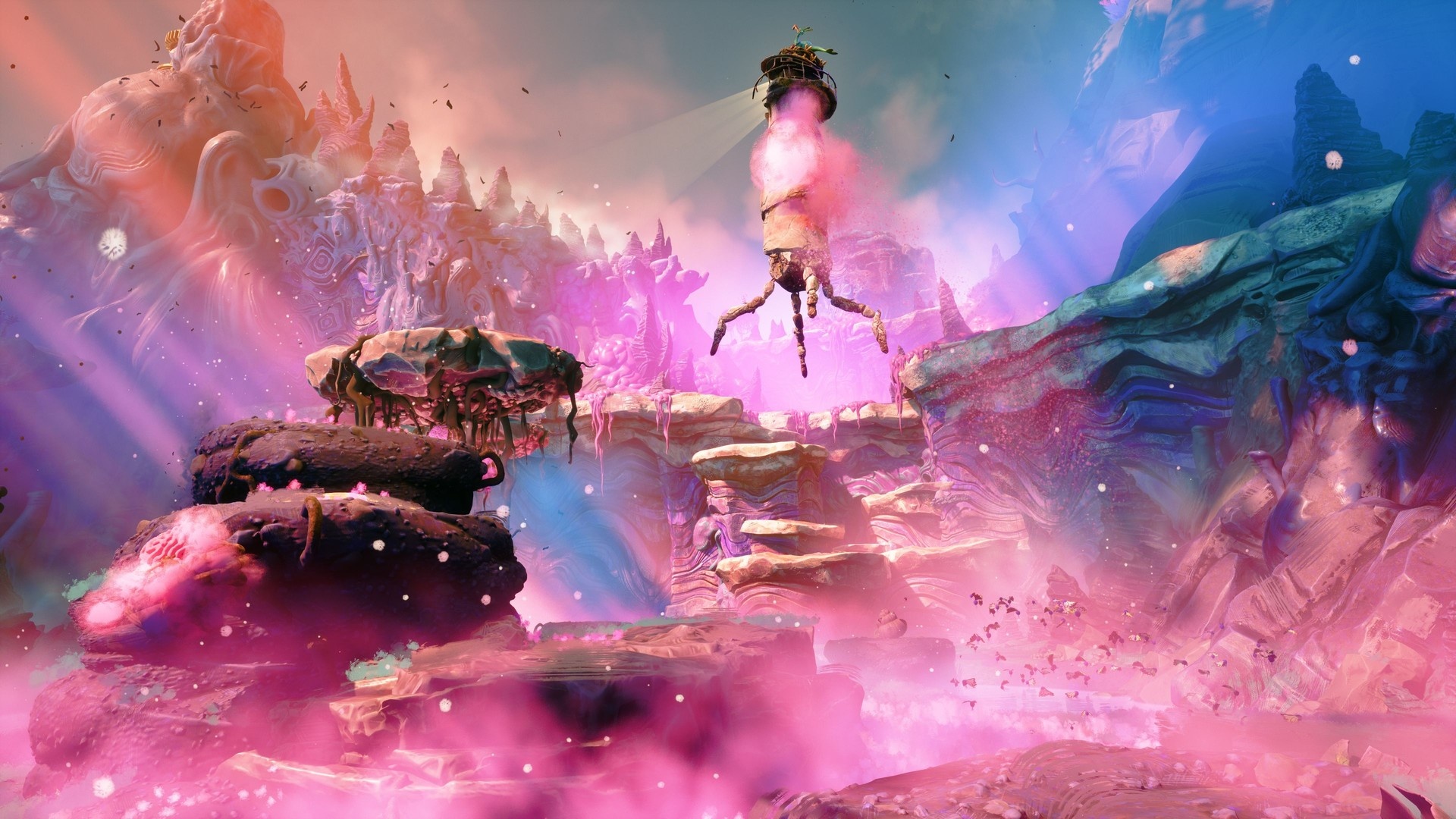
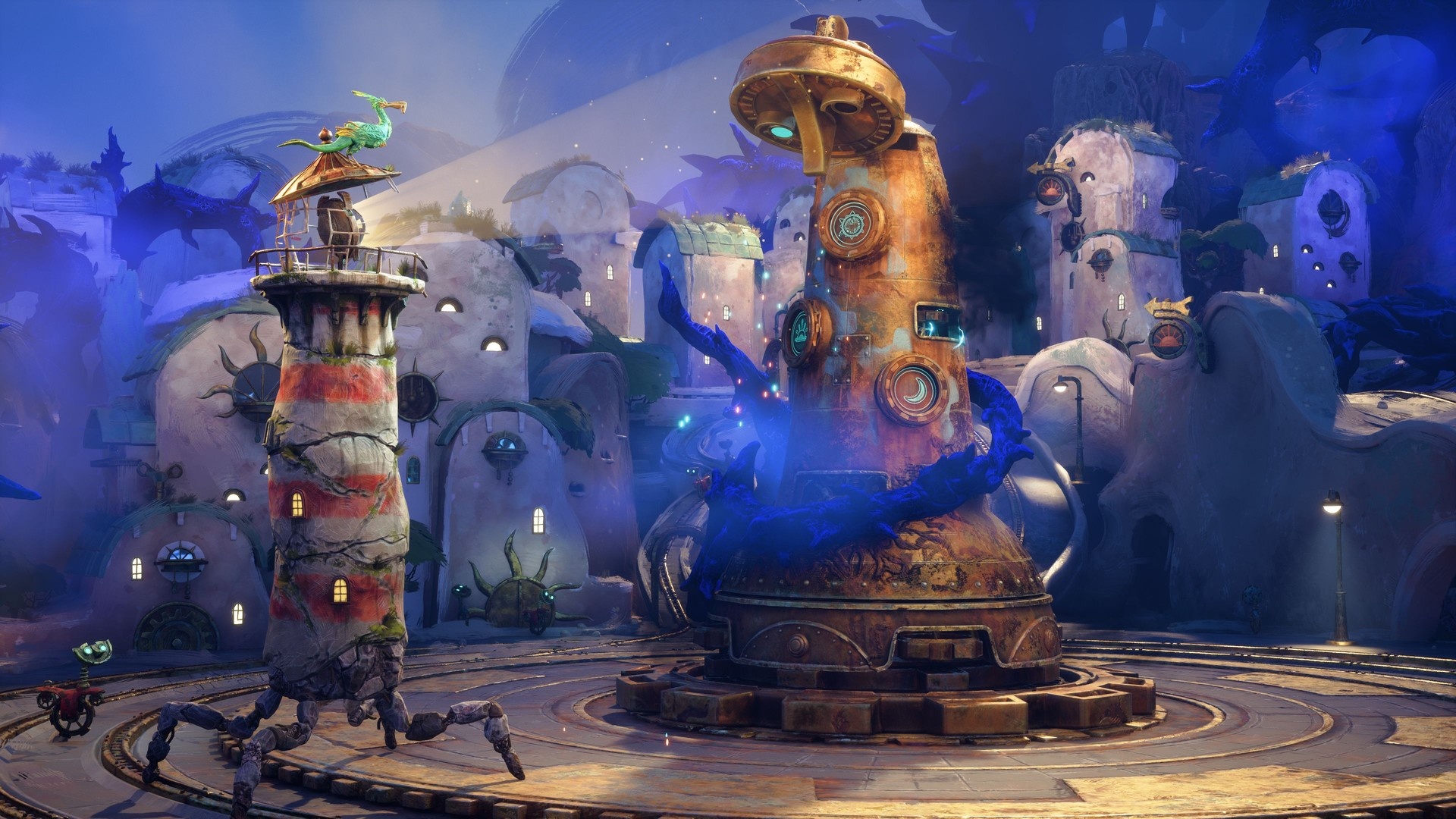
The world mixes natural scenery with remnants of human artifacts. Petty cited hikes near abandoned mining trails in California as inspiration: scattered pieces of old machinery that feel like odd monuments reclaimed by nature. The environments include snowy mountaintops, cavern systems, and unusual rock formations.
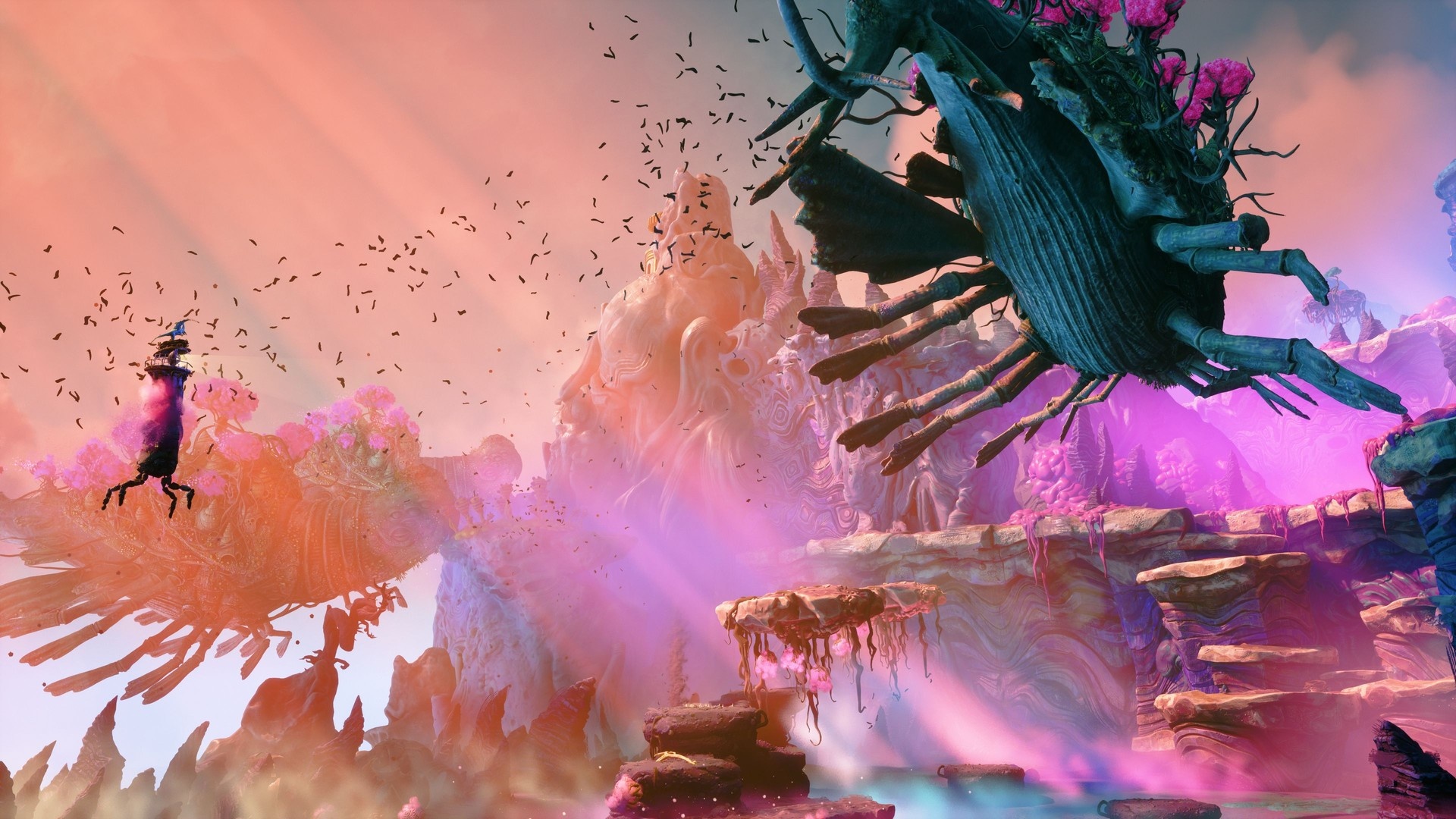
Gameplay includes metamorphosis moments. For instance, pink pollen can attach to the lighthouse, making it lighter and able to float temporarily, which changes movement and pacing in that segment.
Director notes
Lee Petty described the Wither as a malevolent, purple ecosystem that the bird flees from; it appears as brambles, vines, and insects. Despite that threat, most creatures encountered are friendly.
Petty also discussed the lighthouse as a metaphor for transformation: an object of the old world repurposed for new functions, with its light used for growth rather than as a weapon. Regarding player choice, Petty said he would choose to play as the bird in a real-life hike because he prefers agility: “I would play the bird because the bird is much more agile and can escape danger more quickly than the lighthouse.”